"RusHydro" generates 12% of Russia's electricity — and warns of possible default
The state energy holding's debt will reach $18 billion by the end of 2027, and servicing it at a 20% key rate is becoming increasingly difficult. The company remains afloat only due to subsidies — the question is whether the Kremlin will continue to pay.

By Tetiana Suchkova-Ladik
June 10, 2026 · 3 min read
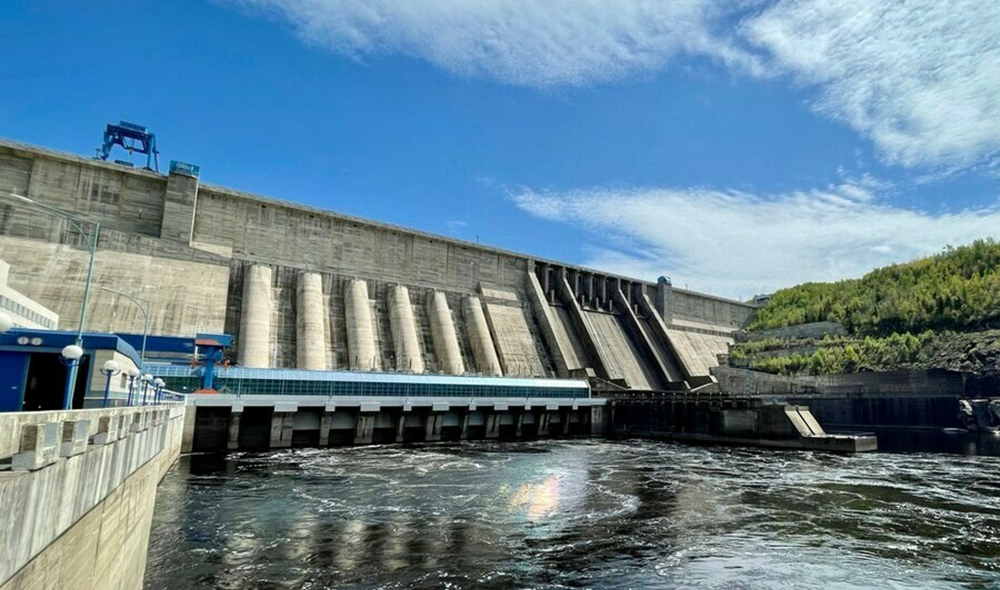
«RusHydro» controls about 60% of Russia's hydroelectric capacity and manages the entire energy system of the Far East. Twelve percent of all electricity in the country. And it is this company that has officially warned investors: by 2027, it may not be able to meet its debt obligations.
Figures that explain the concern
In materials prepared for the company's annual shareholder meeting, it revealed a forecast: net debt by the end of 2027 will reach 1.3 trillion rubles — slightly more than $18 billion. Already this year, the debt-to-EBITDA ratio will be 6.2x — debt exceeds operating profit by more than six times. For comparison: a ratio above 4x is considered critical in the industry.
As recently as early 2025, according to analysts at Alfa-Bank, this ratio was at 3.3x. The deterioration is happening quickly.
Why the debt pit is so deep
There are several reasons, and all of them are structural. First, «RusHydro» has spent years investing in the development of the Far East's energy infrastructure — only by 2025, 430 billion rubles in capital investments were supposed to go there. Money was being spent, while tariffs for the population remained subsidized by the state and artificially low: even after a 150% increase in 2023, they did not cover generation costs. Far Eastern regions owed «RusHydro» approximately 40 billion rubles — and this debt continues to accumulate.
Second — and this is the decisive factor — the Central Bank of Russia raised its key rate from 16% in July 2024 to a peak of 21%, and it is currently holding at 20%. Servicing ruble debts costs the company about 15% annually. Under these conditions, refinancing 150 billion rubles of debt that was supposed to be repaid in 2025 becomes a financial trap.
«If the Central Bank continues to lower the rate at the same slow pace, a number of issuers will face refinancing problems, which will contribute to an increase in defaults»
Lyudmila Rokotyanskaya, analyst, in a comment to Expert magazine
State company in debt — what does this mean for people
«RusHydro» is not a private business. The controlling stake belongs to the state, and it is the state that has for years compensated for losses from the artificially low tariff model. Now the government is discussing a moratorium on dividend payments until 2028, accelerated electricity price liberalization in the Far East, and additional subsidies.
What this means in practical terms: if subsidies increase and tariffs are liberalized — residents of the Far East will pay more for electricity. If the state decides not to rescue the company — the stability of energy supply in the region, where there is simply no alternative to «RusHydro», is at risk.
Meanwhile, Russia is already recording a record wave of corporate defaults: according to Yahoo Finance citing Izvestiya, 25% of the bond market is at risk of default — companies that took out loans at low rates are now forced to refinance at rates four times higher.
Default of a state company — nonsense or precedent?
Technically, the Kremlin could simply recapitalize «RusHydro» — this has been done before. But in 2025, the federal budget is burdened with war spending, and the Central Bank is maintaining a strict monetary policy precisely to restrain inflation from military expenditures. Every new subsidy is a choice between the front and the energy system.
If the Central Bank of Russia lowers its rate by the end of 2025 to at least 15% — «RusHydro» will get room for refinancing and the default scenario will become less likely. If the rate remains at 18–20%, and budget support does not increase — the company that provides electricity to an entire macroregion will actually be approaching insolvency as early as 2026.