Apple asked to be exempted from DMA for 18 months — and was denied. Now 450 million without Siri AI
The European Commission rejected Apple's request for temporary relief from compliance obligations — and emphasizes that the company itself made the decision not to launch Siri AI on iPhones in the EU. Apple, in turn, claims that Brussels refused to consider any compromise solutions.

By Tetiana Suchkova-Ladik
June 10, 2026 · 3 min read
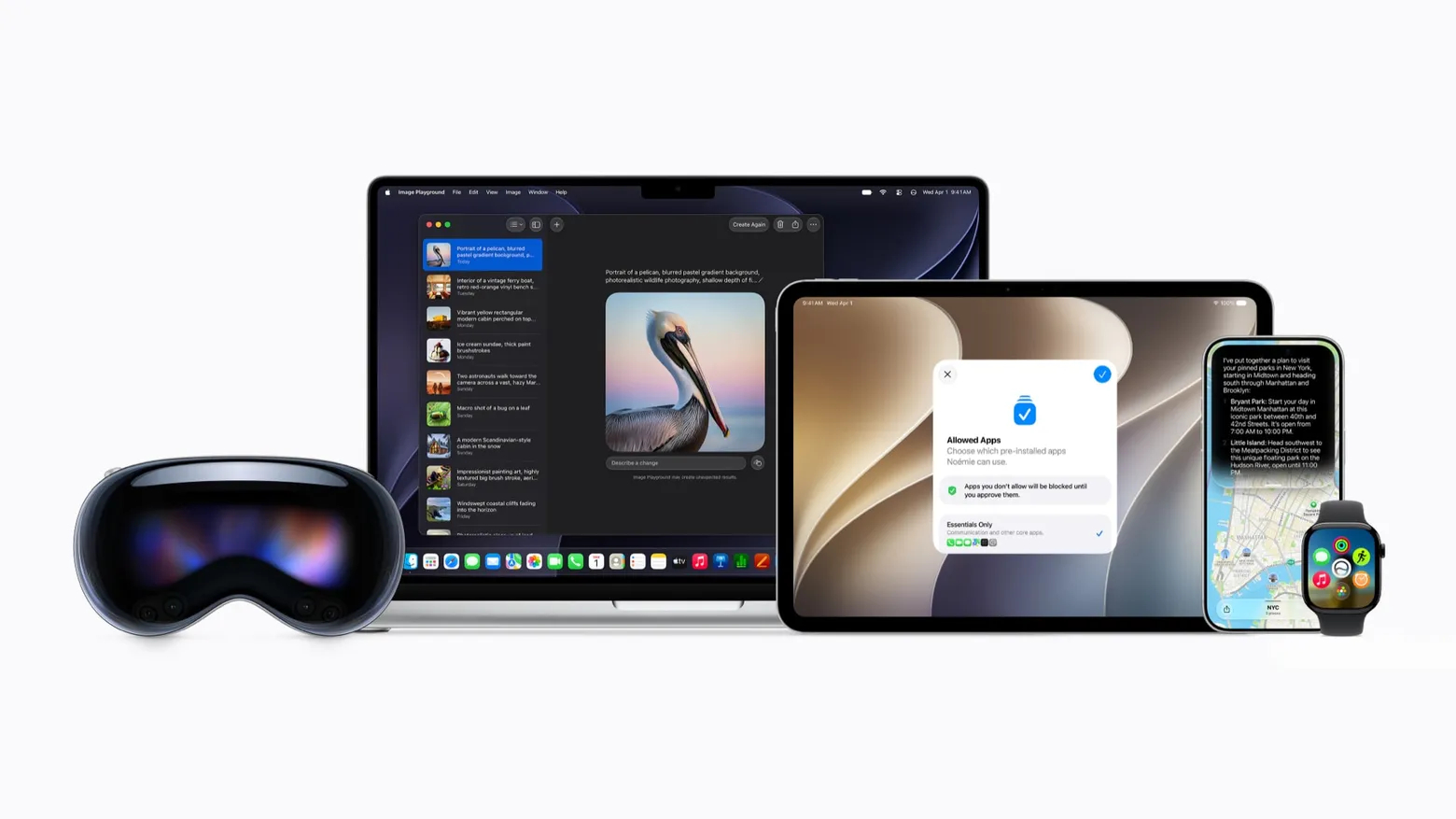
When Apple showed the updated Siri AI at WWDC 2026, it simultaneously announced that EU residents would not receive this feature on iPhone and iPad — with no timeline given. Within hours, Brussels responded.
What actually happened
According to European Commission spokesperson Thomas Regnier, Apple requested an exemption from compliance obligations under the Digital Markets Act (DMA) — for at least 18 months. The Commission refused. "The decision not to launch Siri AI in the EU is Apple's decision and Apple's alone," Regnier told journalists in Brussels.
"Apple simply could not develop a compatible solution that meets the EU's basic privacy and security standards. Instead of seeking an appropriate solution, the company asked the Commission to exempt it from its obligations."
Thomas Regnier, European Commission spokesperson, Reuters, June 9, 2026
Apple's position is opposite. The company claims it has spent months proposing technical solutions, including a "Trusted System Agent" mechanism — an intermediary layer that would allow third-party voice assistants to safely access Siri AI. All proposals were rejected. According to Apple, the Commission demands that competing AI systems be given direct access to private user data, the ability to autonomously manage applications, and read messages — without Apple's protective filters.
Why iPhone, but not Mac
Paradoxically: Siri AI will launch in the EU on Mac, Apple Watch, and Vision Pro — but not on iPhone and iPad. The reason is technical and legal: the European Commission recognized iOS and the App Store as gatekeepers, not macOS. Compatibility obligations apply only to designated platforms. So one and the same Apple account, one model architecture — yet a fundamentally different experience depending on which device is in your pocket.
How many people and how much money
Siri AI will not reach over 450 million iPhone and iPad users in EU countries. This is Apple's biggest voice assistant update in 15 years — contextual, agentic, capable of managing applications.
Forrester analyst Dipanjan Chatterjee notes that the success of the new Siri "will depend on quick delivery of the feature and whether it works as promised." For EU users, this delivery is postponed indefinitely. Some analysts point out that along with the Chinese market, up to 40% of Apple's sales are at risk — in a segment where AI features are already becoming a key argument when choosing a smartphone.
This is already the second time in two years. The first generation of Apple Intelligence appeared in the US in October 2024, and in the EU — only in March 2025, five months later. That time the issue was resolved through a different DMA compliance format. The current situation is technically more complex, and there is no deadline.
In April 2025, the European Commission for the first time in DMA history fined Apple €500 million for restricting developers from redirecting users to alternative purchasing channels. Apple appealed the decision — the court blocked the appeal.
Two narratives, one problem
The dispute essentially comes down to one question: where does privacy protection end and market position protection begin. Apple insists that an open API for competitors is a security hole. The European Commission counters that a permissive architecture with protection and compatibility simultaneously — is technically possible, and Apple simply chose not to build it.
If by the iOS 27 release in fall 2026 the parties do not find a formula that satisfies both DMA standards and Apple's security requirements — Siri AI will remain the only flagship iPhone feature that can only be used outside the market where Apple earns a quarter of its revenue.