A 5,000‑Year‑Old Fortress in Spain — and a Roman Soldier in Its Walls: What This Discovery Means
In southern Spain archaeologists have uncovered not only Neolithic fortifications but also a Roman burial made a millennium after the fortress was built. We examine why this matters for the history of Europe and what to expect from further investigations.

By Tetiana Suchkova-Ladik
December 31, 2025 · 2 min read
What was found
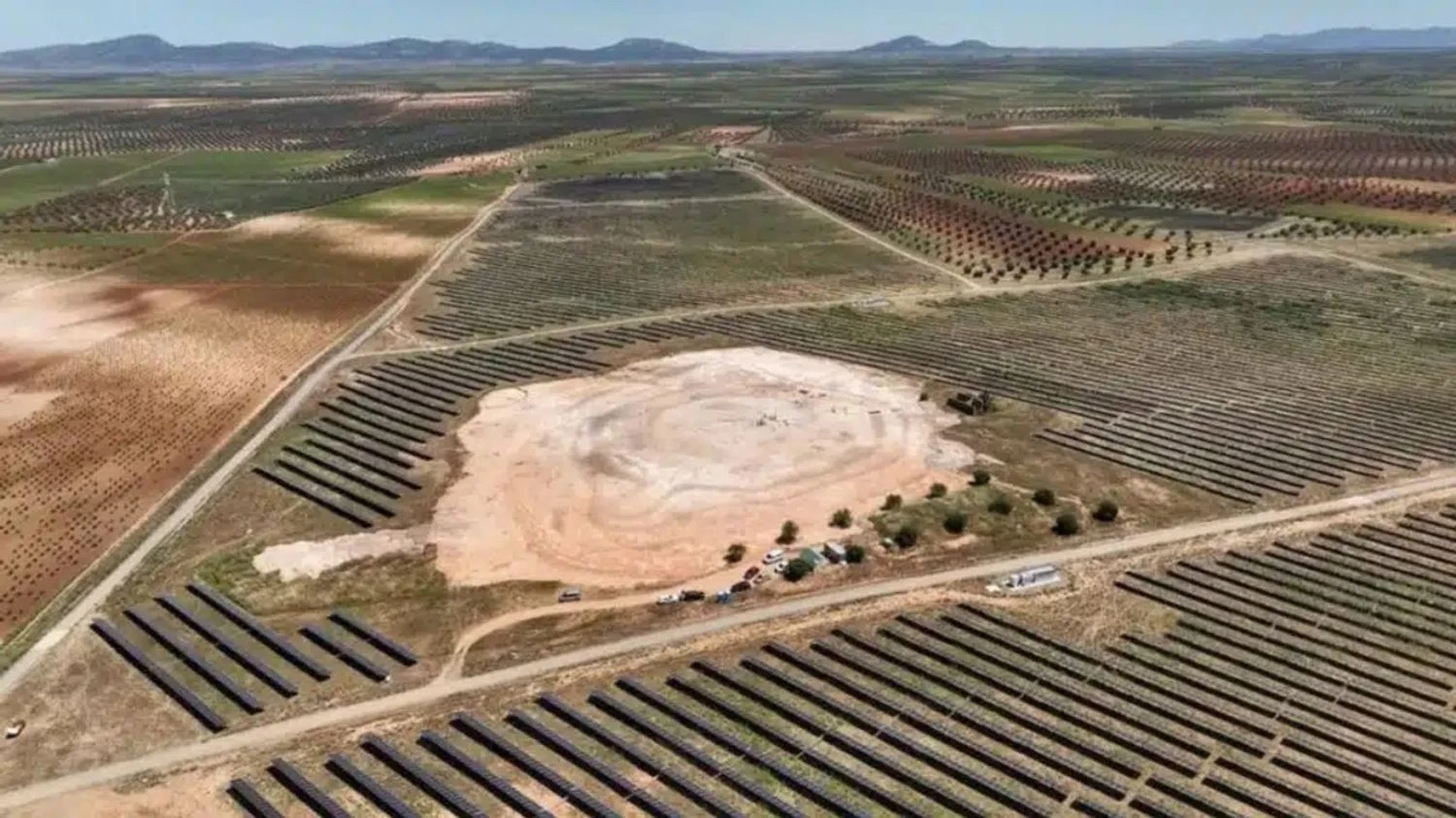
During excavations carried out ahead of the construction of a solar power plant near Almendralejo in Extremadura, archaeologists uncovered a Late Neolithic fortress about 5,000 years old (roughly 3000 BCE). The structure shows clear geometric planning, projecting bastions at the corners and internal defensive trenches — construction solutions that were ahead of their time.
"Even more striking was the discovery of a Roman‑era burial within its walls — a find that raised as many questions as it answered."
— Futura (quoting UNN)
Why this matters
First conclusion: we are seeing an example of long‑term use of the landscape. A fortress from an era of migrations and technological shifts did not remain confined to its own time — its space became a resource and a landmark for later generations.
Second: the architectural details (symmetry, bastions, trenches, ~77 m in width) place this site among important prehistoric fortifications on the Iberian Peninsula — alongside Motilla del Azuer and La Bastida — and prompt a reassessment of local models of defensive engineering in the Copper Age.
Burial of a Roman warrior: hypotheses
At the heart of the ruins a skeleton of a man aged 25–35 was found with a short dagger, typically associated with the weaponry of Roman legions after 218 BCE. Why he ended up here roughly 2,500 years after the fortress was built is a question with several working hypotheses:
- the ruins were used as a memorial or burial place;
- they served as a temporary shelter or bivouac for troops/travelers on the march;
- a case of individual history — a deserter or a wanderer.
"There are no obvious signs of violent death; he may have died of natural causes or disease. The Romans often used ancient monuments as burial places."
— Futura (quoting the expedition's findings)
Methodology: what science will tell us next
Forensic and laboratory studies — radiocarbon dating, isotope analyses and DNA — will provide key information on the man's origins, his diet, mobility and the timing of the burial. Combining dates for the construction and the burial will clarify whether this is an isolated case or part of a broader practice of using ancient monuments in the Roman period.
What this means for us and for Ukraine
This story is a reminder that infrastructure projects (in this case a solar power plant) often open doors to the past. Effective archaeological oversight during reconstruction and construction is essential to preserving heritage. For Ukraine, which is currently rebuilding regions and investing in renewable energy, this is a practical lesson: culture and development must go hand in hand.
Summary
The find in Extremadura does not rewrite history overnight, but it provides an important piece of a larger mosaic: it demonstrates how places can "outlive" eras and become resources for new communities. The next round of laboratory results will determine how boldly local chronologies should be rewritten and how movements of people between ages should be reconstructed.
"This find underscores: our history is not a line, but a network of connections between generations."
— the archaeological project team