10 years of defense cooperation: how the agreement with Qatar strengthens Ukraine's air defenses
In high diplomacy, it's not loud statements but quiet agreements that matter. The agreement with Qatar is not a show but a strategic step toward technological cooperation and bolstering airspace defense.

By Tetiana Suchkova-Ladik
March 28, 2026 · 2 min read
What was agreed
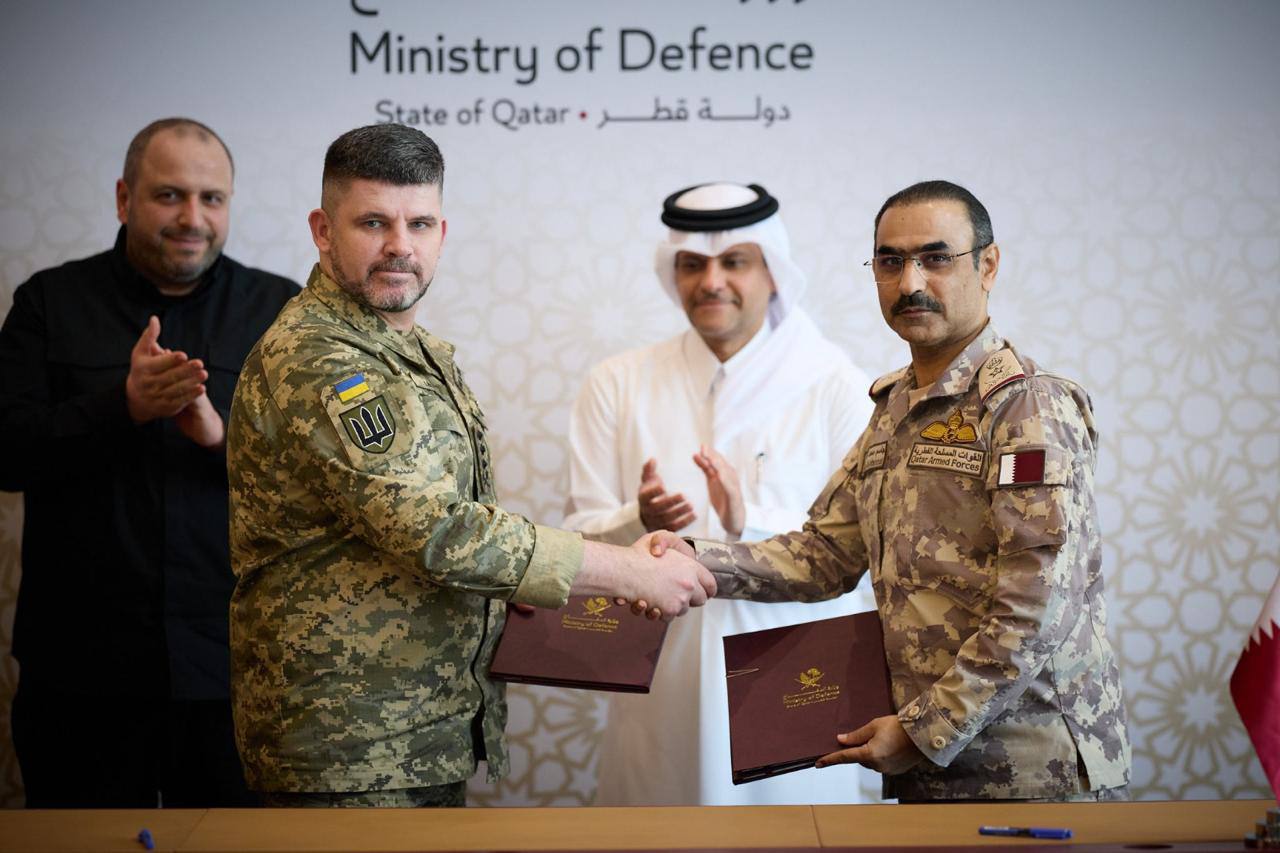
Ukraine and Qatar agreed on a defense partnership for at least 10 years, President Volodymyr Zelensky reported on Telegram. The agreement provides for joint projects in the defense industry, the creation of co-production facilities, technological cooperation, and the attraction of investment into security solutions.
"Ukraine and Qatar agreed on a defense partnership for at least 10 years."
— Volodymyr Zelensky, President of Ukraine (Telegram)
What to expect for security
According to National Security and Defense Council Secretary Rustam Umerov, the document enables cooperation in countering aerial threats — namely strengthening air defense systems, developing relevant technologies, and their joint implementation.
"The agreement allows cooperation in countering aerial threats."
— Rustam Umerov, Secretary of the NSDC
Geopolitical context
The agreement comes against the backdrop of Kyiv's intensifying relations with the countries of the Persian Gulf. At the end of March, Zelensky also visited Saudi Arabia, where security cooperation was discussed. Analysts and regional journalists (including a column by Ruslan Bashirli on LIGA.net) note that the Gulf monarchies are becoming increasingly sensitive to regional escalations and are moving from neutrality toward a more active security stance.
Practical effects and risks
In practice this means: technology exchange, investments in defense startups, and the possibility of local production of components for air defense systems. At the same time, the agreement is only a framework: to be transformed into a real force on the front lines, it needs to be filled with contracts, logistics, and personnel training.
What’s next
Now the key is the procedural part: specific memoranda, co-production schedules, investment packages, and testing of solutions. If Gulf partners do indeed confirm financial and technological support, this would give Ukraine important tools to protect its airspace. But for now the agreements must be turned into signed contracts and real deliveries — that is the next and decisive stage.
Brief conclusion: the agreement with Qatar is a strategic expansion of Ukraine's partnership network in the region, offering a chance for accelerated modernization of air defense and technological cooperation. Now it is important to watch the implementation details: they will determine how much this format truly changes the security balance.



