13 Months at the Edge of the World: Ukrainian Polar Researchers Return from Antarctica
Thirteen Ukrainian researchers completed a year-long expedition at the Akademik Vernadsky station. What they were doing there while the country was at war at home.

By Tetiana Suchkova-Ladik
April 4, 2026 · 2 min read
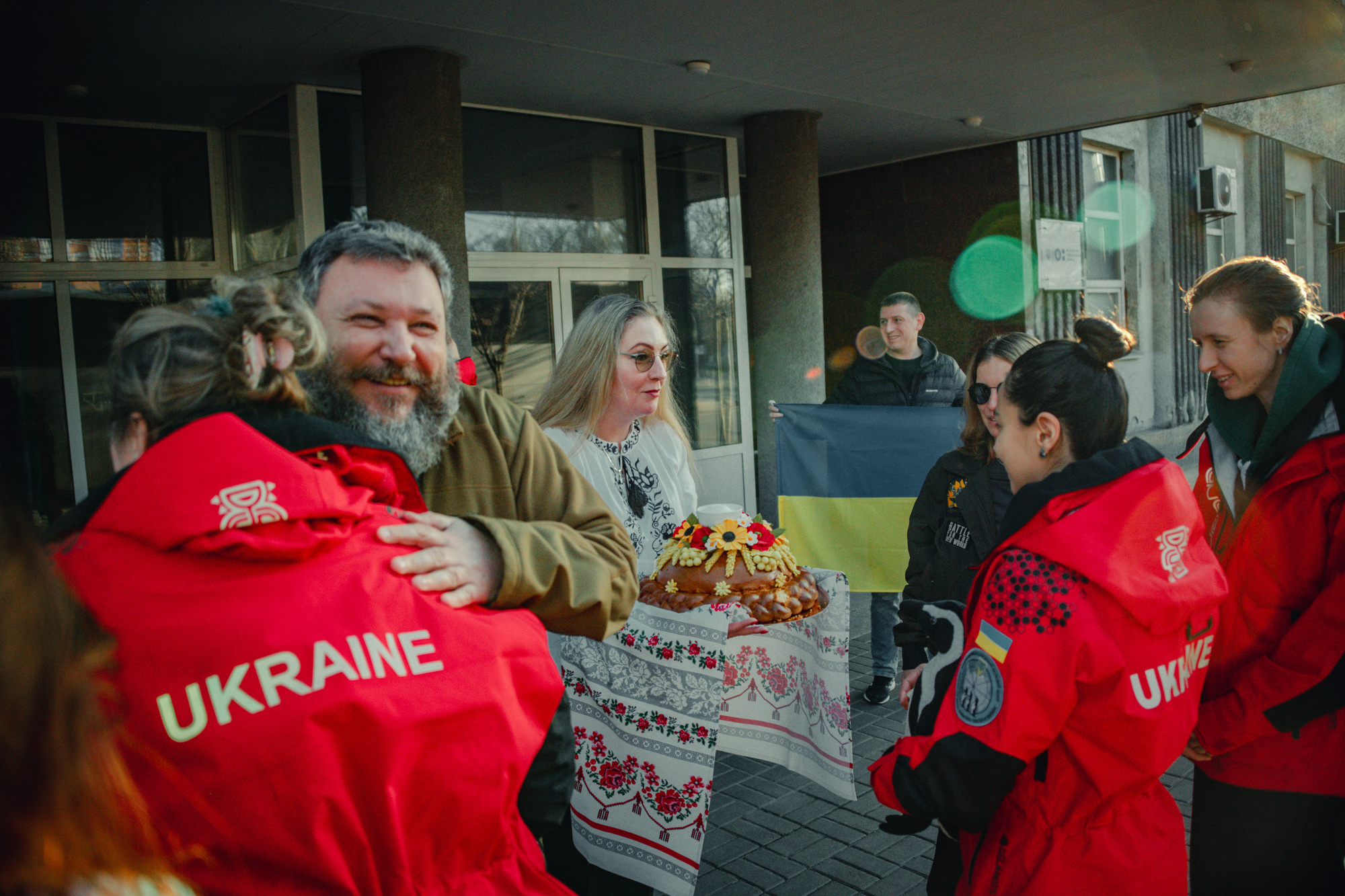
Thirteen people have just returned from a place where the average winter temperature falls to minus 20, where contact with home is cut off, and news from the front arrives with a delay. The Ukrainian Antarctic expedition has completed another annual cycle of work at the Akademik Vernadsky station — and this is not simply an official travel report.
The station has existed since 1996, when the United Kingdom handed it over to Ukraine for the symbolic sum of one pound sterling. Since then Ukrainian scientists have not missed a single season — including 2022 and all the years after. While the state mobilizes people and resources, the scientific presence in Antarctica remains uninterrupted. That is crucial: a pause even for one year means losing a place in international scientific consortia and long-term observation records that cannot be restored retroactively.
This year’s expedition comprised 13 polar researchers — meteorologists, geophysicists, a doctor, and mechanics. Their daily work includes measuring the ozone layer, monitoring the Earth’s magnetic field, and observing penguin populations and glacier dynamics. These data flow into global databases and are used by researchers in dozens of countries — regardless of who is at war with whom.
The real strain of the expedition is not the cold or the distance. It lies in the fact that people go there voluntarily for a year, knowing that there is a war at home, that their relatives are under threat, and that they are physically unable to do anything. Several participants of previous expeditions went straight to the military enlistment office upon their return. How those who returned now live with this is a separate question that official reports do not cover.
Ukraine is one of the few countries that maintain a permanent presence in Antarctica. That grants a voice in the Antarctic Treaty — the international mechanism that regulates the use of the continent and prevents its militarization or privatization. Presence = a voice. Absence = an observer without veto power.
The next rotation will depart in a few months. Finding 13 people willing to spend a year at Vernadsky in wartime conditions is a task that does not get easier each year. Whether there will be enough volunteers for the 30th or 31st expedition depends not only on funding but also on whether society considers this work important enough to let people go.



