17 Months — and Ukraine's First JDAM: 250 kg Warhead, Pilots Already Practicing Scenarios
The Ministry of Defense has purchased the first experimental batch of a domestic guided aerial bomb developed by a Brave1 participant. This is not an adaptation of a Western or Soviet solution — it is an original design created specifically for the conditions of this war.

By Tetiana Suchkova-Ladik
May 18, 2026 · 2 min read
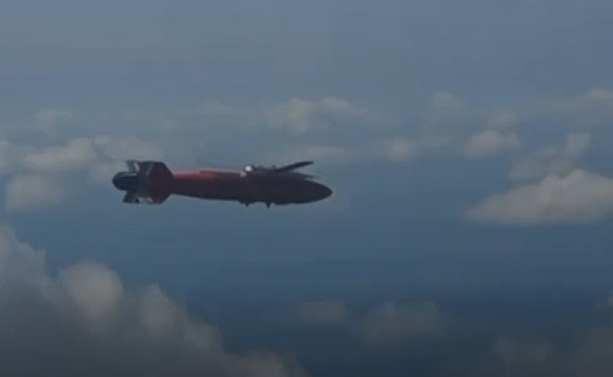
Ukraine has completed the development of its first domestically-produced guided aerial bomb (KAB). On May 18, Defense Minister Mikhaylo Fedorov announced that the munition has passed all necessary tests and is ready for combat use. The Ministry of Defense has already purchased the first experimental batch.
What is this bomb
The developer is one of the participants in the Brave1 defense cluster — a state platform supporting defense technologies. The project was financed through a Brave1 grant and lasted 17 months. The warhead is 250 kg. The KAB is equipped with a guidance system and aerodynamic control, allowing it to strike targets tens of kilometers from the release point — fortifications, command posts, and deep rear-area enemy facilities — without entering the effective range of enemy air defense systems.
«This is not a copy of Western or Soviet solutions, but an original development by Ukrainian engineers for effective destruction of fortifications, command posts, and other enemy targets at tens of kilometers deep after launch».
Mikhaylo Fedorov, Defense Minister of Ukraine
A video released by Fedorov shows the bomb's test flight after being dropped from an aircraft. The specific manufacturer and carrier platform are not disclosed.
Context: why Ukraine needs this
Since 2023, Russia has massively deployed modernized Soviet FAB-250, FAB-500, and FAB-1500 bombs with UMPK modules — converting cheap gravity bombs into guided gliders. Su-34 and Su-35 aircraft drop them outside the range of most Ukrainian air defense systems. According to military analysts' assessments, the mass deployment of these munitions became one of the key factors in pressure on Ukrainian defense in 2024–2025. By autumn 2025, improved UMPK-PD versions achieved ranges up to 95 km.
Ukraine responded primarily through imports: American JDAM-ER, French AASM Hammer, and small GBU-39 SDB glide bombs. In parallel, in June 2025, KB Medoid publicly demonstrated its own glide module for FAB-500 with a range of 60 km — essentially a reverse-engineered UMPK with French navigation elements. The KAB from Brave1 is a separate project with its own warhead design.
Current status
- The Ministry of Defense has purchased the first experimental batch — the scale is not disclosed.
- Pilots are practicing combat scenarios and adapting its use under real conditions.
- Fedorov announced scaling up production without specifying timelines or volumes.
- Confirmation of combat use by the Armed Forces or independent sources is not available at the time of publication.
The key question now is not whether the bomb works in tests — but whether there are sufficient production capacities for serial manufacturing. If Brave1 and the Ministry of Defense ensure a transparent chain from grant to assembly line, the Ukrainian KAB could become a systemic solution. If not — it will remain a technology demonstrator with good video footage.



