193 Ukrainian military personnel returned from captivity — among them those prosecuted by Russia for "terrorism"
On April 24, another prisoner exchange took place. Russia held some of the fighters in Chechnya and managed to initiate criminal cases against them — a legal tool that complicates their return and still lacks a systematic response.

By Tetiana Suchkova-Ladik
April 24, 2026 · 1 min read
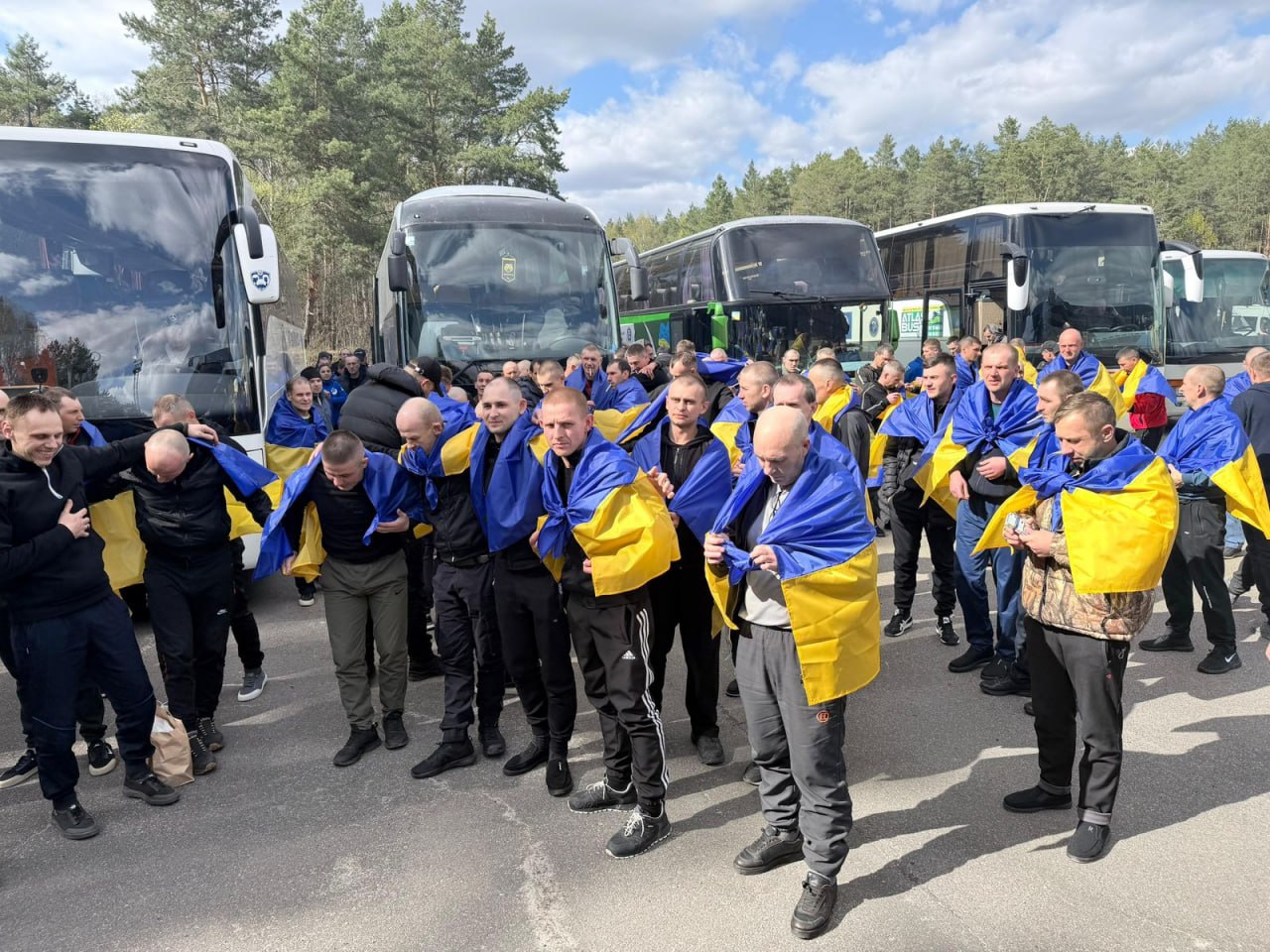
On April 24, Ukraine returned 193 servicemen from Russian captivity. Among them are defenders whom Russia had managed to bring criminal charges against: typically on charges of "terrorism" or "participation in illegal armed formations." Some of them had been held in Chechnya.
Photographs from the exchange site captured exhausted people who were met by medics and representatives of the Coordination Headquarters for Treatment of Prisoners of War. The detailed medical condition of the servicemen is not officially disclosed — standard practice during the first hours after return.
Detention in Chechnya is a separate variable in this story. Human rights defenders note that conditions in Chechen places of detention differ from general Russian pre-trial detention facilities and camps: lower levels of external oversight, higher risk of torture, and lower probability of visits by the International Committee of the Red Cross, which already has limited access to Ukrainian prisoners of war throughout Russian-controlled territory.
Criminal cases as a pressure tool are not a new practice. Russia initiates them systematically: this allows holding a person longer even after a potential exchange, to bargain for a higher "price," or simply to complicate the negotiation process. The Geneva Convention prohibits prosecution of combatants for lawful participation in combat operations, but Russia ignores its provisions, and there is effectively no international enforcement mechanism.
Overall, since the start of the full-scale invasion, Ukraine has managed to return over 3,800 servicemen and civilians. The number of those still in captivity is not officially confirmed — estimates vary from several thousand to tens of thousands of people depending on the source and calculation methodology.
The question that remains unanswered after each such exchange: does Ukraine and its partners have a specific legal mechanism to counter Russian practice of prosecuting prisoners of war — and if not, when exactly will its emergence become a condition for the next round of negotiations?



