$2 Million Invested, $2.5 Billion Claimed: How Fire Point Became the Most Expensive Defense Startup — and Why Parliament Is Examining This
# The Founder of Long-Range Drone Manufacturer FP-1 Valued Fire Point at Over $2.5 Billion at TSK Meeting The founder of the company producing long-range drones FP-1 valued Fire Point at more than $2.5 billion during a meeting of the Temporary Special Commission (TSK) — as part of a case regarding the Defense Ministry's (Minditch's) attempt to purchase half of the company. The journey from $2 million in initial investments to a billion-dollar valuation took less than three years.

By Tetiana Suchkova-Ladik
May 13, 2026 · 2 min read
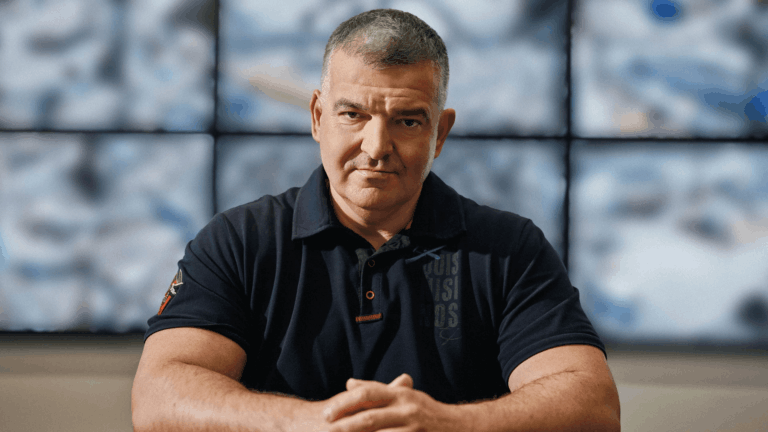
When parliament's Temporary Investigation Commission in the "Midas" case summoned the founders of Fire Point, the question was not about drones. The question was about money — and who it really belongs to.
$2 million → $2.5 billion: arithmetic of wartime
Chief Designer and co-owner of Fire Point Denis Shtilerman stated at the TIC session that the company is valued at more than $2.5 billion. The initial investments of three founders — Shtilerman, Yegor Skalisa, and Irina Terekh — amounted to up to $2 million: partly as contributions to the charter capital, partly as loans from the founders themselves as individuals. According to Shtilerman, the loans were repaid, and the entire financing structure was officially formalized.
In 2025, all profits were reinvested in production. According to AP, as of August 2025, the company was manufacturing 3,000 FP-1 drones and 30 FP-5 "Flamingo" rockets per month, and by year-end reached 6,000 drones and 60-90 rockets. Shtilerman named the 2025 revenue at 29.3 billion hryvnia — refuting the figure of 311 billion that had earlier appeared in the media.
Why the TIC is involved at all
The formal pretext for summoning the founders — suspicions about the influence of businessman Timur Mindich, a figure in the energy sector corruption and money laundering case, on the Ministry of Defense. Shtilerman said that in August 2025, Mindich offered to buy 50% of the company — and if the initial proposal was $100 million, the final one reached "slightly less than a billion dollars". Shtilerman refused, explaining this by the unconfirmed source of funds.
"We systematically work only with legal funds and do not agree to cooperate with financing of questionable origin".
Denis Shtilerman, TIC session
Shtilerman declares 97.5% of the company's shares. However, as the analytical publication Oboronka notes, even if audio recordings suggest otherwise, legally this means nothing without a body of evidence in a criminal proceeding. Establishing the true beneficiary is the task of the investigation, which so far has no clear executor: NABU investigates only damage to the state budget.
What the company actually produces
Fire Point was registered in Ukraine in 2022 and operates a network of 30 hidden production facilities across the country. Its arsenal includes three types of weapons:
- kamikaze drones FP-1 — range up to 1,600 km;
- cruise missiles FP-5 "Flamingo" — up to 3,000 km;
- ballistic missiles FP-9 — up to 855 km.
The state in 2024-2025 purchased, according to Shtilerman, "all available volumes of deep strikes" — demand consistently exceeded production capacity. The R&D specialist staff exceeds 1,200 people, with total employee count over 2,000.
A valuation of $2.5 billion with state contracts as the sole source of income — this is not market capitalization in the conventional sense: no public offering, no external audit, no independent appraiser whose name was mentioned at the TIC session. If the investigation establishes the true beneficiary of the company — rather than merely checking Shtilerman's declaration — the $2.5 billion valuation will take on an entirely different context.



