200,000 in Munich: Massive March in Support of Iranians During the Munich Security Conference — What It Means for Diplomacy
The Great March was deliberately timed to coincide with a meeting of world leaders. We explain why this protest increases pressure on negotiations with Iran and why this matters for the security order that also involves Ukraine.

By Tetiana Suchkova-Ladik
February 14, 2026 · 2 min read
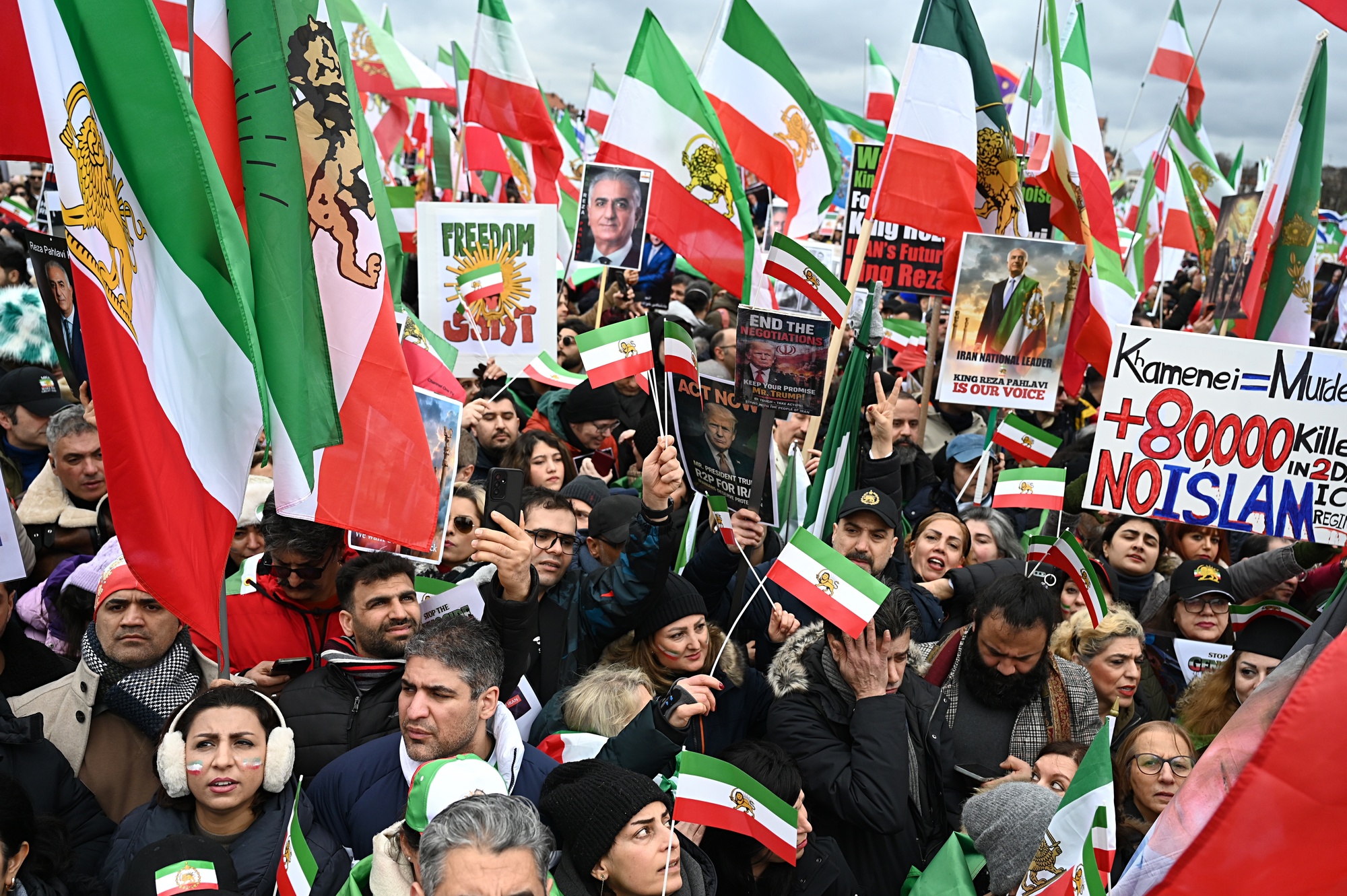
Why the demonstration took place alongside the Munich conference
According to DPA citing Munich police, on Saturday, February 14, around 200,000 people took part in a rally against the suppression of protests in Iran — twice as many as organizers from Munich Circle had expected. The time and place were chosen deliberately: with political and military leaders gathered in the city, the protest was intended to turn public solidarity into additional diplomatic pressure.
"According to law enforcement estimates, the large demonstration gathered about 200,000 people."
— Munich police (via DPA)
What participants say and who is counting the victims
Demonstrators voiced support for Reza Pahlavi — a figure of the opposition movement who publicly calls for international intervention. Human rights network HRANA reports that more than 7,000 people have been killed as a result of the repression against protesters in Iran; activists fear the real number may be higher due to restrictions on communications and access to information.
"More Iranians are dying every day in Iran. Only swift intervention can save lives and improve regional security."
— Reza Pahlavi, opposition politician
Political impact: negotiations, pressure and risks
The rally strengthens the position of those who argue that talks between Washington and Tehran need to take human rights into account. Pahlavi has already warned that ordinary diplomatic concessions could "cost lives" if not accompanied by security guarantees for protesters. Against this backdrop, the planned new talks in Geneva on February 17 take on a different context: they are happening at the same time as American negotiations on Ukraine and Russia, complicating prioritization in Washington.
Why this matters for Ukraine
Ukraine is interested in stable, predictable partners and clear international mechanisms for responding to human rights violations. The large public mobilization in Europe shows that public resonance can force diplomats to take humanitarian arguments into account alongside security and strategic interests — which strengthens the overall norm of holding authoritarian regimes to account.
Conclusion
The mass march in Munich is not only an expression of solidarity. It is an instrument of influence: wide streets are turned into an additional argument in negotiating rooms. Whether international pressure will translate into concrete steps — from sanctions to mechanisms for protecting human rights — depends on the next actions of leaders at the Munich conference and the outcomes of the planned talks in Geneva. For now the main question is simple: can diplomats combine security and the protection of civilians in real decisions, not just declarations?
Sources: DPA, Munich Circle, HRANA.



