690 attack weapons, 4 killed, "Oreshnik" on Bila Tserkva: what happened during the night of May 24
Russia used 90 missiles and 600 drones — more than Ukraine's air defense can intercept simultaneously. The main target was Kyiv, where 30 buildings were damaged and one of the capital's oldest markets was set on fire.

By Tetiana Suchkova-Ladik
May 24, 2026 · 2 min read
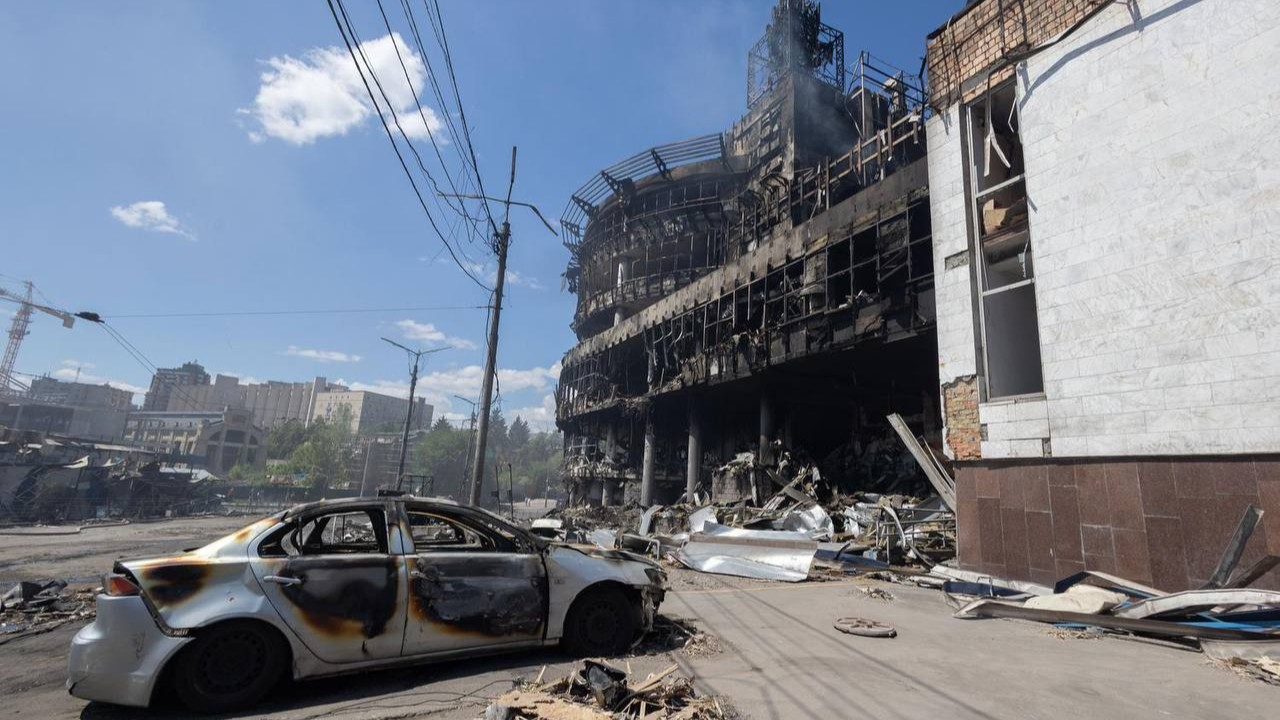
On the night of May 24, Russia delivered one of the most massive combined strikes on Ukraine in the past year: 690 air attack assets — 90 missiles and 600 drones. The main target was Kyiv. The attack lasted over four hours.
What was flying and from where
According to the Air Force of the Armed Forces of Ukraine, Russia deployed: 1 medium-range ballistic missile ("Oreshnik"), 2 aeroballistic "Kinzhals", 3 anti-ship "Zircons", 30 ballistic "Iskanders-M/S-400", 54 cruise "Kh-101/Iskander-K/Kalibr" missiles and 600 strike UAVs — "Shaheds", "Herbis", "Italmasis", "Banderol" and decoy drones "Parody".
Launches were conducted from Bryansk, Kursk, Vologda regions of Russia, temporarily occupied Crimea, and the Black Sea waters. The "Oreshnik" struck Bila Tserkva — the first strike of this type of weapon on Kyiv region.
What was intercepted
Air defense destroyed or neutralized 604 targets: 55 missiles and 549 drones. According to preliminary data, 19 missiles failed to reach targets for other reasons — information is being clarified. As of 09:30, hits from 16 missiles and 51 strike UAVs were recorded at 54 locations.
Why missiles became the main problem
"Missiles caused the main part of the damage again. Unfortunately, there were too many missiles for our air defense resources."
Serhiy "Flash" Beskrestnov, adviser to the defense minister
Beskrestnov explained the structural reason: Ukraine's available air defense systems do not allow intercepting an entire missile volley when it comes to a concentrated massive strike on a specific city. That is why, despite record work on drones, missiles caused the main destruction.
At the same time, a better than usual ratio was recorded for drones: the share of interceptors among all destroyed missiles exceeded 40%, and 95% of UAVs were destroyed or neutralized — a figure higher than the average for the past six months, Flash noted.
By his assessment, Russia did not employ any new tactical or technological solutions. The emphasis is on mass, not effectiveness: hundreds of "Shaheds" flew along the same routes to overload air defense, "Gerani-3" and "Gerani-4" attacked Kyiv from the north. No attempts to control drones from the territory of Belarus were recorded this time.
Consequences
- Kyiv: two killed, 77 wounded, at least 30 residential buildings damaged, schools and one of the capital's oldest food markets affected; the strike affected all districts of the city
- Kyiv region: "Oreshnik" strike on Bila Tserkva, two killed in Bucha and Obukhiv districts, nine wounded; direct hit on a high-rise building in Vyshgorod
- Cherkasy: a drone hit a residential building, 11 injured, including children; a fire covering 400 sq. m was extinguished
- Across the country: according to President Zelenskyy, approximately 100 injured, four killed
Zelenskyy called the attack evidence that Russia continues to deliberately strike civilian infrastructure and residential areas, and spoke with French President Macron and Norwegian Prime Minister Støre.
If Russia repeats an attack of the same intensity before Ukraine receives additional interceptors — the air defense system will again find itself in a mathematical deficit situation: it lacks not skill, but air defense missiles.



