690 weapons strikes, two killed in Kyiv — EU promises air defense and summons Russian ambassador
On the night of May 24, Russia launched 90 missiles and approximately 600 drones against Ukraine. Kyiv sustained damage in all districts; Brussels responded with a summons to the ambassador and promised new air defense aid.

By Tetiana Suchkova-Ladik
May 24, 2026 · 2 min read
On the night of May 24, Russia carried out one of the most massive combined attacks on Ukraine since the beginning of 2025. According to the Ukrainian Air Force, from 6:00 PM on May 23, the enemy deployed 690 air attack weapons — 90 missiles of various types, including 36 ballistic missiles, and approximately 600 attack drones.
What happened in Kyiv
Kyiv was the main target of the attack. According to President Volodymyr Zelensky, "the most hits were in Kyiv, and Kyiv itself was the main target of this Russian attack." Damage was recorded at more than fifty locations across all districts of the capital.
Residential buildings, shopping centers, educational facilities, a market on Lukyanivska Street, administrative buildings of the State Emergency Service and police, as well as the National Museum "Chornobyl" were hit. Debris fell on a private house in the Sviatoshyn district. The entrance to the Lukyanivska metro station was damaged and the exit to Khreshchatyk was temporarily closed.
According to Kyiv City State Administration, two women died in Kyiv — an 86-year-old and a 44-year-old. The number of injured in the capital rose to 62 people, including two children. Across Ukraine at the time of reporting — at least 83 injured.
Analysts detected a tactical shift: as reported by 24 Kanal, this time Russia reduced the share of decoy drones and focused on Kh-101 cruise missiles, Kalibr, and Iskander-K, and also deployed an anomalous number of air-based ballistic weapons in a short time.
Brussels' response: words and actions
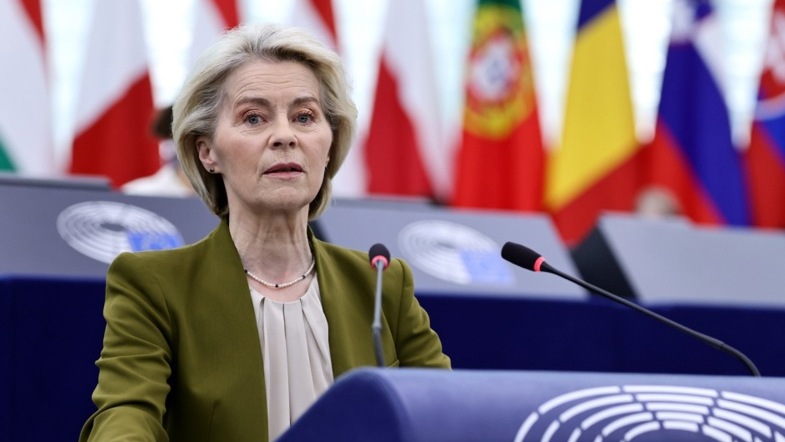
"Russia's massive attack on Ukraine last night demonstrates the brutality of the Kremlin and its contempt for both human life and peace negotiations. Terror against civilians is not strength. It is desperation."
Ursula von der Leyen, President of the European Commission, X
Von der Leyen announced that the EU will soon provide Ukraine with additional assistance to strengthen air defense. Separately, she confirmed the completion of a drone support package of 6 billion euros.
Head of EU diplomacy Kaja Kallas went beyond words: she reported that the EU representation building in Kyiv sustained damage — two Russian missiles struck within 50 meters of the delegation. In response, Kallas summoned Russia's ambassador to Brussels.
"No diplomatic mission should ever be a target."
Kaja Kallas, High Representative of the EU, X
Context: strike amid negotiation pressure
The attack occurred against the backdrop of active diplomatic efforts around a ceasefire. The day before, Zelensky publicly warned that according to partners, Russia was preparing a strike with the Oreshnik ballistic missile and called on Kyivans to respond to air raid warnings. The scale and tactics of the strike itself — maximum city coverage with minimal air defense response time — fit the logic of demonstrating force before any framework agreements.
The EU has promised air defense more than once. The question is whether von der Leyen's "soon" will this time translate into concrete systems before the next massive strike — or will it remain just another declared intention without a delivery timeline.



