70 days on foreign business trips: how the Financial Monitoring Service chief's travels undermine trust in oversight of state funds
An investigation by Bihus.Info shows: Filip Pronin spent more time abroad than the official events lasted. This is not just a statistic — questions of trust and the effectiveness of oversight of defense spending are becoming critical.

By Tetiana Suchkova-Ladik
February 19, 2026 · 3 min read
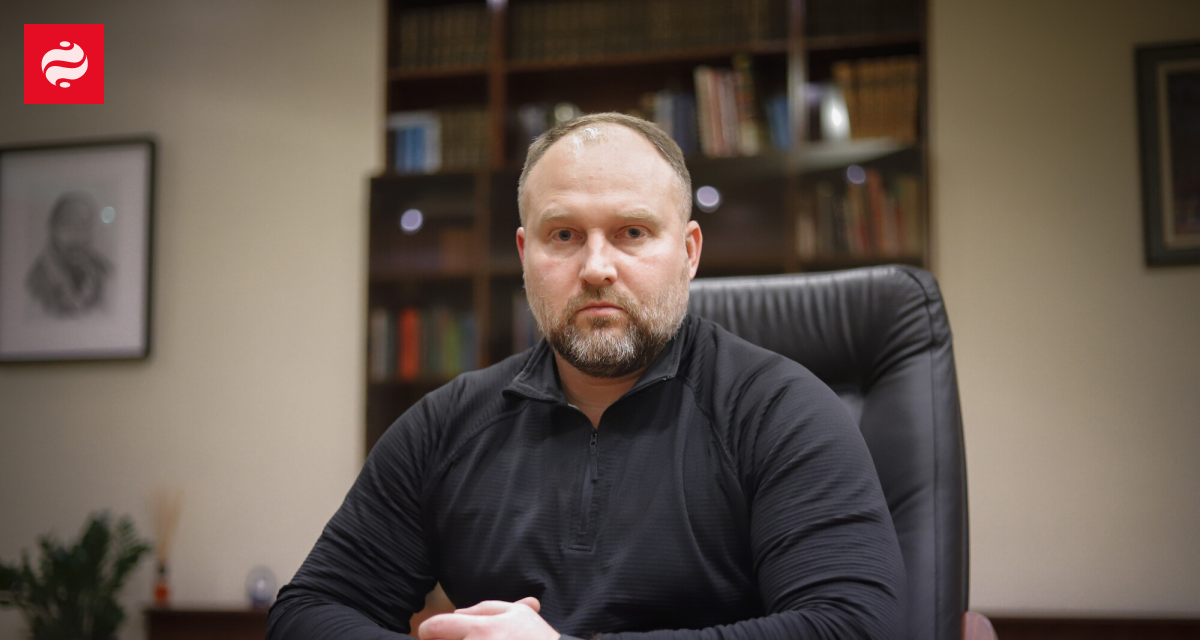
In a large field — details that matter
An investigation by Bihus.Info found that in his first year as head of the State Financial Monitoring Service (SFMS) Filip Pronin spent about 70 days on foreign business trips. The trips were recorded to Tanzania, Mexico, France (trips to Paris and Strasbourg), Luxembourg and Switzerland — sometimes significantly longer than the official events for which, on paper, they were undertaken.
What the journalists found
Key findings from the investigation:
- Some trips coincided with meetings of parliamentary temporary investigative commissions (TICs), where Pronin was supposed to give explanations, including on cases related to the financing of defensive works.
- At the TIC meeting on "Mindichgate" at the end of January the head of the SFMS was on sick leave, but the next day he was in Tanzania at a meeting of the Egmont Group; in documents the trip is marked as work-related, although the meeting lasted four days and Pronin was there for 11.
- In February 2025 Pronin published information about the business of the fifth president that became a basis for sanctions, and then travelled to Paris — increased activity abroad amid political pressure on the agency.
- Throughout the year there were several high-profile events at the SFMS: searches of the service’s leadership, and a NABU (National Anti-Corruption Bureau of Ukraine) investigation into possible abuses in the construction of fortifications (372 million UAH is mentioned, of which at least 200 million UAH may have been misappropriated, according to an MP).
- In November NABU carried out "Midas" operation. In that case Financial Monitoring should have provided critical transaction data, but, according to the head of NABU, law enforcement waited "anomalously long" for some requests.
"Bihus.Info’s investigation indicates: in his first year in office Pronin spent 70 days on foreign business trips"
— Bihus.Info (investigation)
Why this matters for citizens and for defense
Financial Monitoring is the agency that has access to transaction data, chains of asset extraction and risky schemes. When its head is frequently abroad for longer than the international events last, it creates several risks:
- Lost time in coordinating with investigations: investigators and anti-corruption bodies expect information from the SFMS at critical moments.
- Loss of trust — a state body that controls the movement of funds must act transparently and promptly; suspicious trips undermine that trust.
- Risk of sabotage or informational gaps in investigations, especially when millions of hryvnias allocated for defensive works are at stake.
"For some requests law enforcement waited anomalously long"
— Semen Kryvonos, head of NABU (according to media reports)
What institutions say and possible consequences
The Cabinet of Ministers appointed Pronin on 31 December 2024. At the same time, NABU is investigating cases in which Financial Monitoring should have been a key partner in providing data. If the timeliness of the supervisory body declines, this affects the pace of investigations and the ability to bring those responsible to account.
What to do next (brief and pragmatic)
Public interest should turn into concrete steps: a public schedule of the official’s trips and tasks, an independent review of the SFMS’s effectiveness in key investigations, and rapid response to law-enforcement requests. Citizens and partners have the right to expect from state bodies not only declarations but also operational work with documents and transactions.
The question is not whether the head of the service is abroad — that is normal for international cooperation. The question is one of proportion: are the lengths of stay justified, is there a full report on work results, and do these trips not hinder the fulfilment of critical tasks in protecting state interests?
Conclusion: Bihus.Info’s investigation poses a simple task to the authorities — ensure transparency and responsiveness in the service that must monitor money flows during wartime. Without such guarantees, trust in financial oversight will remain an open question.



