700 Azovstal fighters in captivity: condemned, forgotten, replaced?
More than 700 servicemen of Azov remain in Russian captivity. 250 of them have been sentenced for "war crimes" — a status that Russia uses as a legal barrier against their exchange.

By Tetiana Suchkova-Ladik
May 20, 2026 · 2 min read
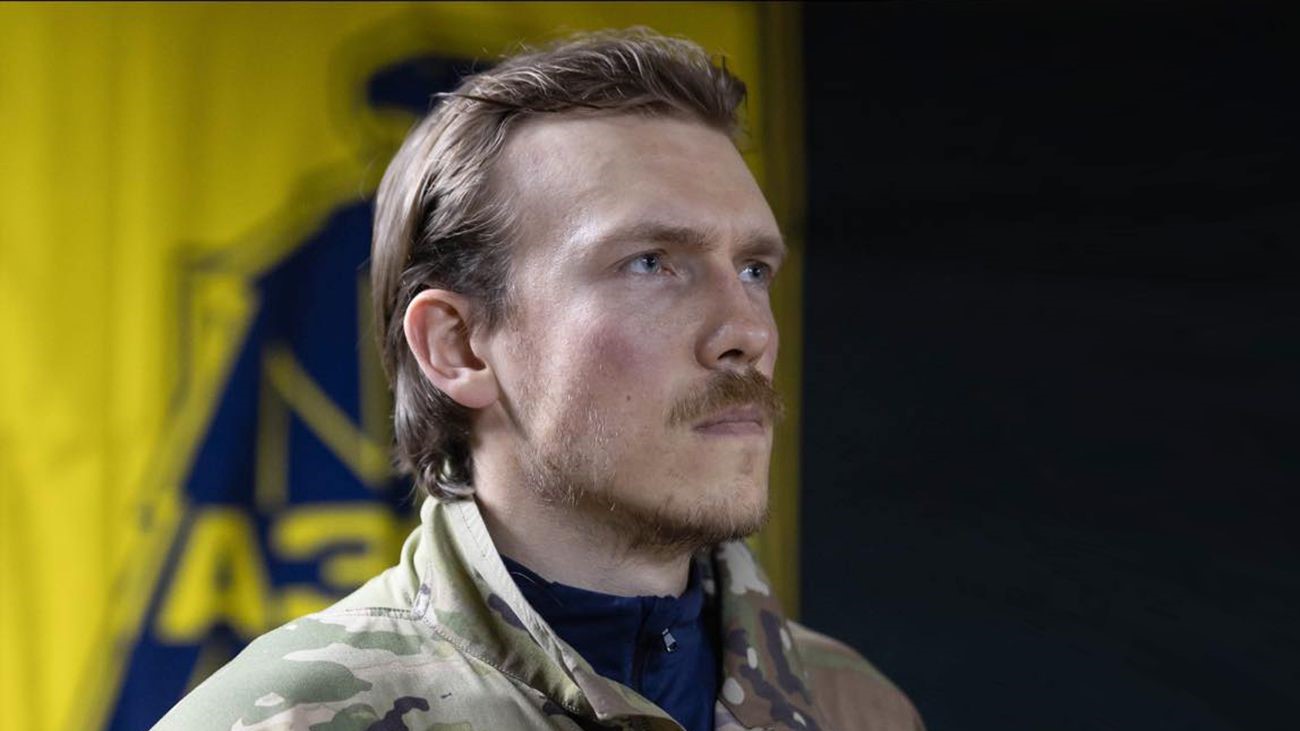
Sergiy Volina left "Azovstal" in May 2022 as one of the last commanders. Today he is free. But more than 700 of his brothers-in-arms are not. And their return is being blocked not only by Moscow's political will, but also by decisions of Russian courts.
According to Ukrainian sources, approximately 250 Azov servicemembers have been sentenced in Russia on charges of so-called "war crimes." Russia consistently refuses to include them in exchange lists, citing the verdicts — essentially reclassifying them from the status of prisoners of war to "convicted criminals."
A Legal Trap
The Geneva Convention protects prisoners of war from criminal prosecution for participation in combat operations. However, Russia does not recognize Azov as a regular unit of the Armed Forces of Ukraine — despite the fact that the battalion was officially integrated into Ukraine's National Guard back in 2014. This allows Moscow to construct a separate legal framework for a specific group of captives.
Human rights advocates from Amnesty International and Human Rights Watch have documented that trials of Ukrainian military personnel in Russia take place without access for independent observers, without proper legal representation, and typically end in guilty verdicts.
Exchanges Exist — But Are Selective
Since 2022, Ukraine has conducted dozens of exchange rounds. According to Petra Parlova, coordinator of the Coordination Headquarters on the Treatment of Prisoners of War, exchanges occur regularly, but Russia systematically excludes those who have been charged with criminal offenses from the lists.
This means that 250 convicted Azov fighters exist in a legal zone where the exchange mechanism effectively does not work — unless Moscow agrees to a political deal outside standard procedures. Precedents exist: several Azov commanders, including Denys Prokopenko, were released in September 2022 as part of a separate agreement involving Turkey and Saudi Arabia.
Families Are Pressured — The State Is Silent
The families of captured Azov fighters have repeatedly held rallies outside the President's Office, demanding transparency in the negotiation process. Their complaint is specific: they do not know whether their relatives are included on priority lists, or by what criteria these lists are formed.
Kyiv's official position is that negotiations are ongoing and details are not being disclosed for security reasons. This is a standard and in some ways justified response. But it does not explain why, two and a half years after the fall of Azovstal, more than two-thirds of the fighters are still not home.
What Comes Next
As long as Russia uses legal verdicts as a tool to block exchanges, standard mechanisms will not work. The question is whether Kyiv — and its partners — is ready to offer Moscow a sufficiently significant equivalent so that these verdicts suddenly "cease to be an obstacle": as already happened with the commanders in 2022.
If so — then why has this approach not yet been scaled to the remaining 250?



