731 weapons in one day: Russia attacked Ukraine twice on May 13-14 — during the day and at night
First — nearly 800 drones across the country, then — 56 missiles and another 675 unmanned aircraft at night. Kyiv was hit in six districts, one person killed.

By Tetiana Suchkova-Ladik
May 14, 2026 · 2 min read
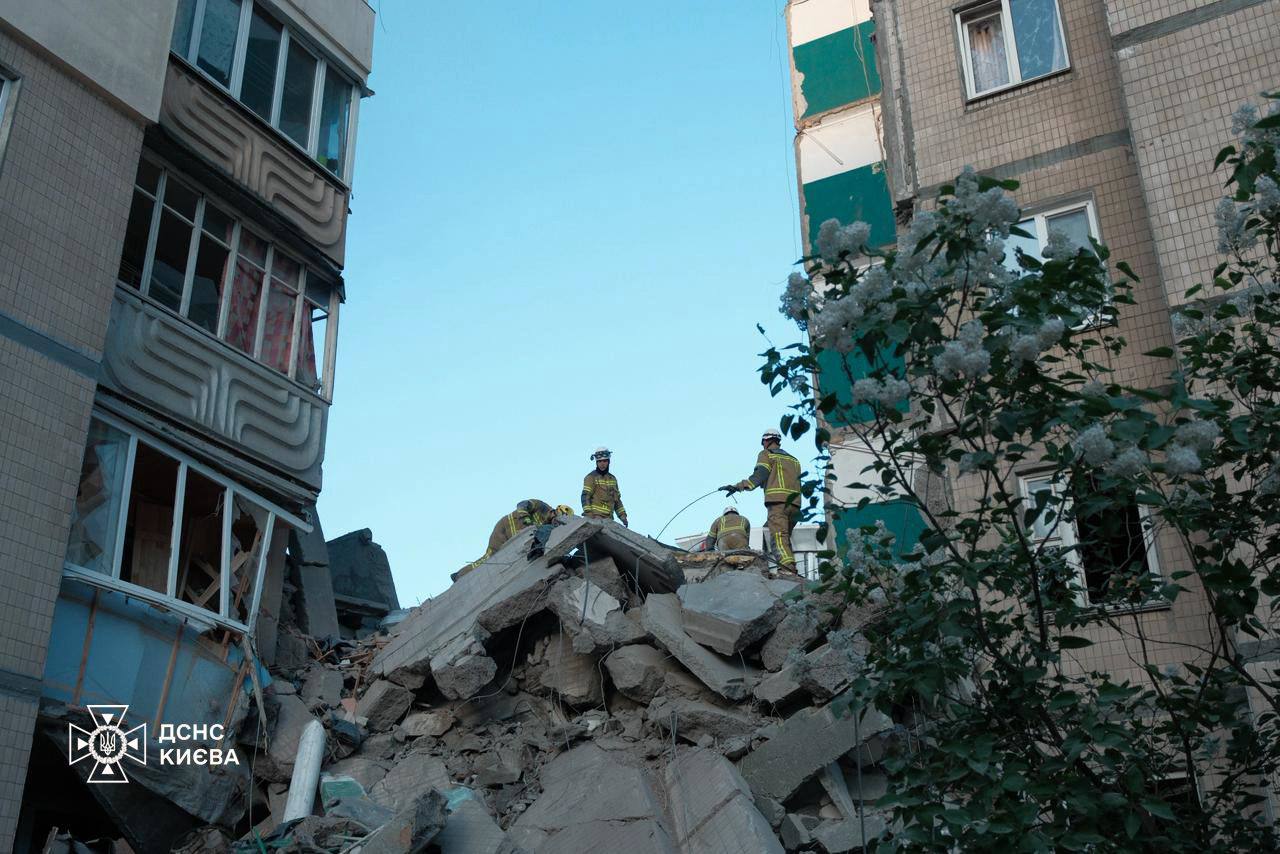
Russia delivered two consecutive strikes on Ukraine: first a massive daytime attack, then a nighttime combined assault. Over the course of one day, radio-technical troops of the Air Force of the Armed Forces of Ukraine recorded over 1,400 air attack means.
How it unfolded
The daytime attack began on May 13 at approximately 8:00 AM and lasted until evening. Russia launched in waves over 800 attack drones—Shaheds, reactive Shaheds, Gerbers, Italmases, and Parody decoy drones. A distinctive feature of the attack, as recorded by the Air Force: Russia used the airspace of Belarus and Moldova for the assault. The primary vector was western Ukraine: Zakarpattia, Lviv region, Volyn, Rivne region, and Ivano-Frankivsk.
As of 6:30 PM, air defense forces neutralized 710 drones. There were 36 confirmed hits and debris falls recorded at 26 locations. Among confirmed targets was railway infrastructure: presidential adviser Dmytro Lytvyn reported 23 hits on Ukrainian railway facilities during the day. As a result of the daytime strike, at least 6 people were killed and over 80 were injured.
"Russia's obvious goal is to overload air defense and cause as much suffering and pain as possible in these days."
President Volodymyr Zelensky, May 13
Without waiting for the daytime attack to conclude, from 6:00 PM on May 13, the adversary launched a second wave—a nighttime assault. According to the Air Force, this time 56 missiles and 675 drones were used: 3 Kh-47 Kinzhal aeroballistic missiles (from Lipetsk region), 18 Iskander-M/S-400 ballistic missiles (from Bryansk and Kursk), 35 Kh-101 cruise missiles (from Vologda region). Around 3:00 AM, a massive cruise missile barrage began.
What happened in Kyiv
The main impact of the nighttime attack fell on the capital. Debris from destroyed missiles and drones was recorded in six districts. In Darnytskyy district, a residential building partially collapsed, with people trapped under the rubble—a search and rescue operation was underway. On the left bank, water supply disruptions were recorded. Kyiv City Military Administration head Tymur Tkachenko reported one person killed and at least 16 injured in the city; later the number of wounded increased to 29. Several districts of Kyiv region were also affected—seven people wounded in total, including one child.
Air defense neutralized 41 missiles and 652 unmanned systems. The response to the attack was provided by aviation, air defense missile forces, radio-electronic warfare units, mobile fire groups, and unmanned systems units.
Context: why now
Zelensky directly pointed to the geopolitical moment: the attack began on the day when U.S. President Donald Trump was visiting China for negotiations with Xi Jinping. In the Ukrainian president's view, Moscow was trying to remind the world of its presence during this diplomatic moment. The attack also coincided with a week after negotiations in Istanbul—the first direct contacts between Russia and Ukraine since 2022, the only confirmed result of which was an agreement to exchange 1,000 prisoners for 1,000.
Foreign Minister Andrii Sybiha, commenting on the strike on social media, called it "clear proof of the need to strengthen sanctions pressure on Moscow."
If after the Istanbul negotiations Russia delivered record strikes twice in one day, the next indicator of the Kremlin's true intentions will be its actions in the first weeks following any new negotiation rounds—whether the number of attack means used will decrease even statistically.



