€800 billion for defense — and no one to manufacture weapons. EU staffing crisis in figures
The European Union has promised to increase defense spending to €800 billion per year, but a quarter of defense industry engineers are nearing retirement, while young people are moving into IT. EUROMIL President Emmanuel Jacobs has called this a pan-European crisis that governments prefer to ignore.

By Tetiana Suchkova-Ladik
May 6, 2026 · 3 min read
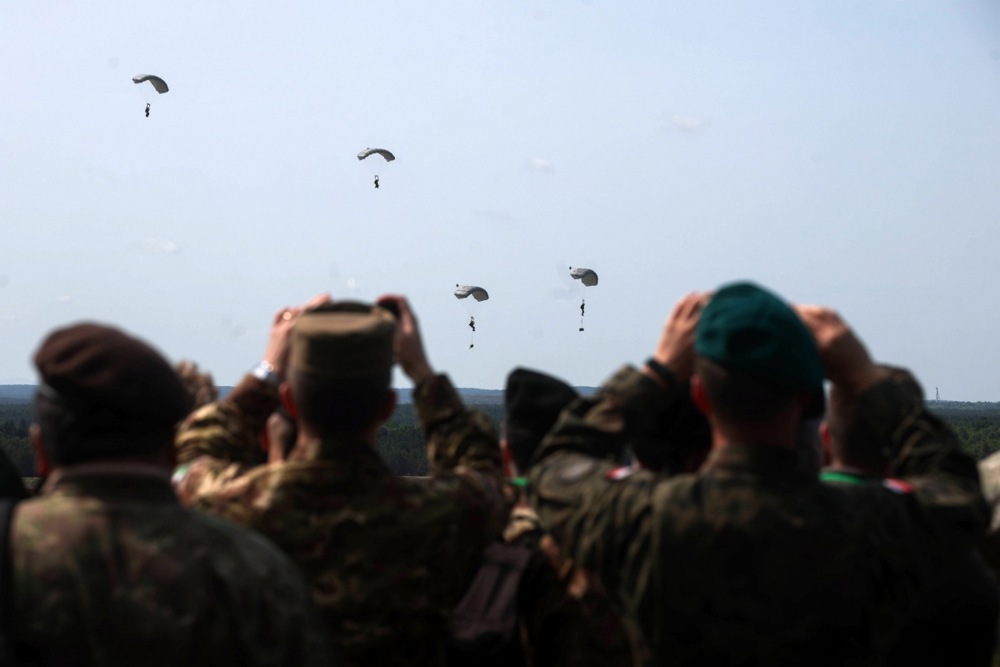
At the European Defense Roundtable in Brussels, Emmanuel Jacob, president of the European Organization of Military Associations and Trade Unions (EUROMIL), stated something many EU governments prefer not to voice: the shortage of personnel in the defense sector is not a localized problem of an individual country, but a systemic crisis affecting the entire bloc. And it directly threatens Europe's rearmament plans.
The Money Is There. The People Are Not
Following the NATO summit in The Hague in June 2025, allies agreed on a new threshold — 3.5% of GDP for defense by 2035. According to McKinsey calculations, by 2030 alone, the combined defense spending of European NATO members could reach €800 billion per year. The problem is that according to consulting firm Kearney's estimates, even raising spending to 3% of GDP requires 760,000 new qualified workers across Europe — and no one knows where to find them.
Figures from the CEO of HR giant Randstad, published by Fortune in June 2025, illustrate the scale: 25% of EU defense engineers and technicians are on the verge of retirement. Staff turnover in the sector stands at 13% — four times higher than in the United States. Engineers are leaving for IT and automotive manufacturing, where salaries are 20–50% higher for comparable positions.
The Factory Front Lines Reality
Franco-German manufacturer KNDS, which produces CAESAR howitzers for Ukraine, has switched to continuous shifts at its Bourges plant and increased annual personnel hiring by 50%. However, KNDS recruitment director Nicolas Chamussy warned about the limits of such an approach.
"We are in a war economy, but also in an economic war. If our salaries rise uncontrollably — we will lose competitiveness"
Nicolas Chamussy, KNDS Recruitment Director
KNDS representative Gabriel Massoni explained the essence of the problem more frankly: manufacturing a howitzer is not the same as assembling a car. The specific competencies that the defense industry requires simply do not exist in the labor market in sufficient quantity.
A similar picture is described by the Aerospace, Defense and Security Industries Association of Europe (ASD): a critical shortage of specialists in AI, cybersecurity, systems engineering, and software development. Leonardo, with 53,000 employees worldwide, also speaks of "growing difficulties" and emphasizes: the problem is not just the war — it is deepened by the industry's rapid digitalization.
Why Governments Remain Silent
According to Jacob, most EU governments acknowledge the deficit behind closed doors but avoid public discussion — because admitting a personnel crisis in defense is equivalent to admitting that ambitious rearmament plans are not backed by real human resources. This is an inconvenient truth against the backdrop of loud figures about budget increases.
EUROMIL analysts in their 2025 report state: Europe "has become stronger on paper, but remains fragile in its human core." Industrial strategies and budget commitments cannot compensate for staff shortages — and no EU procurement directive will solve this.
- Staff turnover in EU defense — 13%, in the US — around 3%
- 25% of engineers and technicians in the industry are approaching retirement age
- 760,000 new specialists are needed just to reach 3% of GDP spending
- Up to 3.9 million people — projected shortage of technical talent in the EU by 2027 (McKinsey)
If the EU does not launch a systemic program for training defense specialists — with real funding, not declarative "skills strategies" — by 2030, half of the promised €800 billion risks turning into orders without executors. The question is not whether there will be enough money. The question is whether Poland's, France's, and Germany's youth will agree to build weapons instead of writing code — and what exactly governments are prepared to offer them in return.



