Army as guarantor: Zelensky on 'normal contracts' and additional funding for the Armed Forces of Ukraine
The President proposed making the army’s combat component one of the elements of security guarantees — we examine how this will work in practice and who will pay to maintain professional forces.

By Tetiana Suchkova-Ladik
December 16, 2025 · 2 min read
Briefly
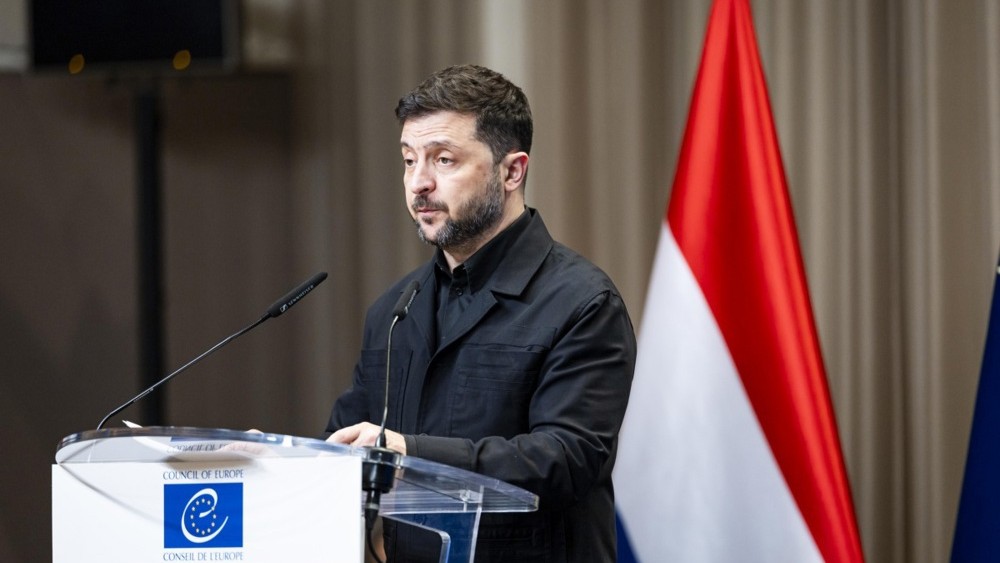
At a press conference with the Prime Minister of the Netherlands, Volodymyr Zelensky outlined the idea that after victory the Armed Forces of Ukraine (AFU) could become one of Ukraine's security guarantees. For this, he said, additional funding and "proper contracts" for those who want to remain in the military are needed.
What the president actually said
Zelensky emphasized that Ukrainian society and the army have already demonstrated the ability to mobilize, but relying solely on that is risky. Instead, he proposes to establish institutional mechanisms to retain personnel after the war.
The army worked, and the people of Ukraine mobilized. To expect the same thing again is wrong. One should count on the fact that there are people who changed professions, who learned to be soldiers — and after the war, it is their right, they will return home.
— Volodymyr Zelensky, President of Ukraine
How this could look in practice
This involves a combination of domestic and external funding: state budgets, multi-year international support packages, and targeted contracts for service members. The goal is to preserve human resources and the skills acquired in the "new technological war." Key mechanisms are stable salaries, training, social guarantees, and civilian career trajectories for veterans.
What the data and analysts say
On December 11 the president reported that in the current version of the American peace plan the size of the AFU is listed as 800,000 people — a number that corresponds to the actual level of mobilization today. Analysts note that with the help of partners it is technically possible to maintain a significant professional army after the war; in particular, in an article for LIGA.net analyst Badrak estimates that the country can financially and organizationally support a half‑million force provided there are long-term commitments from partners.
Why it matters to the reader
This is both a security and an economic issue: retaining trained servicemembers is an investment in defense capability, but also in jobs and local economies. If partners agree to multi-year financial formats, it will reduce the risk of renewed degradation of personnel and make it possible to plan reconstruction with human capital in mind.
Conclusion
The idea of making the AFU one of the security guarantees is not a slogan, but a proposal to combine combat experience with mechanisms of financial stability. The next step is to turn words into concrete programs and signed agreements with partners: whether we will have such contracts is a question of politics and money, on which the security of every Ukrainian depends.



