Artillery as a reflex: how "Azov" methodically breaks down the combat capability of occupiers
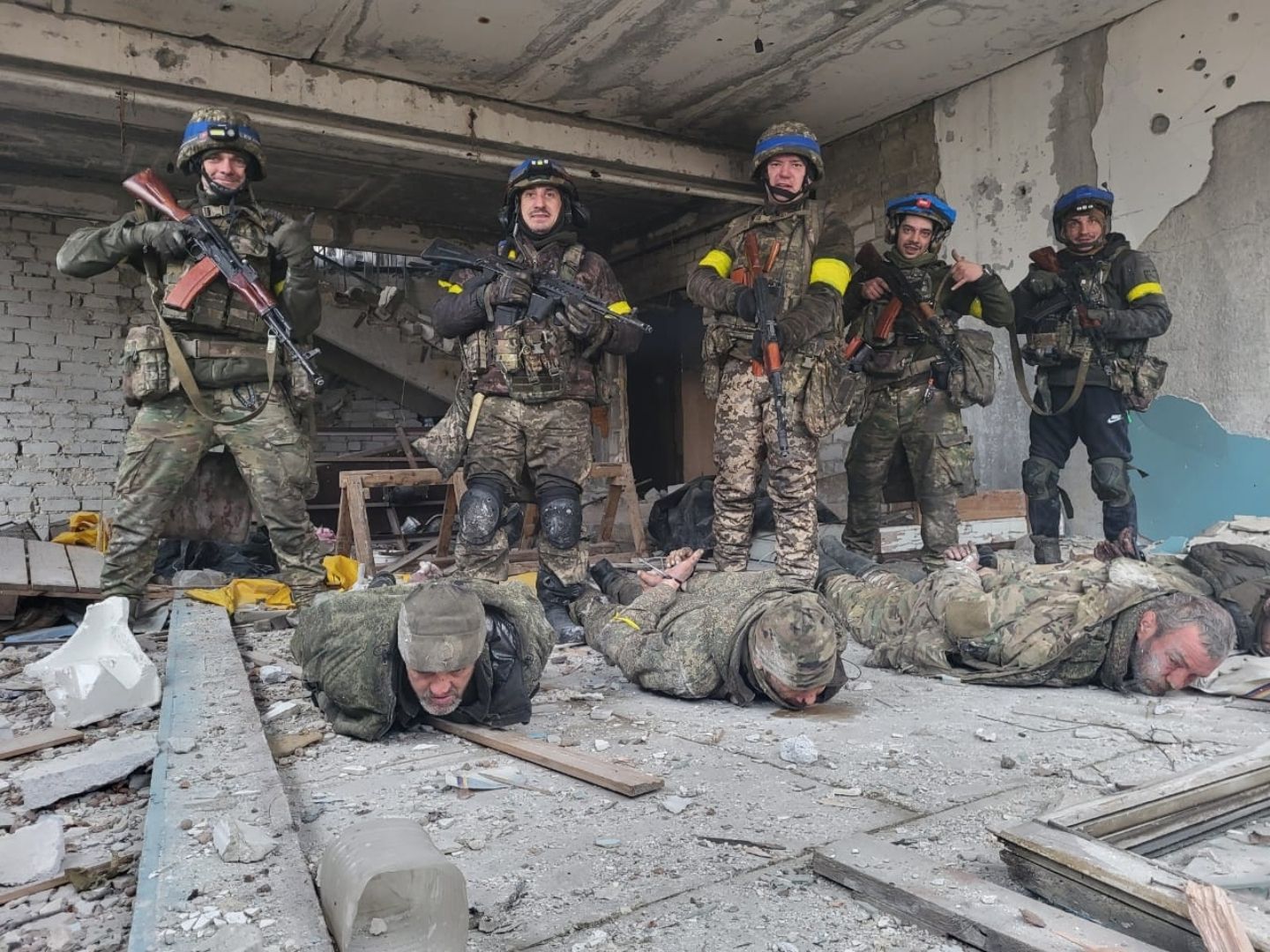
First Deputy Commander of the 12th Special Purpose Brigade "Azov" Lev Pashko described the tactics of continuous fire pressure, which, according to him, develops a conditioned reflex in Russian soldiers and has already yielded concrete results: 24 prisoners captured in a single day with no losses on their side.

By Tetiana Suchkova-Ladik
April 8, 2026 · 2 min read
Lieutenant Colonel Lev Pashko — Hero of Ukraine, veteran of the defense of Mariupol, currently commander of a battalion of the 12th Special Purpose Brigade "Azov" of the National Guard — described an approach to fire pressure that the brigade applies systematically. The essence is not in a single strike, but in the rhythm.
"I tell officers: train the Russians. Artillery must work from morning to evening so they are trained: as soon as there's movement — open fire. This breaks them methodically".
Lev Pashko, first deputy commander of the 12th "Azov" Brigade of the National Guard, for LIGA.net analysis
The word "training" here is not a metaphor for rhetorical effect — it is a description of a specific behavioral mechanism. Constant fire response to any movement develops a conditioned reflex in a soldier: immobility becomes the only survival strategy. A unit that does not move, does not attack, does not rotate and does not resupply — is withdrawn from combat without direct assault.
Results That Can Be Measured
In "Azov," they cite a specific episode: thanks to the method of continuous fire pressure, brigade fighters captured 24 Russian servicemen in one day — with no losses on their side. Details regarding direction and date are not disclosed in the public version for operational security reasons. Previously, the brigade publicly reported taking prisoners on the Kreminna direction, where cases were recorded when occupiers surrendered after coming under fire from their own artillery.
In parallel — and this is an important tactical context — the commander of the drone group of the same brigade noted: the time from target detection by reconnaissance drone to FPV strike today is between 30 to 90 seconds. Artillery and drones mutually reinforce each other in this system: artillery forbids movement, drones prevent evacuation and rotation.
Why This Is Not Simply "Psychological Pressure"
The psychological effect here is derivative of the tactical effect, not the other way around. A soldier conditioned for months not to move at the sound of gunfire loses initiative — and this directly affects the unit's ability to perform offensive tasks. That is why Pashko speaks of "breaking" — not emotional, but functional.
At the same time, the effectiveness of the method depends on one critical resource: continuous supply of artillery ammunition. "From morning to evening" — this is not rhetoric, but a logistics requirement. If the rate of fire drops, the conditioned reflex begins to fade.
If the pace of 155-mm shell supplies from allies in the second half of 2025 remains at the level of the first half — will "Azov" have enough ammunition to maintain this rhythm across the entire brigade's area of responsibility?



