Astrologer from Telegram channel "Lunar Hours" may have influenced top Ukrainian government appointments
# Translation The Schemes outlet has identified the person behind "Veronika Fengshui Office" from materials in the Yermak case: 51-year-old Kyiv astrology consultant Veronika Anikiyevych appears in correspondence regarding the appointment of a prime minister, health minister, and Yermak's deputy chief of staff Tatarova.

By Tetiana Suchkova-Ladik
May 13, 2026 · 2 min read
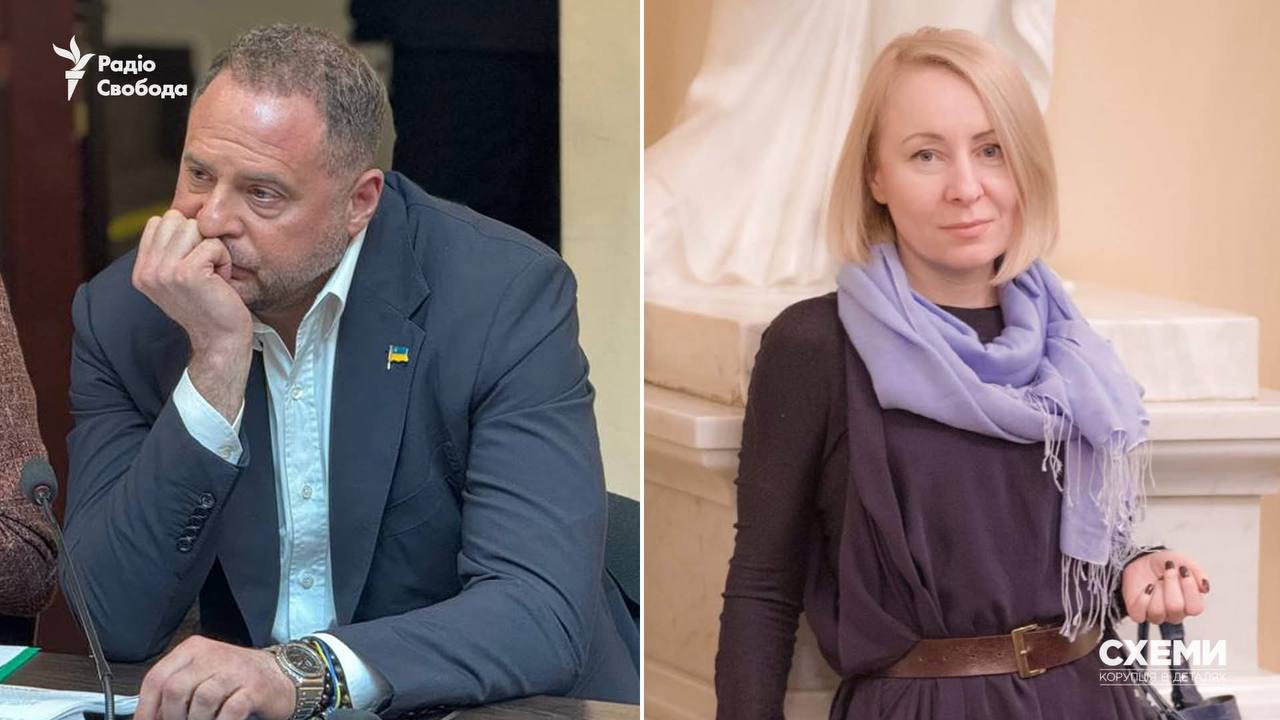
The VACS is holding hearings on the choice of a precautionary measure against the former head of the Presidential Office Andriy Yermak, who is suspected of legalizing 460 million hryvnias in elite construction near Kyiv. However, the detail that has attracted attention is one that has no direct bearing on the substance of the suspicion — and is all the more striking for that reason.
Who is "Veronika Fengsui Office"
During a hearing on May 13, SAP prosecutor Valentyna Hrebeniuk revealed the name of a person saved in phone contacts as "Veronika Fengsui Office": according to her, this is Veronika Anikievych. Journalists from Schemes (Radio Freedom) established the details: a 51-year-old Kyiv resident, who also goes by the surname Danilenko (the surname of one of her relatives), runs the Telegram channel "Lunar Hours" and positions herself as an astrology consultant.
On social media, Anikievych actively and publicly supported Yermak. In the phone books of other people, she is saved with two entries: "Veronika Consult. A.B." and "Veronika Anikievich/fortuneteller Yermak" — the latter, apparently someone else's entry, but telling nonetheless.
"Asks for advice about him, writes the date of birth"
— SAP prosecutor Valentyna Hrebeniuk, reading an excerpt from Yermak's correspondence with Anikievych in court
What appointments are mentioned in the case
Among the candidates that Yermak allegedly discussed with the astrologer, the prosecutor's office names: prime minister, minister of health, deputy head of the Presidential Office Oleh Tatrov, and the head of the State Property Management Office Ihor Lysyy — a person who manages state property. The scheme is simple: Yermak would send the candidate's date of birth and receive, apparently, an astrological assessment.
Yermak's defense attorney Ihor Fomin argued in court that his client was communicating with a psychologist. Investigators seized the phone from Anikievych herself during investigative actions. She registered as a sole proprietor only in 2024 — already in the midst of events that became the subject of investigation.
Why this is more important than a curiosity
The mere fact of consultations with an astrologer is not a legal argument and not an element of suspicion of money laundering. But it illustrates the mechanism of personnel decision-making at the highest level of executive power in a country waging a full-scale war: the date of birth of a candidate for the position of deputy head of the Presidential Office is sent not to HR and not to the security service, but to a person with a Telegram channel about the lunar calendar.
This is not unique to Ukraine and not news for those who have been following "Schemes" for years. But for the first time it has sounded not as a rumor — but in the courtroom of an anti-corruption court, from the lips of a state prosecutor, with a quote from the correspondence.
Whether specific decisions about appointments that coincided with the "consultations" will appear in the case materials will be determined by what the investigation managed to extract from Anikievych's phone before it disappeared from view.



