Aviation Corporation United Aircraft Corporation (UAC), known for aircraft, made its debut in missile production — and is already striking Ukraine
GUR Reveals Characteristics of New Cruise Missile Kh-71K "Kovyor": Electronics from Seven Countries, Range Up to 300 km, Warhead – OFAB-250 Aerial Bomb. Next Step – Launch from S-70 Stealth Drone.

By Tetiana Suchkova-Ladik
April 27, 2026 · 2 min read
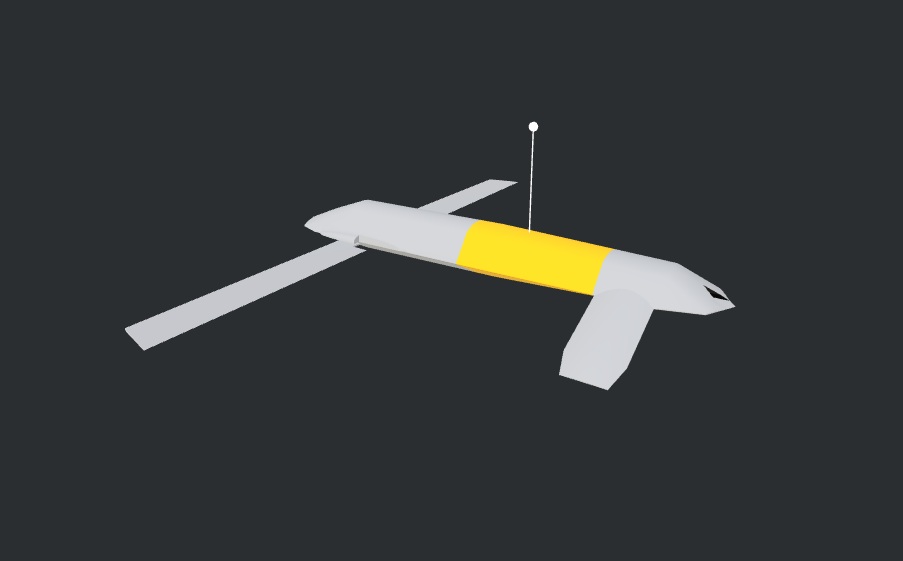
The Main Directorate of Intelligence of the Ministry of Defense of Ukraine has released an interactive 3D model of the cruise missile S-71K "Kover" along with a list of components and an electronic schematic. According to the GUR, the missile was developed by the United Aircraft Corporation (UAC) — a structure that traditionally specializes in aircraft manufacturing rather than missile production. Intelligence officials emphasize that this is likely one of the UAC's first attempts at missile construction.
What's Inside
The warhead is a fragmentation-high-explosive bomb OFAB-250-270 weighing 250 kg, integrated into the structural frame of the nose section. The missile body is made from multilayered fiberglass with aluminum reinforcement. The "Kover" is powered by a turboreactor engine R500 manufactured by LLC "Reynolds" (part of the UAC). Three fuel tanks — one main and two side tanks — provide a probable range of up to 300 km.
The onboard system includes a flight controller, an inertial navigation system based on simple sensors, and a power supply system. However, what is significant is not the architecture, but the origin of the components.
"Maintaining access to foreign technologies and components allows the aggressor state to develop new weapons and scale their use in the war against Ukraine".
— GUR Ministry of Defense of Ukraine
Seven Countries in One Missile
The vast majority of the S-71K's electronics are of foreign manufacture. The GUR identified components from the United States, China, Switzerland, Japan, Germany, Taiwan, and Ireland. The fact itself is not new — a similar pattern is characteristic of the Kh-101 and Kalibr — but for the aviation manufacturer's debut missile, it indicates systemic dependence on parallel imports, which sanctions have not yet completely blocked.
From Su-57 to "Okhotnik"
Currently, the S-71K is designed for launch from the fighter Su-57 — Russia's only fifth-generation fighter aircraft, which the RF has so far hesitated to deploy en masse in the zone of Ukrainian air defense systems. The missile was first used in late 2024. Looking ahead, according to GUR, Russia is considering the possibility of launching it from the heavy attack drone S-70 "Okhotnik" — a low-observable UAV with a wingspan of 19 m and a takeoff weight of 25 tons. Such a carrier could operate without risk to a pilot and potentially complicate interception.
- Range: up to 300 km
- Warhead: OFAB-250-270, 250 kg
- Engine: turboreactor R500
- Carriers: Su-57 (currently), S-70 "Okhotnik" (in prospect)
- Electronics: components from 7 countries, including the US and China
For now, the S-70 remains in limited operation — there is a known case where the Russians lost control of their own "Okhotnik" and it crashed. However, if missile integration with the drone is achieved, a specific question will arise: will Ukrainian air defense be able to intercept "Kover" launched from a carrier with a smaller radar cross-section than the piloted Su-57 — and is there currently an answer to this scenario from partners?



