Ballistics in central Pryluky: two killed, 17 wounded — rocket hit near "Epicentr" and factory
Morning strike on a city nearly 300 kilometers from the front line once again demonstrated that there is no deep rear. The target was likely an industrial facility—civilian infrastructure and people nearby were damaged.

By Tetiana Suchkova-Ladik
May 19, 2026 · 2 min read
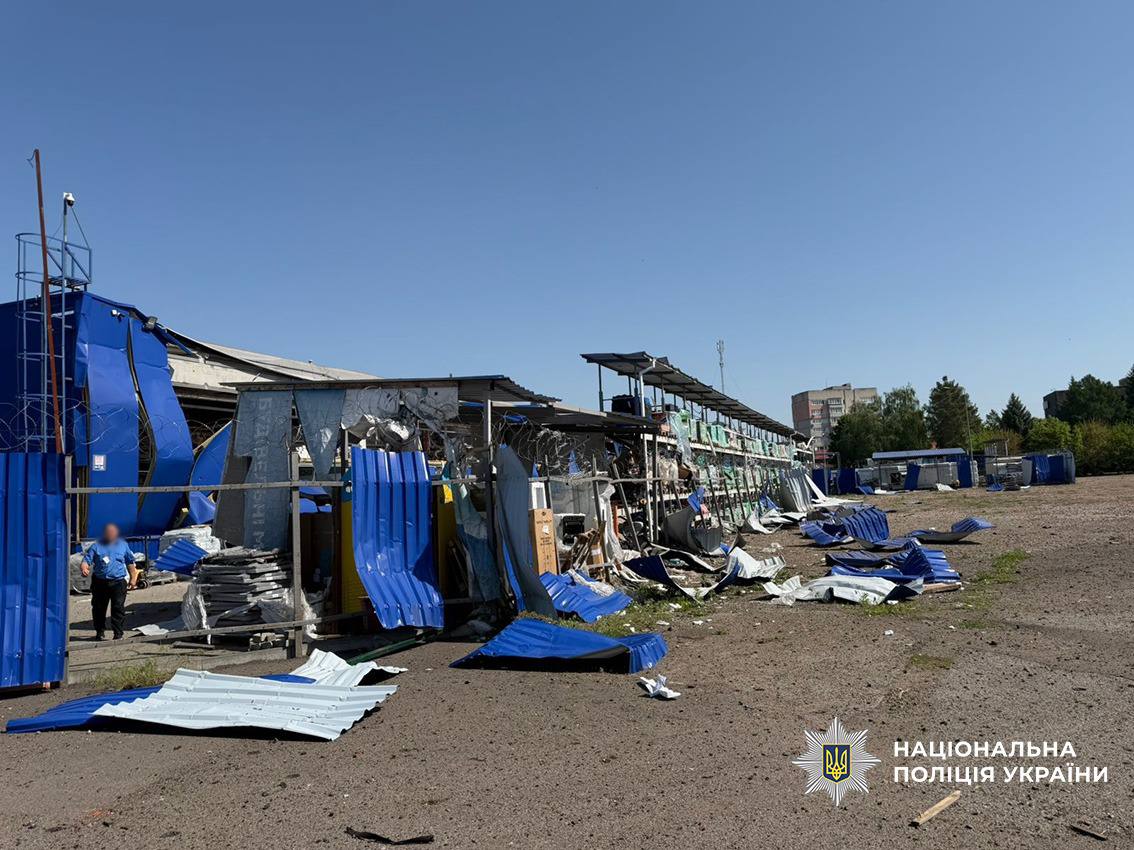
Around 10:00 on May 19, Russia struck the center of Pryluky—a city in Chernihiv region located approximately 280 km from the nearest front lines—with a ballistic missile. According to preliminary data from Chernihiv Regional Governor Viacheslav Chaus, two people were killed and at least 17 were injured, including a 14-year-old child.
What and where was damaged
The missile hit the territory of a non-operational factory in the central part of the city. This was reported by a Suspilne correspondent working at the scene. Adjacent to the impact site, a fire broke out on the roof of the «Epicentr» building supermarket—one of the largest retail facilities in the city. A supermarket, civilian vehicles, and firefighting equipment were also damaged—meaning the emergency response equipment was damaged simultaneously with the strike itself.
«Unfortunately, we already know of two dead people. At least 17 wounded. Among them is a 14-year-old child. Medical professionals are providing everyone with necessary assistance».
Viacheslav Chaus, Head of Chernihiv Regional Military Administration
Police additionally reported damage to several buildings within the impact radius.
Tactical context
Pryluky is not a front-line city. The distance from active combat operations makes this strike an example of Russia using ballistics against deep-rear targets—which is precisely why Russia employs Iskander-M missiles with ranges up to 500 km. The declared target: an industrial facility. Actual result: two civilian deaths and destruction in a residential and commercial district.
According to Militarnyi analysts, in 2025 Russia has already used over 500 ballistic missiles of various types—a pace higher than in 2024, despite sanctions pressure on production chains. Some of these launches involve North Korean KN-23/24 missiles—less accurate but more accessible for replenishing supplies.
Pryluky in broader context
The city has an industrial history—it hosts machinery manufacturing enterprises, some of which are now non-functional or repurposed. Precisely these inactive or partially active factories often become declared targets for Russian strikes: the official logic is «dual-use», the actual consequence is strikes on densely built-up areas.
- Dead: 2
- Wounded: at least 17, including a minor
- Damaged: «Epicentr» supermarket, supermarket, firefighting equipment, civilian vehicles, several buildings
- Time of strike: approximately 10:00
Emergency and medical services are working at the scene. Data may change—especially regarding the number of wounded.
If Russia continues using ballistics against industrial targets in the deep rear at the current frequency, a fundamental question arises—will Ukraine's air defense system manage to receive enough interceptors from the THAAD or Patriot PAC-3 class before the next strike hits not an empty factory, but something worse.



