Banker Who Organized Maidan Logistics: Stepan Kubiv Dies
At the age of 65, people's deputy Stepan Kubiv died suddenly — a man who rose from the position of head of a Lviv bank to commandant of the House of Trade Unions and first vice prime minister of the country. Colleagues cite a blood clot as the cause of death.

By Tetiana Suchkova-Ladik
May 18, 2026 · 2 min read
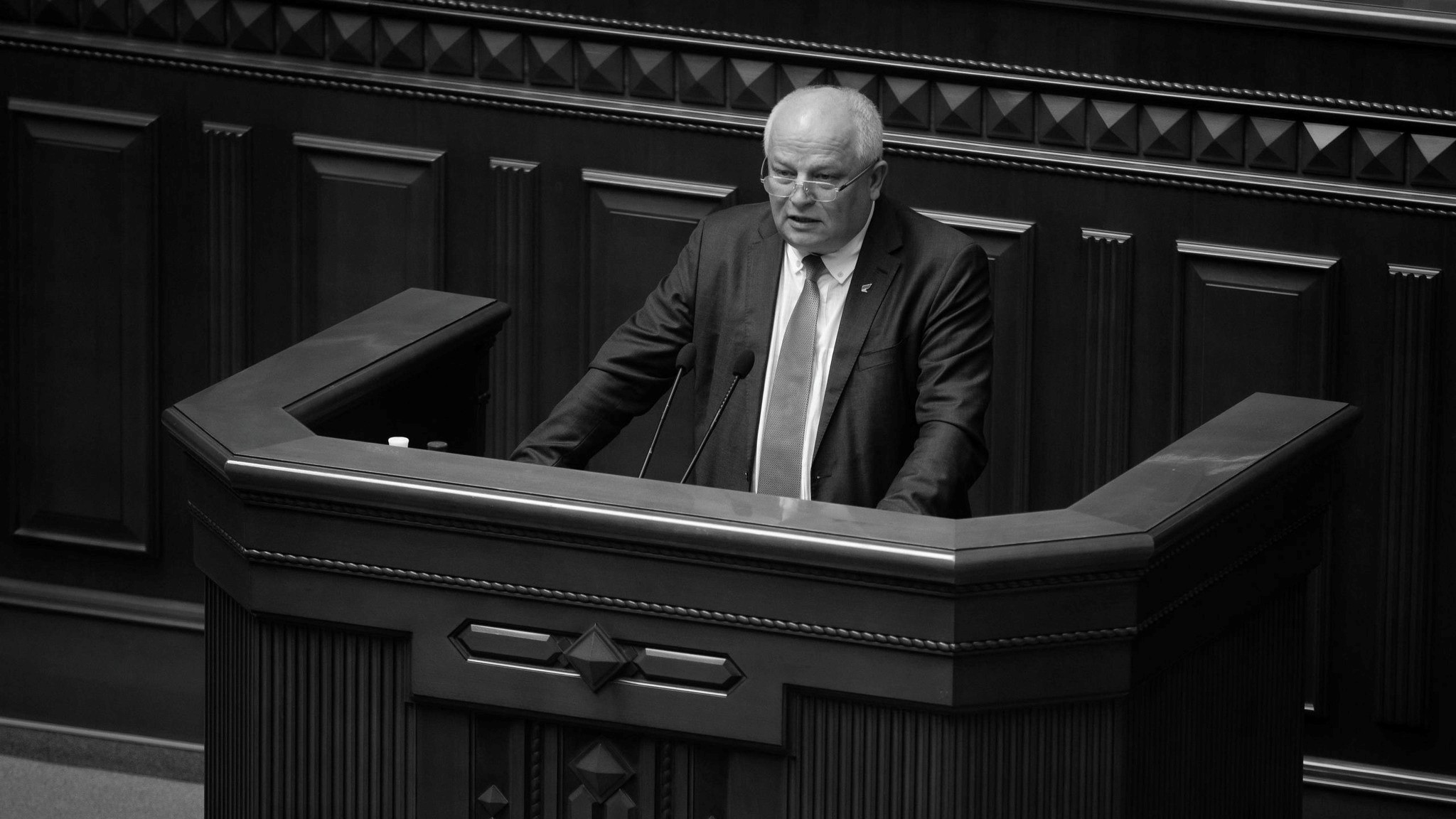
On the night of May 18, the press service of "European Solidarity" announced the sudden death of People's Deputy Stepan Kubiv. According to his colleagues, the cause was a blood clot. He was 64 years old — born on March 19, 1962 in the village of Mshanets in Ternopil region.
Banker on the Barricades
Kubiv came to politics not through party corridors, but from the banking sector: he headed CrediBank in Lviv — now a subsidiary of Polish PKO Bank Polski. It was this management experience that defined his role during the Maidan of 2013–2014.
"Our record — 110,000 servings of food for Euromaidan"
Stepan Kubiv — from an interview with "Ukrainian Pravda" during the Revolution of Dignity
Kubiv became commandant of Maidan strongholds and effectively managed the infrastructure of the Trade Union House — the resistance headquarters. According to him, the first step after his appointment was the legal formalization of the protesters' presence in the building: "We gathered in a pizzeria nearby and immediately decided — everything had to be official". A banker's habit of procedures in the midst of revolution.
From the NBU to the Cabinet
Immediately after the Revolution of Dignity, on February 24, 2014, Kubiv became head of the National Bank of Ukraine — at one of the sharpest moments of the economic crisis. He held the position until June of that year.
Later, from April 2016 to August 2019, he served as first vice prime minister and minister of economic development in the government of Volodymyr Groysman. In parallel, he headed the Vasyl Stus Memorial Society. In 2024, Russia put him on a wanted list — a standard gesture by Moscow toward Ukrainian officials.
Speaker of the Verkhovna Rada Ruslan Stefanchuk wrote that he "received the tragic news with deep sorrow," noting Kubiv's dedication to the interests of the state. People's Deputy Oleksiy Batenko recalled more than twenty years of acquaintance: "There are few such people".
A Trajectory Difficult to Repeat
Kubiv was a rare type of politician who came to power through a civic movement, not the other way around. A banker who counted food servings at Maidan, then stabilized the hryvnia in February 2014, and two years later managed the government's economic bloc — this was not a typical career trajectory for Ukraine at that time.
If official confirmation of a blood clot as the cause of death appears in the coming days — the question will arise whether Kubiv and deputies of his generation underwent systematic medical check-ups during the full-scale war, or whether the state still lacks a mechanism for monitoring the health of current parliamentarians.



