March could be the bloodiest month for the Russian army in 2026 — and here's why the numbers add up
The General Staff is recording roughly 1,038 losses per day in March — more than in February (28,400). If the trend continues, the month will surpass January's 32,650. Defense Minister Fedorov announced a "solution" to reach 50,000 per month — but did not provide details.

By Tetiana Suchkova-Ladik
March 29, 2026 · 2 min read
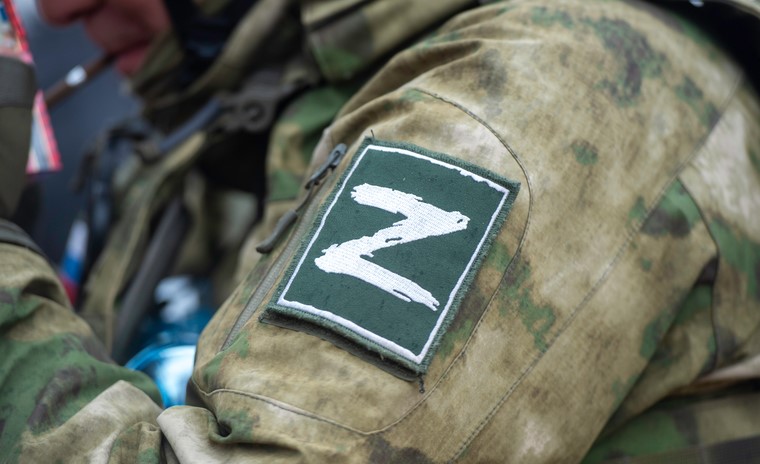
For the first 28 days of March 2026 the Russian army lost about 29,000 soldiers killed and seriously wounded — this follows from data from the General Staff of the Armed Forces of Ukraine: 1,266,770 on March 1 versus 1,295,830 on the 29th. The average daily figure is roughly 1,038 people, which projects to more than 32,000 for a full month.
For scale: losses in February 2026 amounted to 28,400, in January — 32,650. The record so far remains January 2025 — 49,100. In other words, the word “record” in the context of current statements applies to 2026, not the entire duration of the full-scale war.
What lies behind the figure
Defense Minister Mykhailo Fedorov on Telegram linked the rise in losses to three factors: pressure from strike drones, the lack of evacuation corridors, and the narrative being imposed by the Russian command.
“Unprepared people, no chance of evacuation, and constant pressure from drones”
Mykhailo Fedorov, Ukraine’s defense minister, Telegram
According to Fedorov, videos arrive from the front daily showing Russian infantry resorting to self-destruction — after wounds from unmanned systems or when completely encircled. The minister directly called this the result of decisions by the Russian military-political leadership: propaganda pushes the thesis “better to die immediately,” whereas Ukraine regularly conducts prisoner exchanges.
Tactical context missing from official statements
March losses come against the backdrop of a significant change in front-line dynamics. According to ISW estimates, in the period from February 24 to March 24, 2026 Russian forces lost 4 square miles — whereas in the previous four-week period they captured 50 square miles. At the same time, Ukrainian counterattacks in southern Dnipropetrovsk and Zaporizhzhia regions, launched back in January, continue to exert operational pressure on Russia’s preparations for a spring–summer offensive.
This is the main difference of the current month from previous ones: the Russians are suffering losses not while on the offensive, but in conditions where the initiative has partially shifted to the other side.
Goal of 50,000: stated but not disclosed
Fedorov confirmed the strategic goal — to destroy 50,000 occupiers per month, calling such a figure potentially “catastrophic” for Russia. He also announced “decisions” intended to bring that mark closer — without specifics about means or timelines.
- The current monthly pace (~32,000) is roughly 64% of the goal
- The gap between 32,000 and 50,000 is not a percentage issue but a systemic problem of scaling strike capabilities
- The 2025 record (49,100 in January) was achieved under conditions of massed assaults, not drone attrition
Slovydilo records that, for the first time since the start of the full-scale invasion, Russia is losing more soldiers than it recruits for three consecutive months — The Times cites Western officials on this. If this trend continues into April, the question of Russia’s mobilization resources will take on concrete arithmetic contours.
An open question remains whether the “decisions” Fedorov refers to are a technological step (new types of drones, wider coverage), operational (a change in encirclement tactics), or simply a rhetorical frame for the public — this will become clear if April’s numbers show a jump rather than a plateau.



