Bessen promised not to continue — but did: what $10 billion means for Russian oil
# The US Again Suspended Oil Sanctions Against Russia Despite Public Assurances by the Treasury Department. Zelenskyy Calculated: The Price of This Decision is Approximately $10 Billion in Russian Strikes.

By Tetiana Suchkova-Ladik
April 19, 2026 · 2 min read
In mid-April 2025, the Trump administration extended a temporary loosening of oil sanctions against Russia for the second time—at least until mid-May. This occurred two days after U.S. Treasury Secretary Scott Bessent publicly stated that there would be no extension.
"We will not be extending the general license on Russian oil, and we will not be extending the general license on Iranian oil."
Scott Bessent, U.S. Treasury Secretary—two days before the extension
Democratic senators Jeanne Shaheen, Chuck Schumer, and Elizabeth Warren called the decision "shameful" and "a 180-degree turn." However, the administration signed the new exemption anyway.
What the license allows and what it costs
The temporary exemption allows the sale of sanctioned Russian oil already aboard tankers on the open sea. This is exactly what was taken advantage of: according to The New York Times, during the period of loosening, Russia received more than $100 million in additional daily revenue. In April alone, oil tax revenues amounted to at least $12.8 billion—twice as much as in March.
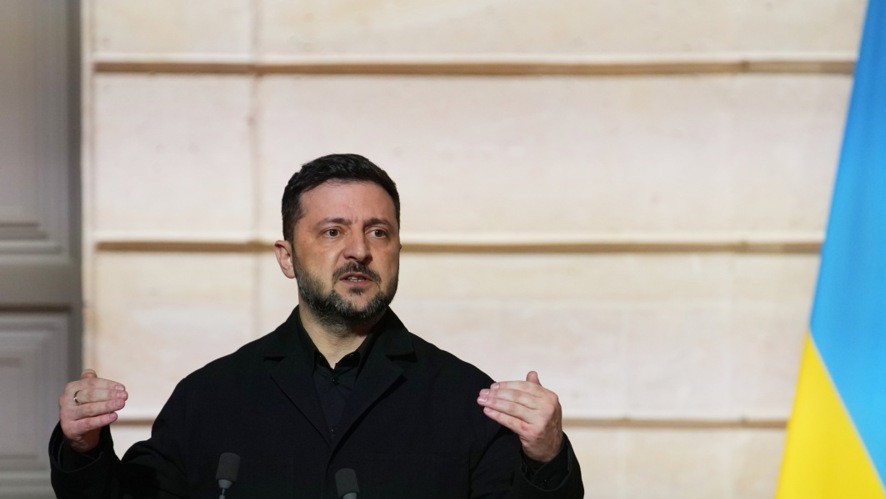
President of Ukraine Volodymyr Zelensky estimated the total effect of this one loosening at $10 billion, which Moscow could direct toward continuing the war.
"Every dollar from Russian oil is money for war. Just this one loosening from America could give Russia around $10 billion for war."
Volodymyr Zelensky, from a social media post
110 tankers and 12 million tons
Zelensky pointed to a specific fleet: more than 110 "shadow fleet" tankers belonging to Moscow are currently at sea with over 12 million tons of Russian oil on board—oil that, thanks to the loosening, can now be sold again without consequences. According to the Disinformation Counteraction Center, since the start of the full-scale invasion, Russia has formed a shadow fleet of over 1,240 vessels, spending more than $10 billion on its creation.
The first sanctions loosening occurred following a phone call between Trump and Putin on March 9 and a visit by Russian special envoy Kirill Dmitriev to the United States. Bessent then explained the decision as a risk of Strait of Hormuz blockade—the need to stabilize global energy markets amid tensions over Iran.
The scale of the strike—in numbers from the same week
In parallel, Zelensky provided data on the intensity of Russian attacks over one week:
- over 2,360 strike drones
- over 1,320 guided aerial bombs
- approximately 60 missiles of various types
Ukraine's Ambassador to the United States Oksana Stefanishyna called on Washington to reinstate full sanctions. Meanwhile, according to Politico, Russia has already developed mechanisms to circumvent restrictions—its oil reached markets even during the sanctions period.
The G7 price cap set at $60 per barrel, introduced in 2022, was intended to simultaneously limit Moscow's revenues and maintain supplies to the global market. However, the expansion of the buyer base during the loosening period allowed Russia to raise the price of Urals oil: in April, it rose by 42% compared to March.
If the Trump administration does not reinstate sanctions after mid-May and does not lower the price cap—Zelensky's forecast of $10 billion will become a lower bound rather than an upper one.



