Without a transponder over the Baltic: why Russia deliberately blinds civilian aviation
# Polish F-16s Intercept Two Su-30s on April 24 — Not a Routine Incident The interception of two Su-30 fighters by Polish F-16s on April 24 is not a routine incident. It is part of a systemic practice that ICAO has already officially condemned but cannot stop.

By Tetiana Suchkova-Ladik
April 24, 2026 · 2 min read
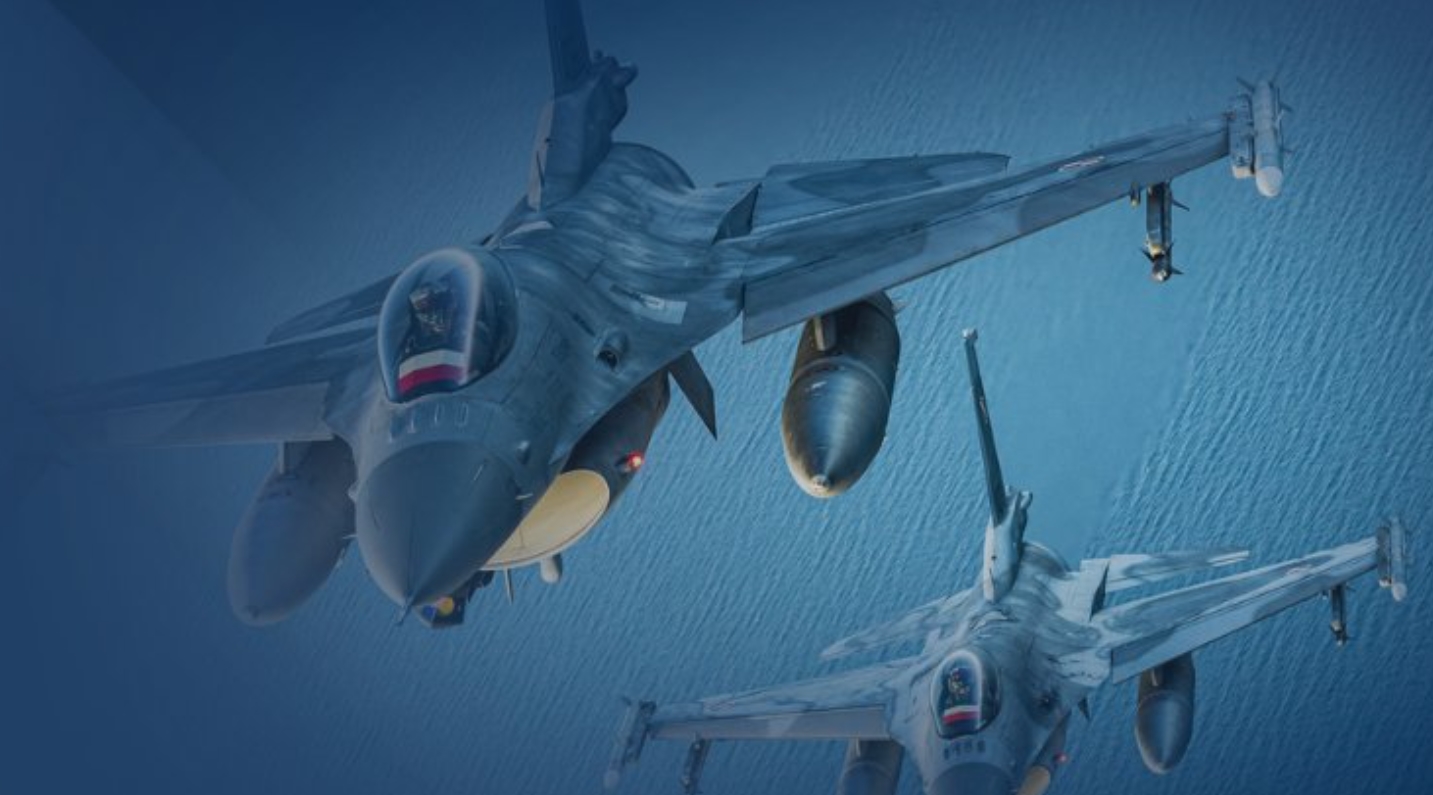
On Friday, April 24, Polish F-16s intercepted two Russian Su-30s over the Baltic Sea. The aircraft were flying without a filed flight plan and with their transponders disabled — devices that transmit an aircraft's position to air traffic controllers and collision avoidance systems of other aircraft. Polish airspace was not violated, but this very formulation conceals the real problem.
A disabled transponder is not a technical malfunction
The transponder is turned off deliberately. According to ICAO rules, each state is responsible for ensuring that its military aviation does not pose a threat to civil aircraft — including outside its own airspace. The Baltic is one of Europe's busiest air corridors, and a military aircraft invisible to radar in this space is not a show of force but a concrete collision risk.
A precedent already exists: in 2006, two civilian aircraft collided in Brazil because one of them accidentally had its transponder turned off. Over the Baltic, Russia does this deliberately and regularly.
How many times and who responds
Only during April 2025, Lithuania's Defense Ministry recorded four NATO fighter scrambles to intercept Russian aircraft that violated flight rules — by disabling transponders and flying without a flight plan. That same month, two Swedish NATO-commanded fighters were scrambled over the Baltic to escort a Russian reconnaissance aircraft approaching Polish airspace, and Britain twice sent its F-35s on interception missions.
Poland is not an exception but one of the most active participants in these patrols. According to Colonel Mihail Marin, who commands the Romanian F-16 squadron as part of the NATO mission,
«There are many cases when — deliberately or not — they do not comply with ICAO rules regarding flight plans and conduct. So we have to scramble and make sure they are who they claim to be and that their intentions are peaceful».
Colonel Mihail Marin, commander of the Romanian F-16 contingent, NATO Baltic Air Policing
What ICAO has done — and what it cannot
The International Civil Aviation Organization (ICAO) at its 42nd Assembly officially condemned Russia for systematically interfering with Global Navigation Satellite System (GNSS) signals in Europe. The practice has become known as the «Baltic Jammer» — a network of equipment for suppressing and spoofing GPS signals concentrated in Kaliningrad and along Russia's western flank.
Estonia's regulator reported that 85% of flights in its airspace already experience interference, while Lithuania recorded a 22-fold increase in incidents. ICAO condemned it. It has not yet revoked the frequencies.
Moscow's position
Russia's Defense Ministry traditionally responds with standard formulations: «All flights by the RF Aerospace Forces are carried out in strict accordance with international rules for airspace use». Transponders do not fit into this response.
The April 24 interception is neither the first nor the last. The question is not whether the next incident will occur, but whether it will happen with a civilian aircraft nearby — and whether ICAO will by then have a tool of enforcement stronger than a resolution.



