Brussels to Moscow: An attack on the Baltic states is an attack on the entire EU. But behind this is Russia's provocation.
The European Commission responded to Zakharova's threats against Baltic countries with the principle of collective defense. Meanwhile, Ukrainian intelligence claims that the drone incidents themselves are the work of Moscow.

By Tetiana Suchkova-Ladik
April 7, 2026 · 2 min read
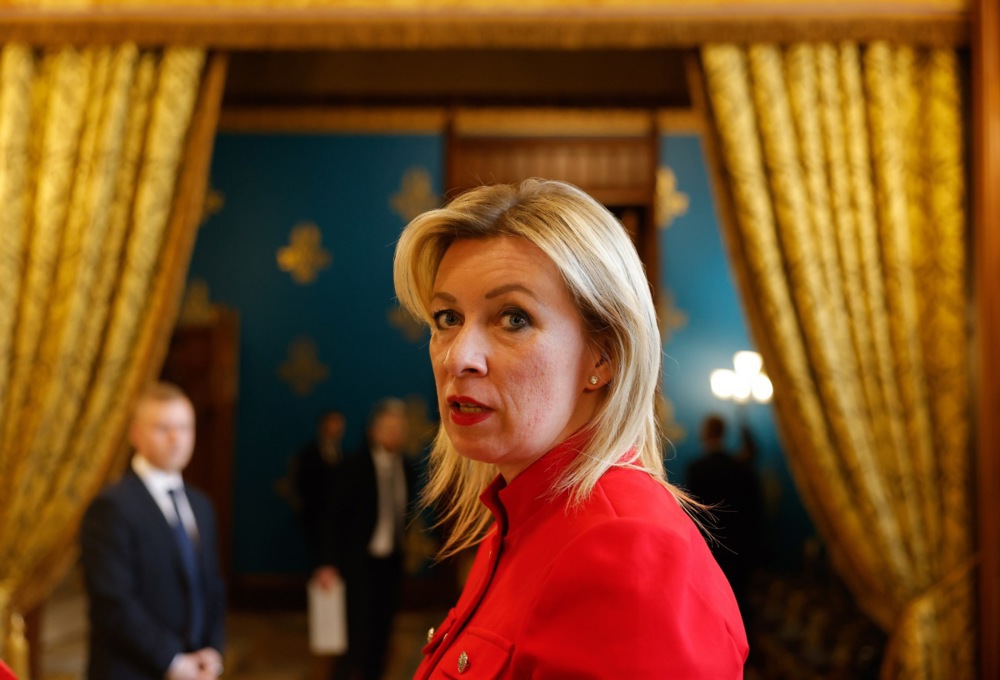
European Commission spokesperson Thomas Renew responded laconically at a briefing in Brussels to Russia's threats against the Baltic states: an attack on any EU member is an attack on the entire European Union. No new mechanisms, no emergency meetings — merely a confirmation of the existing principle already enshrined in the Union's treaty framework.
What started it all
The trigger was a series of incidents: over several days, Ukrainian drones were detected in Estonian airspace and near Latvia's border. Debris from one drone was found in the municipality of Kastre in Tartu County, Estonia. Estonian military issued a night-time alert, but did not shoot down any drones.
The shortest route from Ukraine to oil terminals on Russia's Baltic coast passes near the eastern borders of Latvia and Estonia — a geographical reality that Moscow has used as a narrative.
"If the regimes of these countries have enough common sense, they will listen. If not, they will have to deal with a response."
Maria Zakharova, Russian Foreign Ministry spokesperson
Zakharova accused Latvia, Lithuania, and Estonia of allegedly deliberately opening their skies to Ukrainian strike drones. Against this background, Renew made his statement — not naming the threats directly, but confirming that the EC had registered them.
What Kyiv says
Ukrainian Foreign Minister Andrii Sybiha first apologized to Estonia, Latvia, Lithuania, and Finland for the incidents, suggesting the influence of Russian electronic warfare capabilities. But then shifted his emphasis: according to him, analysis of the week's events points to deliberate Russian actions.
"We have intelligence data indicating that the Russians are deliberately redirecting drones toward the Baltic states in order to use these incidents for their information purposes, for propaganda goals."
Andrii Sybiha, Ukrainian Foreign Minister
Sybiha emphasized that Ukraine has never directed drones against the Baltic states and called on partners to jointly counter Russian disinformation.
Tactical logic of provocation
The scheme is simple: Russia uses electronic warfare to knock Ukrainian drones off course toward neutral or allied territories — and gets a ready pretext for diplomatic pressure. This is not the first such tactic: Moscow used similar rhetoric regarding alleged Polish military participation in combat operations.
- Drones were diverted into Estonian and Latvian airspace during strikes on Russian oil infrastructure on the Baltic coast.
- None of the Baltic states officially confirmed that they deliberately allowed Ukrainian UAVs to pass through.
- Defense Commissioner Andrius Kubilius planned a meeting with NATO's Commander in Europe Alexus Grinkevich — Renew refused to reveal details of the agenda.
Brussels' response is correct in substance, but reactive in form: the EC confirmed the principle after Moscow had already shaped the narrative about Baltic "complicity."
If Ukrainian intelligence publicly provides technical evidence that Russian electronic warfare systems deliberately redirected the drones — this would shift the diplomatic balance. Without it, Sybiha's accusations remain claim against claim, and Moscow will continue to use each new incident over the Baltic as a ready pretext for another "warning."



