Red Lines: Thin and Not-So-Thin
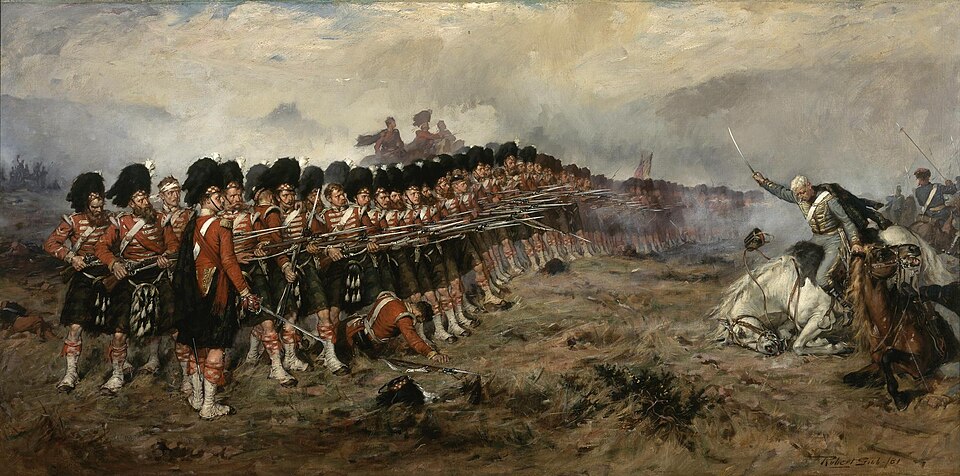
The concept of the "red line" originates from the Battle of Balaclava in 1854, when the 93rd Scottish Regiment halted a Russian attack. A thin line of riflemen in red uniforms became the symbol of the final line of defense in international politics.

By Oleg Bazylewicz
December 6, 2025 · 2 min read
The current attempts by Moscow and Beijing to reshape the world order in their favor have triggered a whole avalanche of consultations and negotiations, and accordingly have brought the concept of "red lines" back into active use in international political discourse.
It's time to remember where the concept of the "red line" comes from.
"Thin red line" - the thin red line
Battle of Balaclava
On 25 October 1854, during the Crimean War, the troops of tsarist Russia tried to cut off supplies to the British forces preparing for the siege of Sevastopol. An attack by the Muscovites near Sapun Hill against the positions of the Turkish troops allied with the British was successful, and the situation of the English and French units became critical.
The situation was saved by the 93rd Regiment of Scottish Highland infantry under the command of baronet Colin Campbell. Campbell understood that, by regulation and to ensure the required density of fire, the firing formation of the riflemen should have been four deep — but in that case the regiment would not have enough frontage and an attack by the Muscovite cavalry might succeed.
Campbell rearranged his Scots into two lines. It was risky, but it worked. The Russians could not break through, although the line of riflemen in red uniforms was indeed thin. The Times newspaper, in its report on the battle, used this expression for the first time — "thin red line", or "тонка червона лінія".
Transformation of the meaning
The expression is still used in the sense of "the last line of defense", especially in the context of personnel shortages. But in general its usage has widened — in the context of international relations it now means the boundary between acceptable and unacceptable conditions.
It should be noted: the people who today shape the international policy of the modern collective West often lack the steadfastness of the fighters of Her Majesty's 93rd Highland Infantry Regiment. The red line of Baron Campbell's brave highlanders, despite indeed being thin, proved an insurmountable obstacle for the Muscovites.
PS
The British then laid a railway from Balaclava to their positions near Sevastopol for supplies, which gave the allies a great logistical advantage. It was the first railway on the territory of modern Ukraine. But that's another story.



