Why Russia Won't Collapse After Putin — Expert Explains and What It Means for Ukraine
In great-power diplomacy, quiet conclusions matter more than loud predictions. Vadym Denysenko, head of the analytical center "Dilova Stolytsia," explains why a scenario of mass separatism in Russia is unlikely and what that means for Ukraine's security.

By Tetiana Suchkova-Ladik
January 1, 2026 · 2 min read
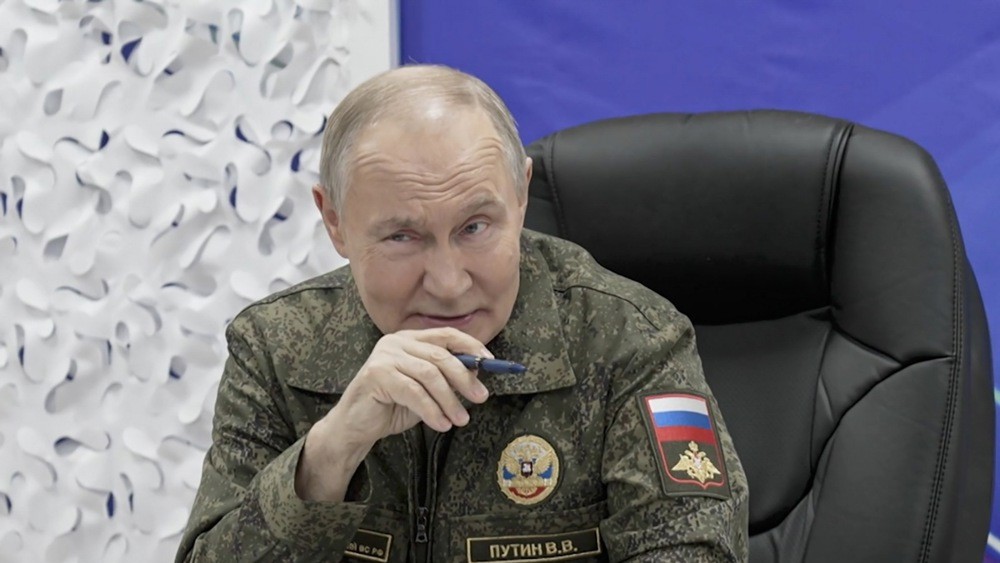
In high diplomacy, it's not loud statements but quiet agreements that matter
For a comment to LIGA.net, head of the analytical center «Dilova Stolytsia» Vadym Denysenko explains why even in the event of Vladimir Putin's death the possibility of a mass collapse of Russia — from the Caucasus to the Far East — remains minimal.
Why separatism is currently unlikely
Denysenko highlights two key reasons. First, there is no public demand for regions to secede; second, local elites lack real motivation to start a revolt. That does not mean there is no desire for greater autonomy — but that desire is more financial than political.
“Secondly, there is no demand from the elites of these regions to engage in separatism. At most, one can say that certain regions will want a certain decentralization. They will seek to get more money and more ability to manage it. That is the maximum the Russian elite is hoping for right now.”
— Vadym Denysenko, head of the analytical center «Dilova Stolytsia»
The analyst also points to the behavior of local elites: they will be guided by how the situation develops in the center. If the transfer of power in Moscow happens relatively quickly and in a controlled way — there will be no large-scale regional uprisings.
“At most, one can say that regions may want a redistribution of funds. Currently, regions retain on average 30–35% of the money they earn. Of course, they would like to return to a situation where they kept 50%. But that is the maximum of their desires.”
— Vadym Denysenko, head of the analytical center «Dilova Stolytsia»
Public reaction and political context
President Volodymyr Zelensky, in his Christmas address, reflected the general emotional attitude of most Ukrainians toward the Russian leadership. Such messages are an indicator of social tension, but they do not change the structural realities inside Russia.
“That he should drop dead,” — said the President during the greeting, expressing what part of society feels in the context of the war and the desire for peace.
— Volodymyr Zelensky, President of Ukraine
What this means for Ukraine
The existence of a centralized Russia does not free Ukraine from risks. On the contrary, a stable center can preserve military-political resources to continue aggression. Therefore, the strategic conclusions for us:
- Do not reduce international pressure and sanctions until the threat is eliminated.
- Strengthen defensive and economic resilience — even in the event of a change in the Kremlin leadership.
- Prepare for scenarios of political turbulence in Russia, which may be local and unpredictable, but will not mean the automatic collapse of the state.
Conclusion
According to Denysenko, a large-scale collapse of Russia after Putin's death is a low-probability scenario due to the absence of social and elite demand. But for Ukraine this is no reason to relax: a stable Russia may mean the continuation of confrontation in another form. Now the move is up to us and our partners — will the forecasts turn into real political decisions and countermeasures?



