Why Ukraine needs to work with Poland's 'right'
Former head of the Polish party "National Movement," Robert Winnicki, said that Ukraine's defeat in the war would turn Poland into a "buffer state" with grave consequences. He added that this creates a basis for cooperation between Ukraine and the Polish right, despite their anti‑Ukrainian statements.

By Oleg Bazylewicz
December 1, 2025 · 2 min read
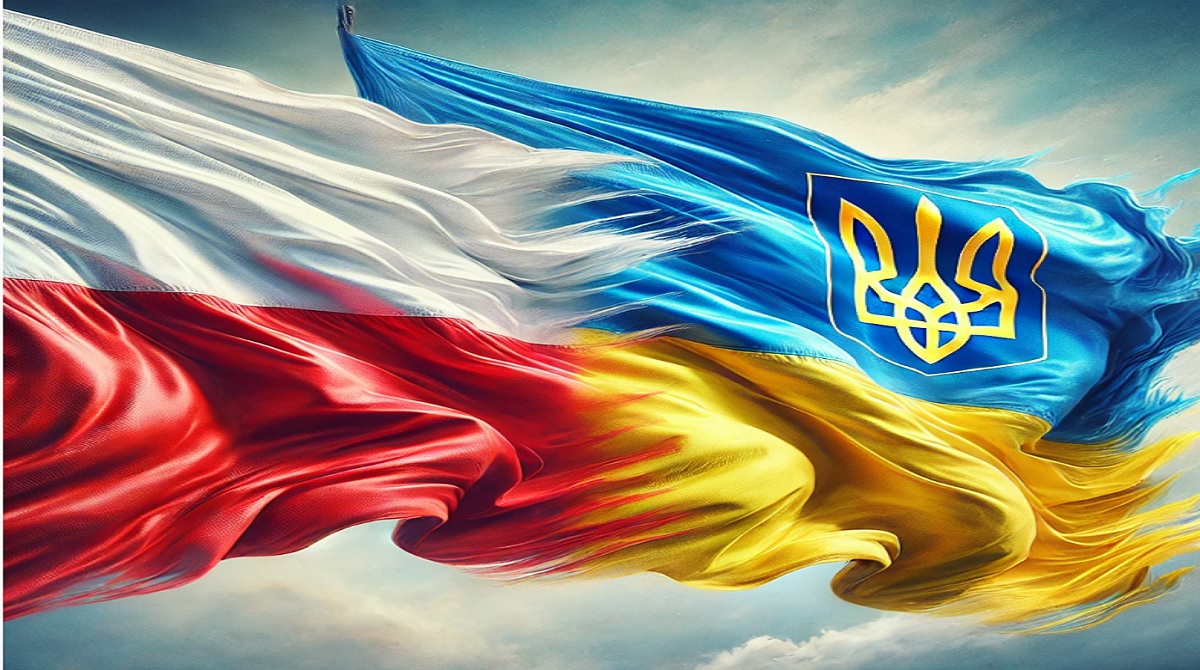
With understandable concern, Ukrainians are watching the shifts in Europe's political landscape. In recent years a variety of right-wing and left-wing movements have been gaining strength in Europe; they are generally regarded as euroskeptic and populist, and often take a fairly critical stance toward support for Ukraine.
But are all of these political movements anti-Ukrainian by definition? Is there not some political ground in their positions that Ukraine could rely on to mobilize such support and help secure decisions vital to the country? Does Ukraine not need a healthy foreign-policy pragmatism?
What Robert Winnicki Says
Consider a piece published by Robert Winnicki (Robert Artur Winnicki), the former head of the "ultranationalist" party "National Movement" (Ruch Narodowy), a member of the Polish Sejm known for his anti-Ukrainian antics.
"I am very glad that in some pro-Russian circles the idea has ripened that 'Ukraine should become a buffer state between Russia and NATO.' That elegant phrase actually means a country that acts as a 'deterrent' between military blocs. Ukraine has been such a 'deterrent' for many years."
– Winnicki writes.
"I'm merely pointing out that for this to happen Russia would have to lose the war in Ukraine, that is, it would have to fail to achieve its goal of subjugating and/or destroying this state. However, if the Russians achieve their objectives and Ukraine falls under their control, it will, obviously, cease to be a buffer state, and the 'zone of deformation' will shift westward."
– he notes.
"Poland will become a buffer state, and the military tension from the banks of the Dnipro will move to the Vistula with all the consequences that entails. Russia's potential success will first affect the eastern part of the country – the Subcarpathian, Lublin and Podlaskie voivodeships. It is from this potential frontline zone that investments, capital and people will flee. Especially young people, who will not want to build their future in a region under threat. Those who do not want Poland to become a kind of 'buffer' should begin to take the consequences of such thinking seriously."
– Winnicki emphasizes.
What This Means for Ukraine
Level-headed representatives of the Polish "right", which here is already commonly regarded as "Ukraine-skeptical", understand well that Ukraine's defeat in the war launched by Russia would have very severe consequences for Poland. The statements of Hungary's openly pro-Russian president Orbán that aid to Ukraine should be ended immediately and that Ukraine should be transformed into some kind of "buffer" sound truly threatening to Poland. After all, Poland would then have to become the "buffer" itself — with all the heavy political, military, economic, demographic and other consequences.
That is why there is actually ground for engagement with the Polish right. Despite anti-Ukrainian statements, despite attempts to "galvanize" their electorate with provocative and populist narratives. Because there are objective geopolitical realities that are difficult and dangerous to ignore. After all, the enemy in Poland and in Ukraine is one and the same.



