Denmark Draws "Red Lines": How Trump's Claims to Greenland Are Changing the Arctic Game
At the Munich Conference, Prime Minister Mette Frederiksen confirmed: U.S. interest in Greenland has not disappeared. The issue is about sovereignty, strategic presence in the Arctic, and the ability of European partners to defend the rules of the game.

By Tetiana Suchkova-Ladik
February 15, 2026 · 2 min read
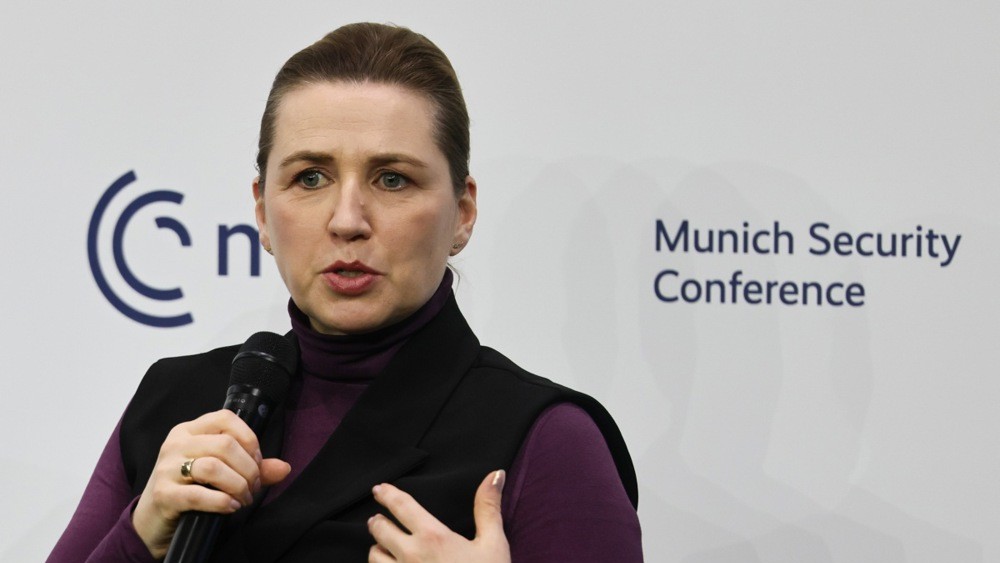
What the prime minister said
At the Munich Security Conference (MSC), Danish Prime Minister Mette Frederiksen confirmed that U.S. President Donald Trump "still wants to get Greenland," The Guardian reports. She said that "unfortunately, the desire [Trump's regarding Greenland] remains the same."
"Unfortunately, the desire [Trump's regarding Greenland] remains the same"
— Mette Frederiksen, Prime Minister of Denmark
Denmark's key stance: cooperation with the United States is possible, but there are indisputable "red lines" — respect for Greenland's sovereignty and territorial integrity. Frederiksen stressed that pressure on the island's population is unacceptable and that the Danish authorities are not prepared to concede on these issues.
Why this matters for security in the Arctic
Interests around Greenland are not just a matter of land or geography. Strategic interests of major powers, access to Arctic waters, and infrastructure collide here. Frederiksen pointed out that the existing 1951 defense agreement gives the U.S. a "very simple" mechanism to strengthen its presence on the island — and this forces Copenhagen to reassess the balance between alliance cooperation and protecting sovereignty.
According to Axios, proposals for an agreement discussed by Rutte did not envisage handing full control of Greenland to the U.S., but questions of format and authority remain open. Frederiksen also emphasized that the NATO Secretary General does not have a mandate to decide on Denmark's sovereignty on its behalf.
Reality — a structured NATO presence
Alongside discussions about ownership and negotiations, NATO has launched a new Arctic initiative — the Arctic Sentry mission, which began on February 11. It's a signal: the alliance is strengthening a structured presence in the region to respond to risks and ensure stability.
"Pressure on Greenland is absolutely unacceptable"
— Mette Frederiksen, Prime Minister of Denmark
What’s next and what it means for Europe
The facts are simple now: U.S. interest in Greenland has not disappeared, Denmark is openly marking the limits of compromise, and NATO is increasing the tools to guarantee security in the Arctic. This is a test for European partners — whether they can combine cooperation with the U.S. and the protection of the interests of the peoples who live on distinct territories.
Analysts and the diplomatic community note that the solution must be legal and transparent: declarations of partnership need to be turned into concrete agreements that respect sovereignty and minimize the risk of escalation. For the public, this is a question of security and trust — whether the alliance means protection, not coercion.
Conclusion
The discussion around Greenland is an example of how geostrategic interests in the Arctic are taking concrete shape. Now the task for partners is to develop mechanisms that preserve the sovereignty of territories while at the same time ensuring real security in the region.
Sources: The Guardian, Axios, official statements from the Danish government, NATO announcements regarding the Arctic Sentry mission.



