De Wever calls for EU to be granted a mandate to negotiate with Moscow — what risks and opportunities for Ukraine
The Belgian prime minister said that without a unified European position and full support from the United States it is impossible to pressure the Kremlin. We explain why this matters for Ukraine’s security and sovereignty and what to expect next.

By Tetiana Suchkova-Ladik
March 14, 2026 · 2 min read
What happened and why it matters
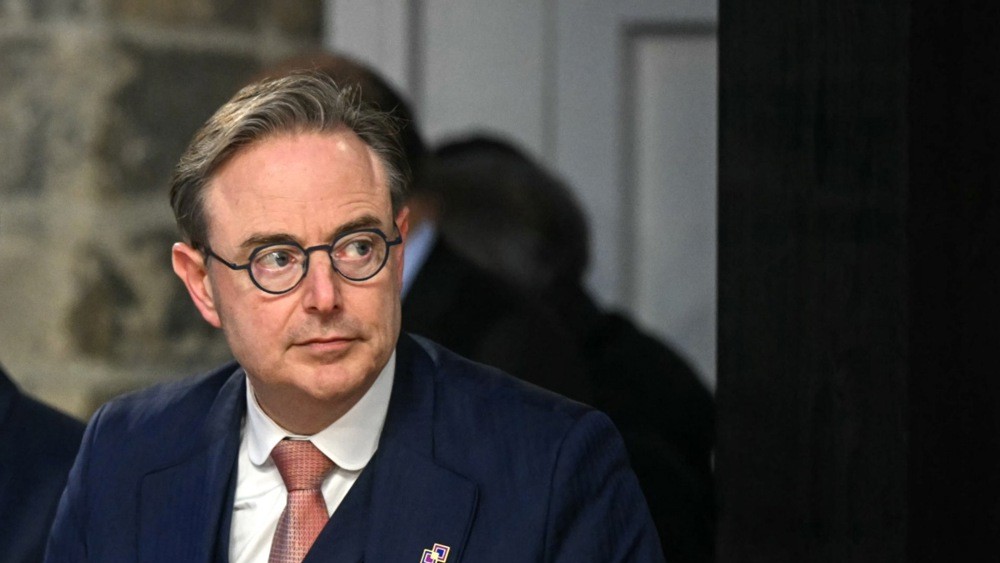
Belgian Prime Minister Bart De Wever, in an interview with L’Echo (reported by Euractiv), called for giving the European Union a mandate to negotiate with Russia. In his view, without “100% support from the United States” it is impossible to make Moscow back down — therefore the EU must act in a coordinated fashion if it wants to influence the course of talks.
“Since we are not able to threaten Vladimir Putin by sending weapons to Ukraine, and we cannot strangle him economically without US support, only one way remains: to make a deal.”
— Bart De Wever, Prime Minister of Belgium (interview with L’Echo, via Euractiv)
Reality according to De Wever
The context is simple and harsh: the war has been going on for more than four years, and the EU’s pressure without close coordination with Washington has limited effectiveness. De Wever directly warns that sometimes the United States “seem closer to Putin than to Zelensky,” and this could create conditions for bilateral agreements in which Ukraine’s interests would be at risk.
Positions of other players
European leaders’ views differ: French President Emmanuel Macron has tried to restore contact with the Kremlin, Kaja Kallas, head of EU diplomacy, insists that before any contacts with Putin the bloc must agree on concrete expectations of Moscow and set “maximalist demands.” President Zelensky has warned that separate negotiations with Europe could be used by Russia to humiliate Ukraine.
“Of course, we would like the Russian army to be somewhat smaller, but I don’t think Europe can influence that. Unfortunately. For now, that’s the case.”
— Volodymyr Zelensky, President of Ukraine
What this means for Kyiv
Risks: negotiations initiated or supported by the EU without clear coordination with Kyiv and Washington could lead to pressure on Ukraine to accept a quick compromise. Political signals from individual European capitals indicate that such scenarios cannot be ruled out.
Opportunities: if an EU mandate becomes a tool for consolidating positions rather than a replacement for coordination with Ukraine and the US, the bloc could strengthen its own diplomatic levers and raise demands of the Kremlin — for example, regarding reduction of the army or withdrawal of forces from occupied territories.
Expert perspective and conclusion
Analysts advise looking not at individual statements but at three markers: (1) whether a formal proposal for a mandate will be brought to the EU level, (2) how close coordination with the US will be, and (3) whether Kyiv will receive a guaranteed format of participation in any negotiations. Without these guarantees there is a real risk that talks will turn into a game where Ukraine’s interests are disregarded.
As reactions from leaders and political appeals alternate, the ball is in the partners’ court: declarations must be replaced by agreed mechanisms that will ensure Ukraine’s security and sovereignty, not the trading away of its interests.
Sources: interview with L’Echo (via Euractiv), LIGA.net, Politico.



