Security guarantees document ready for finalization — Zelensky on negotiations in Paris
The President said that a bilateral document with the United States is "ready for finalization." We explain why this is important for pressure on Russia and what steps to expect next.

By Tetiana Suchkova-Ladik
January 8, 2026 · 2 min read
Context and main points
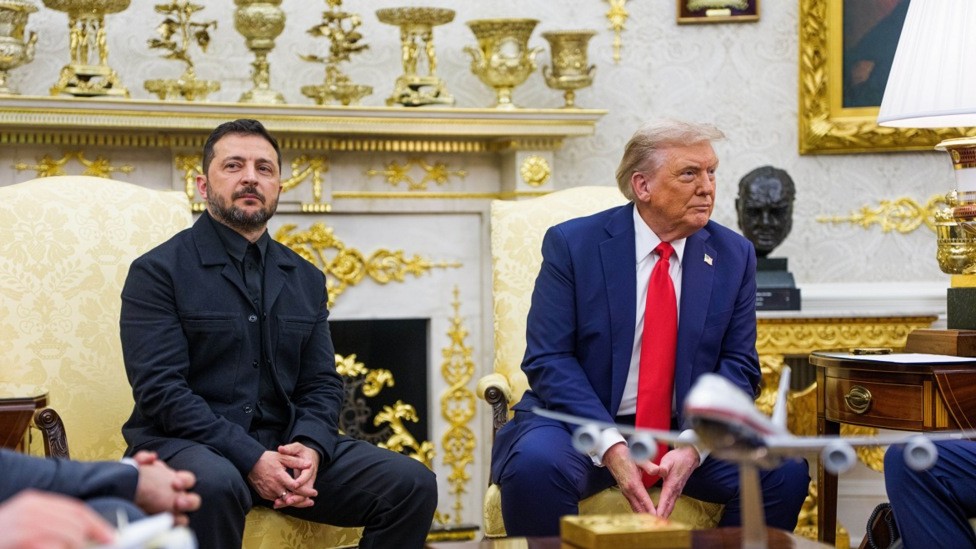
President Volodymyr Zelensky reported that the document on security guarantees for Ukraine is ready for finalization with U.S. President Donald Trump. The statement came following the Ukrainian delegation’s talks in France and is significant not only as a diplomatic signal but also as a practical mechanism of pressure on the aggressor.
"[The head of the Ukrainian delegation and Secretary of the National Security and Defense Council] Rustem Umerov reported on the results of our team’s talks in France yesterday. A bilateral document on security guarantees for Ukraine is, in fact, ready to be finalized at the highest level with the President of the United States"
— Volodymyr Zelensky, President of Ukraine
What was discussed
According to the president, the Ukrainian team continues to integrate its work with the EU and U.S. teams: in addition to guarantees, the parties discussed documents on reconstruction and economic development. At the same time, "difficult questions" about a basic framework for ending the war were raised — and Kyiv presented options for the final agreement of such a document.
"We understand that the American side will communicate with Russia, and we expect feedback — whether the aggressor is truly ready to end the war"
— Volodymyr Zelensky, President of Ukraine
The Paris Declaration and the international context
On January 6, following the meeting of the "coalition of the willing" in Paris, the Paris Declaration was signed listing security guarantees for Ukraine. Kyiv, London and Paris also adopted a declaration of intent regarding the deployment of multinational forces — evidence that key partners are agreeing not only on words but also on certain practical steps.
- The Paris Declaration sets out a list of potential guarantees and mechanisms for partners’ coordination.
- Kyiv insists that the realism of future guarantees be confirmed by partners’ ability to exert effective pressure on Russia right now.
What’s next
The negotiating team will return to Kyiv and report on the details. The next step is to turn declarations and political agreements into concrete mechanisms that have measurable capability to deter the aggressor: from signals of diplomatic pressure to military-technical and financial measures.
The question for partners is simple: can they back political statements with effective steps that will change the Kremlin’s calculations? The answer will determine how quickly declarations turn into guarantees, rather than declarative promises.



