Drone That Cannot Be Jammed: How Ukrainian Developers Taught Unmanned Vehicles to Recognize GPS Spoofing
Perun company has presented AI-based optical navigation with an error margin of up to 5% — the drone independently detects GPS spoofing and switches to autonomous mode. This is no longer a prospect, but a weapon on the front lines.

By Tetiana Suchkova-Ladik
April 7, 2026 · 2 min read
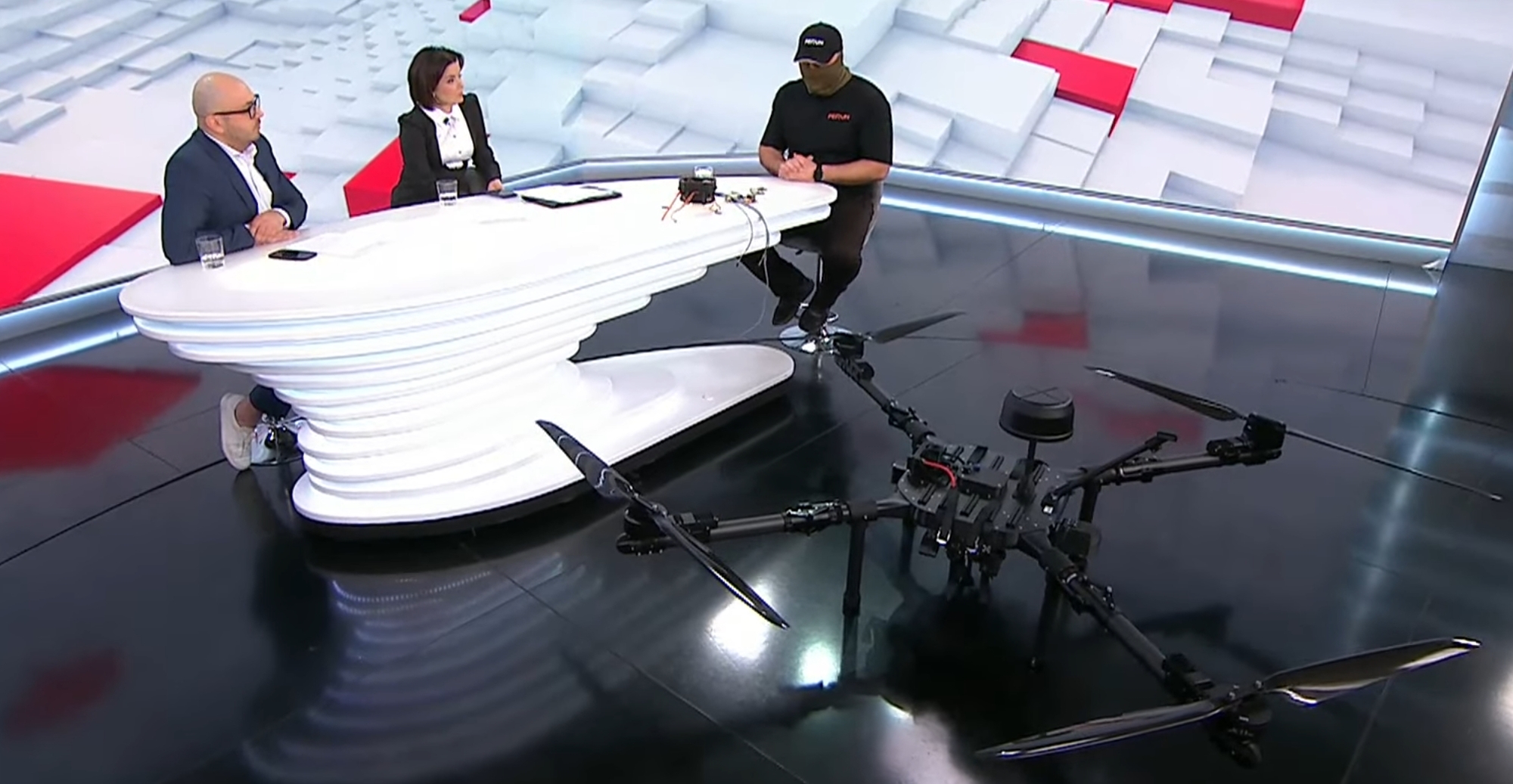
Electronic warfare has become one of the main theaters of war in Ukraine — and drone navigation has found itself at its epicenter. Aleksandr, the director of drone manufacturer Perun, told the telethon on April 7 about a technology that changes the rules of the game: optical navigation based on artificial intelligence that allows an unmanned aircraft to fly and strike targets even with complete GPS jamming.
What the system can do
According to Aleksandr, the new development determines coordinates without satellite signal with an error of up to 5%. But the key detail — not just autonomy, but active attack recognition: the drone distinguishes a real GPS signal from a fake one and automatically switches to optical mode. In other words, the system doesn't wait for the pilot to notice the deviation — it reacts on its own.
«We determine our coordinates without GPS»
— Perun director Aleksandr, telethon, April 7
Spoofing — the substitution of coordinates with a false signal — is considered a more sophisticated threat than simple jamming: the drone doesn't fall, but flies to where the enemy directs it. That is why the ability to detect forgery, rather than just survive its absence — is a qualitatively different level of protection.
Not a solitary attempt
Perun is not the only player in this niche, but one of the few to publicly announce mass production readiness. American-Ukrainian startup Vermeer with an office in Kyiv is developing a similar Visual Positioning System: the system uses up to four infrared cameras and onboard AI that matches video with 2D/3D terrain maps. According to Dronelife, the AFU has already deployed this technology on the front — and in October 2025, Vermeer attracted $10 million in investments from venture fund Draper Associates.
A parallel track — neural network navigation from KrattWorks, as described by IEEE Spectrum: an unmanned aircraft continues its mission even after losing both radio communications and satellite signal simultaneously. The common denominator of all these systems — AI that reads the landscape instead of a satellite.
Why this matters now
Russia actively uses spoofing against reconnaissance drones: an intercepted "scout" leads a strike drone right into an ambush. As VGI notes, redirecting a reconnaissance drone can disrupt an entire strike operation. Optical navigation closes this exact vulnerability — and makes the drone uncontrollable to the enemy, even if they've seized the frequency.
- Jamming — breaks the connection between the operator and the drone
- Spoofing — substitutes GPS coordinates, directing the drone to a point desired by the enemy
- Optical navigation — is tied to terrain and landmarks beyond the reach of radio interference
The question that remains open: are the claimed 5% errors acceptable for reconnaissance, but is it sufficient for precise target engagement in urban development, where the cost of error is measured not in meters, but in buildings?



