Drone attack on Dnipro: 16-story building partially destroyed, people injured
Russian drones struck a residential building in Dnipro — what is known about the casualties, the rescuers’ actions, and the broader context of the attack.

By Tetiana Suchkova-Ladik
January 22, 2026 · 1 min read
What happened
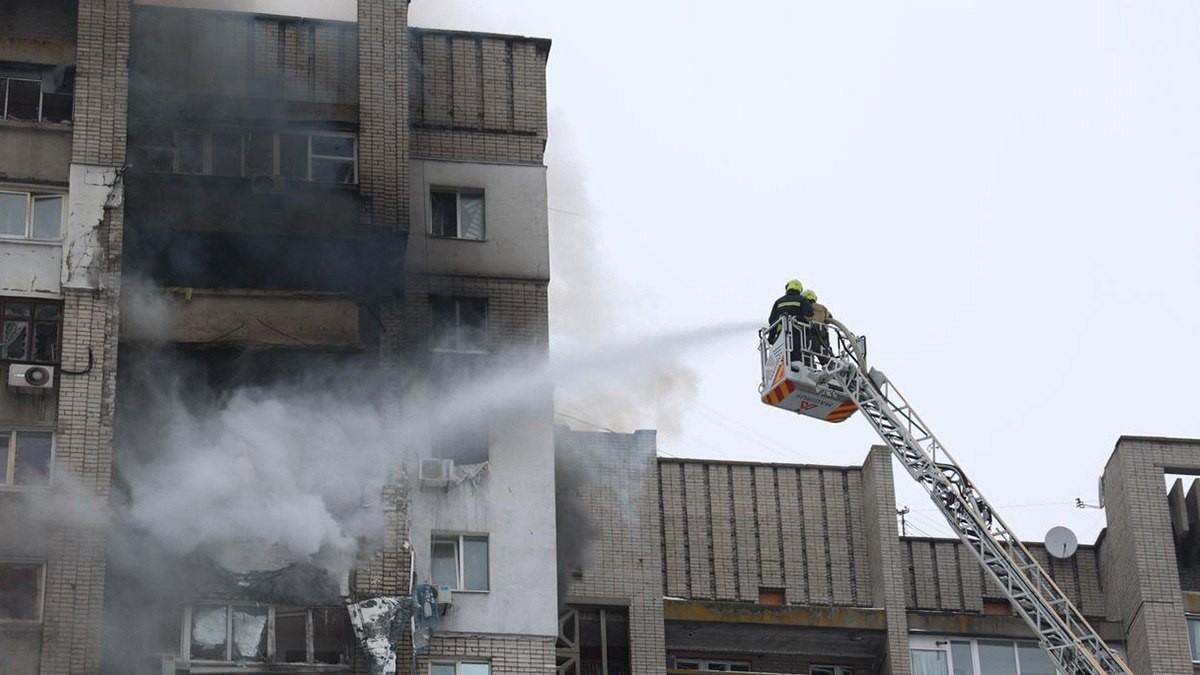
Russian drones struck the residential sector of Dnipro during the night: according to the State Emergency Service (SES), a 16-story building was partially destroyed, and fires broke out in two apartments covering a total area of about 200 m².
"The Russians attacked Dnipro with drones — there is destruction in an apartment building, and people have been injured."
— State Emergency Service (SES)
Rescue operations and the injured
Rescuers managed to evacuate 16 people from the upper floors of the building. Preliminary data indicate 14 people were injured. Among them is a 14-year-old girl (no threat to life), as well as a 64-year-old woman and an 88-year-old man, who are in moderate condition, reported the head of the regional state administration, Oleksandr Hanzha.
"More than 50 rescuers and 17 pieces of equipment are working to address the aftermath; emergency psychological assistance and warming stations have been deployed for residents."
— Oleksandr Hanzha, head of the regional state administration
Broader context
The SES also reported that on the night of January 22 the Odesa, Dnipropetrovsk and Chernihiv regions were struck. During the day of the same date, Kryvyi Rih was hit by a missile strike — there are also casualties and damage there. Such synchronization of attacks fits a pattern noted by security experts: the combination of drones and missile strikes is intended to spread panic and to stretch emergency services' resources.
What’s next
Local services are responding quickly: saving lives and minimizing humanitarian consequences is the priority. At the same time, this attack again raises questions about strengthening air defenses and supporting civilian infrastructure. The response of communities and the state must be twofold: rapid medical and psychological assistance for the injured and systemic support to prevent similar incidents in the future.
While rescuers work to eliminate the aftermath, it is important to follow official announcements from the State Emergency Service and local authorities and not to spread unverified information.



