Johnson rules out a military scenario over Greenland — what it means for NATO and the principle of territorial integrity
Speaker of the House Mike Johnson called a military operation against Greenland unlikely. We explain why this discussion is important for the alliance, for Europe, and for countries defending their borders.

By Tetiana Suchkova-Ladik
January 7, 2026 · 2 min read
What it's about
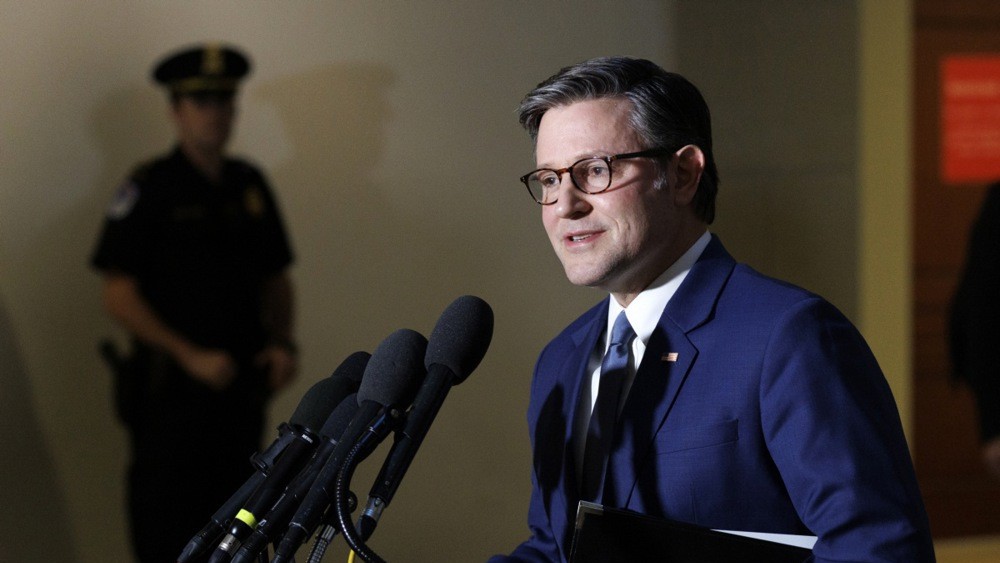
A recording of remarks by U.S. House Speaker Mike Johnson, published by C‑SPAN, has again raised the question of possible American interests in Greenland. Johnson stressed that this is not about military action, but about diplomacy and negotiations — even given the well‑known U.S. strategic interest in the island.
Main point of the statement
"I don't even think that's possible. I don't think anyone is seriously considering it. And in Congress we certainly aren't [considering it]."
— Mike Johnson, Speaker of the U.S. House of Representatives
Johnson also noted that interest in Greenland has a long history — from the Truman era to statements about rare‑earth minerals and other resources. At the same time he emphasized "measured discussions" and the role of diplomatic channels instead of military solutions.
Context: why this is not just rhetorical
Greenland is strategically important: its location and resources make it a subject of interest for major powers. That's why even ironic or hypothetical talks provoke diplomatic reactions.
Earlier, a White House spokeswoman called purchasing Greenland one of the priorities and hinted that one option might involve deploying the military. Such statements increase concern among partners: the French foreign minister and the Danish prime minister have noted that any military strike on Greenland would have serious consequences for NATO, and Denmark regards Greenland as part of its territory.
History gives reason for vigilance: the Trump administration carried out operations without broad agreement from parliamentary institutions (the Venezuela example is often mentioned), so a politician's words do not always equal policy. That's why not only individual statements matter, but systemic mechanisms of oversight and diplomacy.
What this means for Ukraine and for Europe
The principle of territorial integrity is a key element of security in Europe. Discussions about the possibility of seizing territory by force undermine confidence in international norms, on which security guarantees for Ukraine depend. For us the important thing is not emotion but practice: how alliances respond to such signals.
So two things matter: first, whether partners' unity in defending norms will hold; second, whether diplomatic and economic tools will be used instead of force. Johnson emphasizes diplomacy — but the test of words is always the behavior of the state and its institutions.
Conclusion
Johnson's statement reduces the likelihood of an overt military scenario regarding Greenland, but does not eliminate the significance of the issue. For Europe and countries defending sovereignty, assurances alone are not enough; long‑term policy and mechanisms that make forceful decisions unlikely are important. Whether this will be enough to entrench norms of international law is a question for continued observation.



