The Dunning–Kruger Effect: Why Trump Can't Stop the War
The mission of Witkoff and Kushner failed due to a lack of diplomatic competence. Trump entrusted negotiations with Putin to a developer and an investor, demonstrating the Dunning–Kruger effect at the level of the U.S. president.
By Oleg Bazylewicz
December 5, 2025 · 3 min read
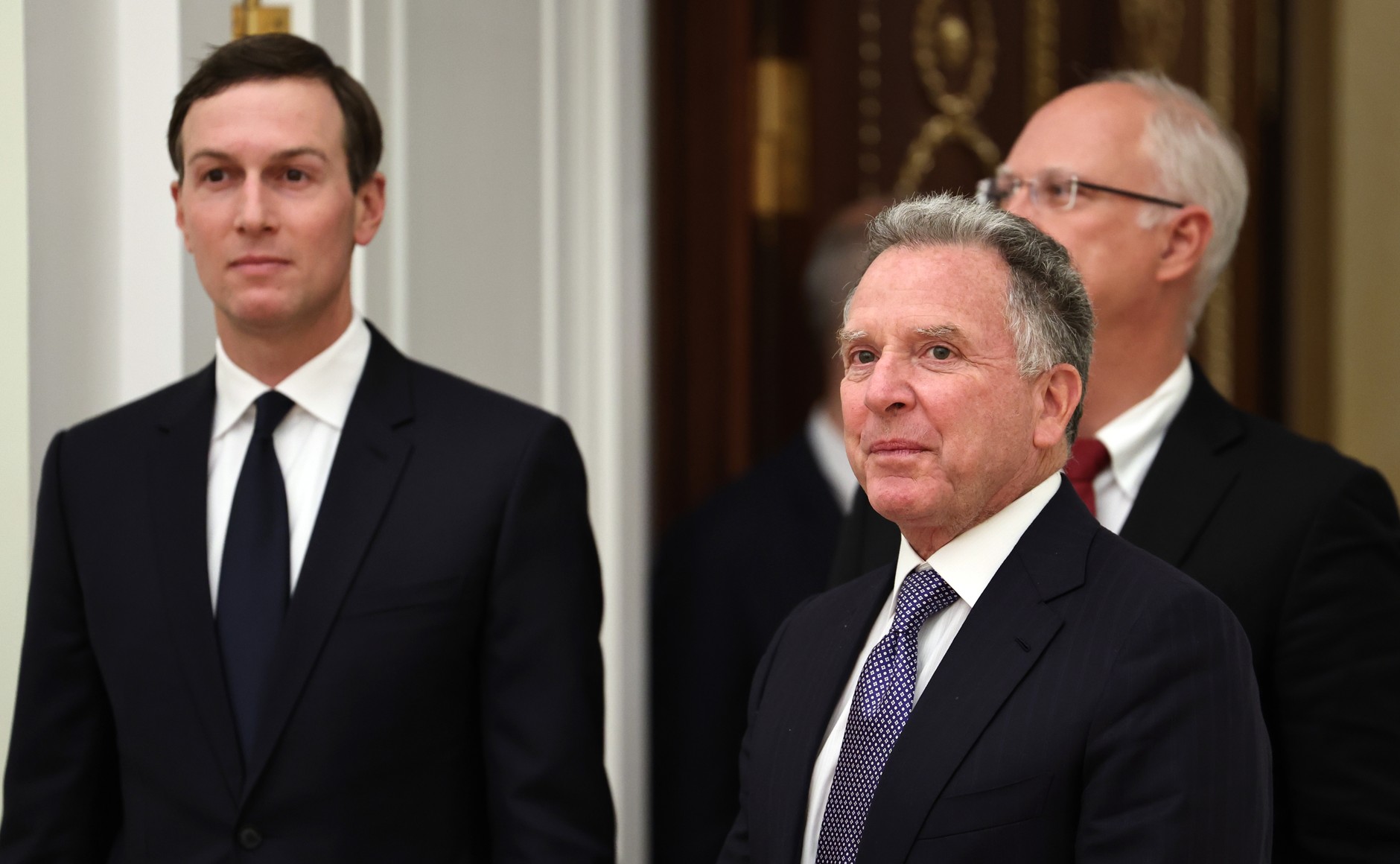
What the hell are real-estate developer Steve Vitkoff and the head of a private investment firm Jared Kushner doing appointed by the President of the United States to negotiate with Putin about ending the war? Why were these people entrusted to discuss the most important matters of war and peace?
The failed mission of the American envoys
The Vitkoff–Kushner mission, which unfolded amid a clamor from the global media that amplified dozens of irresponsible statements from every related and unrelated person, predictably failed. There will be no peace.
"Who are all these people?"
Although the more interesting question is not "who" but "why." Yes, it is utterly irrelevant that both Vitkoff and Kushner are American Jews whose roots lie in the Pale of Settlement in the western outskirts of the Russian Empire (present-day Belarus). It is irrelevant that, before meeting with Putin, a tour of the Moscow synagogue was offered to them, but was later cancelled. It is irrelevant that instead of going to the synagogue they sat and waited two and a half hours for an audience with Putin, who at that time was giving a speech somewhere and, as always, publicly threatening someone.
What is interesting is this: what the hell are real-estate developer Steve Vitkoff and the head of a private investment firm Jared Kushner appointed by the U.S. president to negotiate with Putin about ending the war? Why were these particular people entrusted to discuss the most critical questions of war and peace?
A crisis of competence, or a sign of deeper troubling trends?
Vitkoff's core competence is real-estate development, and Kushner's is investment projects. Although, no—actually Kushner's key qualification is that he is Trump's son-in-law. Was it not obvious in advance that these competencies, to put it mildly, are insufficient to persuade Putin to stop the war? Could nobody among the entire American political-diplomatic beau monde be found who had a bit more appropriate qualifications for this mission?
There is undoubtedly a certain crisis of competence. Trump, in his second term, has taken lessons from the first and now actively appoints so-called "yes-people" to all key positions in the state. These are unprincipled sycophants personally loyal to him. We in Ukraine, unfortunately, know well how that works. One should not expect competence here. But there is a greater problem.
The Dunning–Kruger effect marches across the planet
In December 1999, a paper with a long title was published in the respectable scientific journal Journal of Personality and Social Psychology: "Unskilled and Unaware of It: How Difficulties in Recognizing One's Own Incompetence Lead to Inflated Self-Assessments." A rough rendering: "Those who lack skill and are unaware of it: how difficulties in recognizing one's own incompetence lead to inflated self-assessments."
Yes, those are David Dunning and Justin Kruger, the "fathers" of the Dunning–Kruger effect, who saw it coming—as the effect has been mentioned more and more frequently since the paper's publication. Although in truth we always knew that amateurs cannot admit they are amateurs, because recognizing one’s own incompetence also requires a certain level of competence.
The plague is clearly spreading. And now the Dunning–Kruger effect has finally reached the world's most influential office—the President of the United States. Why this has happened is a separate question and a subject for future research. For now, we can state the fact: Trump is such an amateur in world affairs that he simply cannot recognize his incompetence. He seeks short-term fixes that are not really solutions.
His inflated self-assessment and excessive ego force him to think in terms of deals and to apply "developer" approaches where they do not work and, by definition, cannot work. The global media are full of analyses of the falsity, short-sightedness, and outright amateurism of everything Trump and his yes-people say. Accordingly, the Vitkoff–Kushner mission is also doomed to fail. It is no coincidence that their meeting with Zelensky following the talks with Putin never took place. There was nothing to discuss.
"War, stop. One-two"
And to those in Ukraine who still, for some reason, hope that Trump will "stop the war," one can recall an old army joke about a stupid sergeant of the Soviet army.
Comrade sergeant, stop the train!
Train, stop! One-two!



