Experts warned of risks in the family-reunification provision of the peace plan
Russia could use even the family-reunification provision of the U.S. peace plan against Ukraine because of the legal uncertainty surrounding the concept of "family." International law has no unified definition, which creates room for manipulation.

By Tetiana Suchkova-Ladik
November 29, 2025 · 1 min read
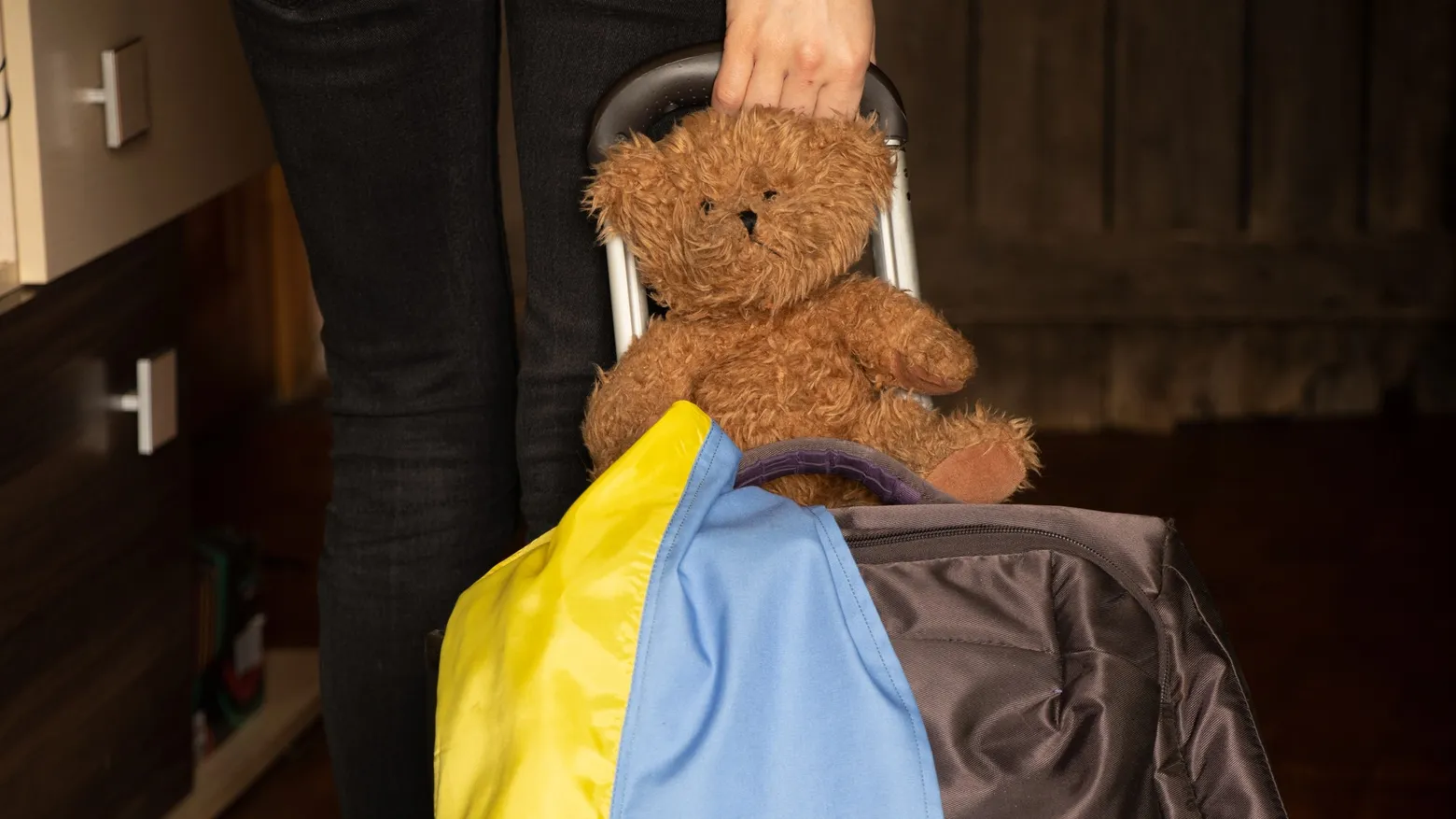
Russia could use even the provision on family reunification contained in the United States' peace plan against Ukraine. The head of the Media Initiative for Human Rights, Tetiana Katrychenko, and legal adviser for Amnesty International Ukraine, Suleyman Mamutov, told the publication about the problems with this provision.
Under the least controversial point of all drafts of the US peace plan, a special humanitarian committee is to be established. Among its tasks is the introduction of a program of the so‑called family reunification.
"However, in reality no one knows what may be hiding behind this."
– Katrychenko noted.
Legal uncertainty of the concept "family"
International law does not have a unified definition of the concept of family – the main sources only establish that it is a natural and fundamental element of society, but its definition may depend on a state's legal system, Mamutov explained to LIGA.net.
He noted that in international law the concept of "family" cannot be narrowed to direct relatives: all stable family or social ties disrupted by the war constitute a separated family.
And legal uncertainty is an ideal ground for political maneuvering and manipulation, since "family reunification" can be interpreted in any way, the legal adviser added.
"It is indeed impossible to avoid the humanitarian issue. After all, it's about thousands of civilian hostages whose fates are unknown, and about families torn apart by filtration and deportation. But even this provision can be used by the Russians against Ukraine."
– the publication reads.
Scale of the problem
The Russians have taken at least 20,000 children out of Ukraine; only 1,400 have been returned. Around 1.6 million Ukrainian children still live in Ukraine's temporarily occupied territories.



