Fico backs EU mandate to negotiate with Russia — on condition of Ukraine's consent
In high diplomacy, quiet agreements matter more than loud statements. Slovak Prime Minister Robert Fico backed Belgium's initiative for an EU mandate to negotiate with Moscow — but attached one key condition that directly concerns Ukraine's sovereignty.

By Tetiana Suchkova-Ladik
March 15, 2026 · 2 min read
What happened
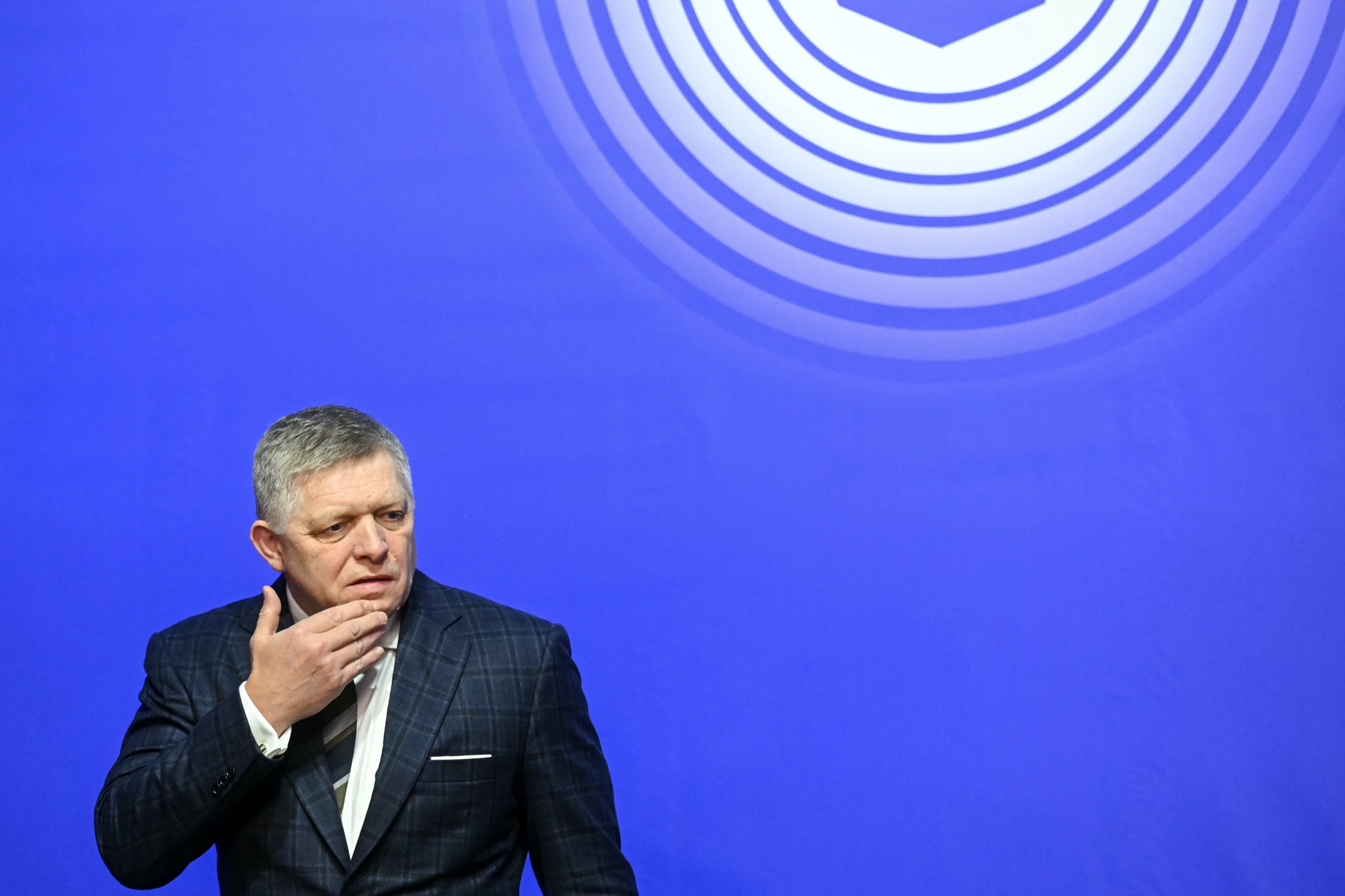
Slovak Prime Minister Robert Fico, in a video address on Facebook, spoke in favor of a proposal by Belgium’s prime minister to give the European Union a mandate to conduct negotiations to resolve Russia’s war against Ukraine. The Belgian government’s initiative was first made public on 14 March 2026, and earlier Poland’s foreign minister Sikorski had also supported Europe’s involvement in mediation.
"If the EU asked for a mandate for peace negotiations, I would vote with both hands"
— Robert Fico, Prime Minister of Slovakia
Fico also criticized those who, in his view, benefit from keeping the conflict in a prolonged state of war. He called the current fighting "a senseless mutual slaughter of Slavs" and urged seeking an outcome through negotiations.
"Such voices of common sense should only be welcomed"
— Robert Fico, Prime Minister of Slovakia
Why this matters for Ukraine
The proposal to grant a an EU mandate means that the negotiating initiative could be coordinated not by a single state but by a structure with political and economic levers of influence. This has positive aspects (coordination, a common position of member states) and risks — above all, if the process takes place without full participation of Ukraine.
Fico explicitly warned of the danger of repeating a scenario referred to as "a new Munich Agreement": any deals must be concluded only with the participation and consent of Ukraine. It is precisely this condition that converts Fico’s statement from a scholastic diplomatic gesture into a real security interest for Kyiv.
Reaction and risks
Analysts point to several key points: first, an EU mandate could ensure a more homogeneous European position in negotiations; second, if talks begin without Ukraine’s direct participation or under pressure, this will put its territorial integrity and international guarantees at risk.
Social proof: the initiative has already been discussed by several European politicians, and Fico’s position adds weight to the debate, as it underscores that the issue is no longer just one for individual capitals.
What next
The key question is not whether to negotiate, but who negotiates and on what terms. It is important for Ukraine to insist on three principles: participation in all agreements, security guarantees, and the irreversibility of territorial integrity. If these conditions are enshrined in the mandate or in prior parliamentary decisions of EU countries, the mandate could become an instrument that protects Kyiv’s interests. If not — there is a risk of diplomatic pressure being used to force unacceptable compromises.
Now the ball is in the partners’ court: declarations about a mandate must be turned into clear legal mechanisms that take Ukraine’s interests into account — otherwise the voices invoking "common sense" may prove to be no more than rhetoric.



