France to quadruple its stockpile of kamikaze drones by 2030 — budgets €8.5bn for rearmament
A draft of the new military-planning law obtained by Politico sets out specific figures: a 400% increase in loitering "kamikaze" drones, a 240% rise in AASM Hammer precision-guided bombs, and a 30% boost in Aster and Mica missiles. MBDA is already outpacing its own production plans fivefold.

By Tetiana Suchkova-Ladik
April 4, 2026 · 2 min read
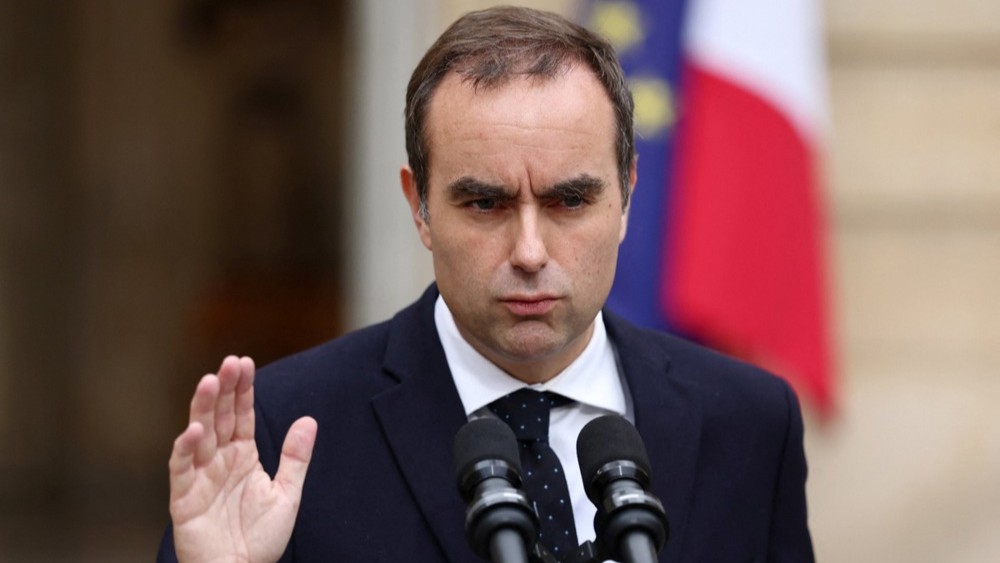
The French government is preparing an updated military planning law to be presented on April 8. The document foresees allocating €8.5 billion to unmanned systems and missiles by 2030 and for the first time enshrines concrete quantitative targets for stockpile increases.
What and by how much
Under the plan, stocks of kamikaze drones will rise by 400%, Safran-produced AASM Hammer guided bombs by 240%, and MBDA-produced Aster and Mica missiles by 30%. This is not a budgetary declaration — the figures are tied to specific types of armaments and manufacturers.
“The urgent need is, of course, ammunition”
French Minister of the Armed Forces Sébastien Lecornu, quote via Politico/Oboronka
Most European countries accelerated the development of their defence capabilities after the full-scale war in Ukraine began in 2022, spending billions of euros on armaments. These efforts intensified after Donald Trump’s re-election, amid fears that Washington might withdraw from NATO.
Production is already moving faster than schedule
The plans do not look declarative — the industrial base is already being restructured. In 2025 MBDA exceeded planned production figures for the Aster missile family fivefold, and the production cycle was reduced from 42 months in 2022 to 30 months.
MBDA plans to increase overall production volume by 40% this year. A contract signed in 2023 for 700 Aster 15, Aster 30 B1 and Aster 30 B1NT missiles for France and Italy was later expanded to 918 missiles — the UK joined the deal.
Connection to Ukraine
The French contract includes Aster 30 missiles, some of which are intended for transfer to Ukraine. They are capable of intercepting aerial targets at ranges of up to 120 km. At the same time, Paris is ordering a new batch of SCALP-EG cruise missiles — the French analogue of the British Storm Shadow, which are already being used in Ukraine.
- Aster 30 — the main missile for the SAMP/T air defence system (the European analogue of the Patriot), already employed in Ukrainian air defence
- AASM Hammer — a guided air bomb with a range of up to 70 km, adapted for various platforms
- Mica — a multi-role missile for aircraft and ground-based air defence systems
President Macron announced that the budget of the Ministry of the Armed Forces will reach €64 billion by 2027 — two years earlier than the original plan. Although these figures require annual parliamentary approval, they clearly signal a trajectory of rising military spending.
The key question is not whether parliament will vote for the figures on April 8, but whether French industry will manage to ramp up capacities to the pace set in the law: if MBDA’s production chain faltered on Aster in 2022–2023 even at lower volumes, then a fourfold increase in kamikaze drones over five years raises questions for subcontractors and the raw materials supply chain, answers to which are so far absent from the document.



