Heraskevych in Munich: a voice of remembrance that bolsters international support for Ukraine
At the Ukrainian lunch of the Munich conference, skeleton racer Vladyslav Heraskevych addressed world leaders — briefly, personally and with a message of unity and remembrance. Why this matters for Ukraine’s diplomacy and image.

By Tetiana Suchkova-Ladik
February 14, 2026 · 2 min read
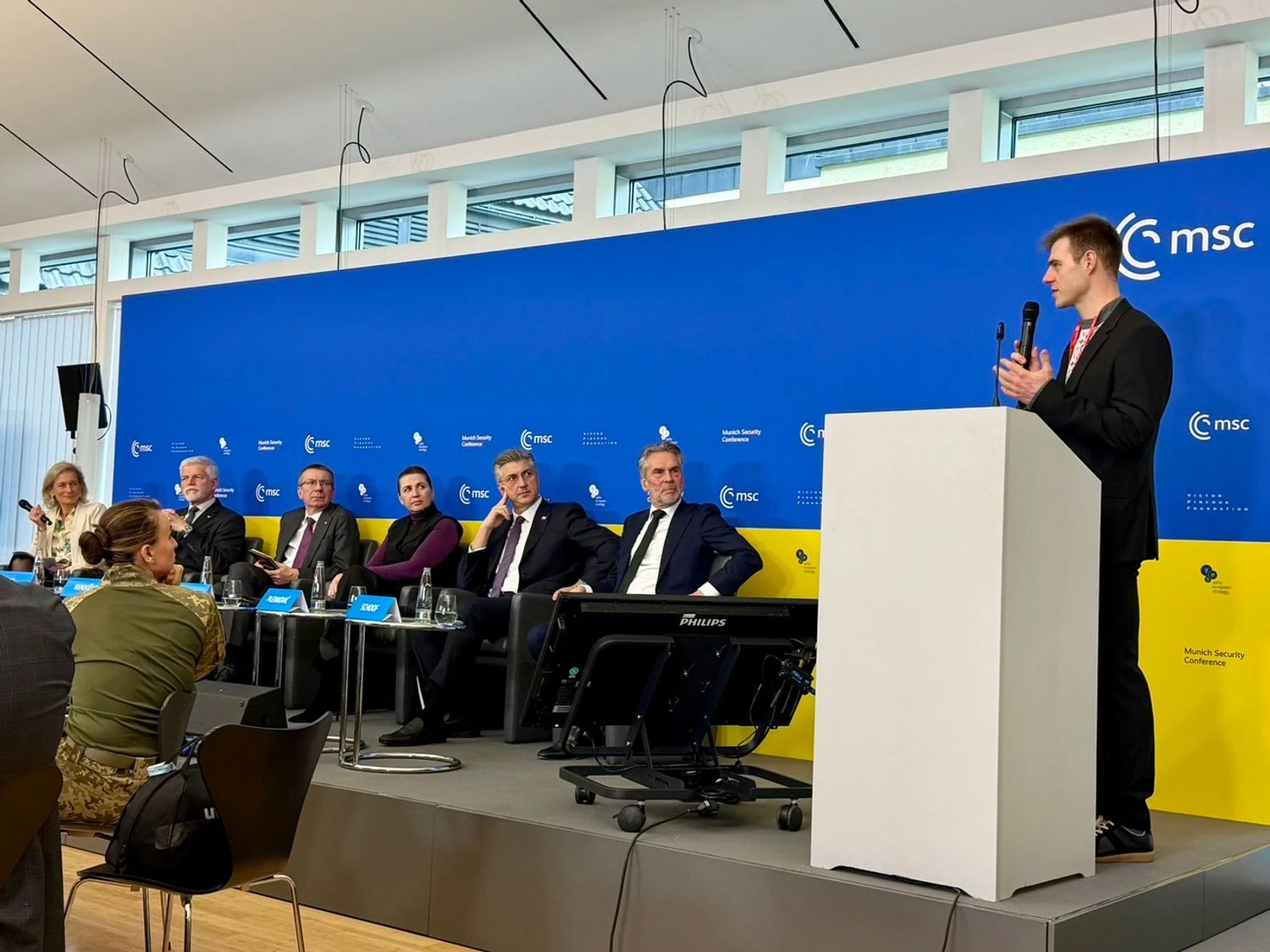
On the sidelines of the Munich Conference
Ukrainian skeleton racer Vladyslav Heraskevych spoke during the Ukrainian lunch at the Munich Security Conference. His speech was reported by Member of the European Parliament Hannah Neumann, and carried by international agencies (UNN — as the source of the report). Short in length, the speech was rich in symbolism and had a clear foreign-policy impact: to remind of the victims and keep international attention on supporting Ukraine.
World leaders are listening to Vladyslav Heraskevych
— Hannah Neumann, Member of the European Parliament
What Heraskevych said
Heraskevych was invited as a special guest and delivered a brief but emotionally charged speech. He emphasized the importance of unity around Ukraine and remembrance of the dead, linking this to the ability of Ukrainian athletes to compete on the international stage.
I think that in these crazy times, in what I have faced in recent days, the brightest part was the coming together around Ukraine, and I hope we can keep that for as long as possible: unity around Ukraine and the memory of the people who sacrificed their lives. Thanks to that sacrifice we can be at the Olympic Games today as Team Ukraine, and I am very grateful for that.
— Vladyslav Heraskevych, skeleton racer
He also noted that the families of fallen athletes supported the initiative of the “helmet of memory” — a symbolic gesture that transforms personal loss into a nationwide story of remembrance.
Context and consequences
This speech is an example of how soft power works in diplomacy: instead of loud declarations — a personal story that resonates with the audience. The presence of an athlete at an event attended by politicians and experts amplifies the message of solidarity and keeps the issue of victims at the center of the international agenda.
Beyond symbolism, Heraskevych touched on the legal aspect: while in Munich he commented on the appeal regarding his disqualification at the Olympics, saying he perceives the decision as a blow not only to himself but to all of Ukraine. That framing depersonalizes the issue — turning an individual conflict into an argument for international protection of the Ukrainian delegation’s interests.
The International Olympic Committee disqualified not me, but Ukraine
— Vladyslav Heraskevych, skeleton racer (comment on the appeal)
What next?
Such a speech is not a one-off emotional act, but an element of a strategy: to keep partners’ attention, consolidate support, and strengthen the case in international institutions. The question for the Ukrainian side and its partners is whether they will turn these signals into concrete steps — from supporting appeals to bolstering protection for athletes and recognizing symbols of remembrance on international platforms?



