Incident at Odesa recruitment center: self-inflicted injury and two versions — what it means for public trust
In Odesa, a man cut his neck and arms inside the premises of the Kyiv Regional Territorial Recruitment and Social Support Center. The military commissariat says it was an act of aggression and an attempt to evade conscription; the man claims he was coerced and that his belongings were confiscated. We examine why the answer to this question matters for security and trust in the system.

By Tetiana Suchkova-Ladik
December 17, 2025 · 3 min read
What happened
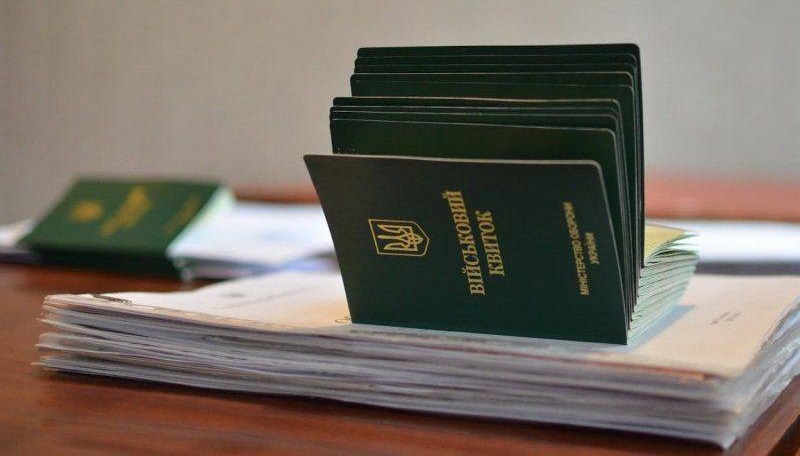
In Odesa, inside the Kyiv District Territorial Center for Recruitment and Social Support (РТЦК та СП), a man sustained cuts to his arms and neck. According to the military commissariat, he was brought in by police as part of a search for violations of military registration rules; during standard procedures the man allegedly behaved extremely aggressively and threatened with a knife, after which he inflicted cuts on himself. He was hospitalized; medics and police responded to the call.
"We emphasize separately that no measures of physical coercion or unlawful actions were applied to the citizen by servicemen of the TC for Recruitment and Social Support..."
— Kyiv RTCK and SS
Accounts of the parties
RTCK's position: The man was brought to the military commissariat because he was wanted for violating registration rules and did not provide documents proving unfitness for service. No deferment markings were found in the unified electronic registry "Oberig." The military commissariat characterizes the actions as an attempted self-harm to avoid conscription and reports that an ambulance and the police were called to provide assistance.
The man's version: A video circulating in local social media shows him identifying himself as Nazar Uzhviy and claiming that on December 15 he was allegedly detained on his way from training, placed in a car and taken to the RTCK. According to him, his phone and money were taken there, and 20–30 people were held inside the premises for a day without explanation. In the video he says he cut himself with a knife he found inside.
"They detained me on the way from training... they took my money and phone. I was there for a day, they didn't explain why they were holding me."
— Nazar Uzhviy, in the video
The man also claims he has a military ID with a mark of unfitness due to eye surgeries, issued by the Kirovohrad military commissariat. This information should be confirmed or refuted by an official investigation and registry checks.
Context and significance
This incident occurs against the backdrop of a series of troubling events in the city: on November 21 an explosion with casualties occurred at one of Odesa's district TCCs, and on December 4, according to the NGO "Defense of the State," there was allegedly an attack on a sailor involving employees of the Prymorskyi TCC — because of that the military commissariat announced an internal investigation. It is precisely because of such cases that public attention to the practices and procedures in these institutions is increasing.
The issue goes beyond a single incident: it is about trust in the registration and conscription system, transparency of procedures and mechanisms for reviewing complaints. If the military commissariat's version is confirmed, it would indicate cases of evasion and manipulation; if the man's account is confirmed, it would call into question the approach to handling citizens at the RTCK.
What should happen next
Key steps to clarify the situation: checking the "Oberig" registry records, medical documentation and police reports, video analysis and, if necessary, the results of an internal investigation. The military commissariat already says no physical coercion was used and that measures were taken to preserve the victim's life — these statements must be supported by documentation.
For the public and local authorities it is important that the investigation be prompt and public. Answers to questions about proper procedures and accountability in such cases affect perceptions of the mobilization system as a whole.
Conclusion
We have two mutually exclusive versions and a number of facts that need to be checked: registry records, medical documents, video and investigative findings. Setting emotions aside for now — transparency of the process is crucial. The question is not only what happened to one person, but whether institutions can promptly provide answers that will restore citizens' trust.



