Iran Hits Diego Garcia: First Use of Medium-Range Ballistic Missiles and Why It Matters for Security
According to the Wall Street Journal, Iran carried out an unsuccessful attack with two ballistic missiles on a joint US and UK base in the Indian Ocean. This is not just an incident — it is a test of range and deterrent systems, the consequences of which will be felt not only by Washington and London but also by alliance partners.

By Tetiana Suchkova-Ladik
March 21, 2026 · 2 min read
Brief and important
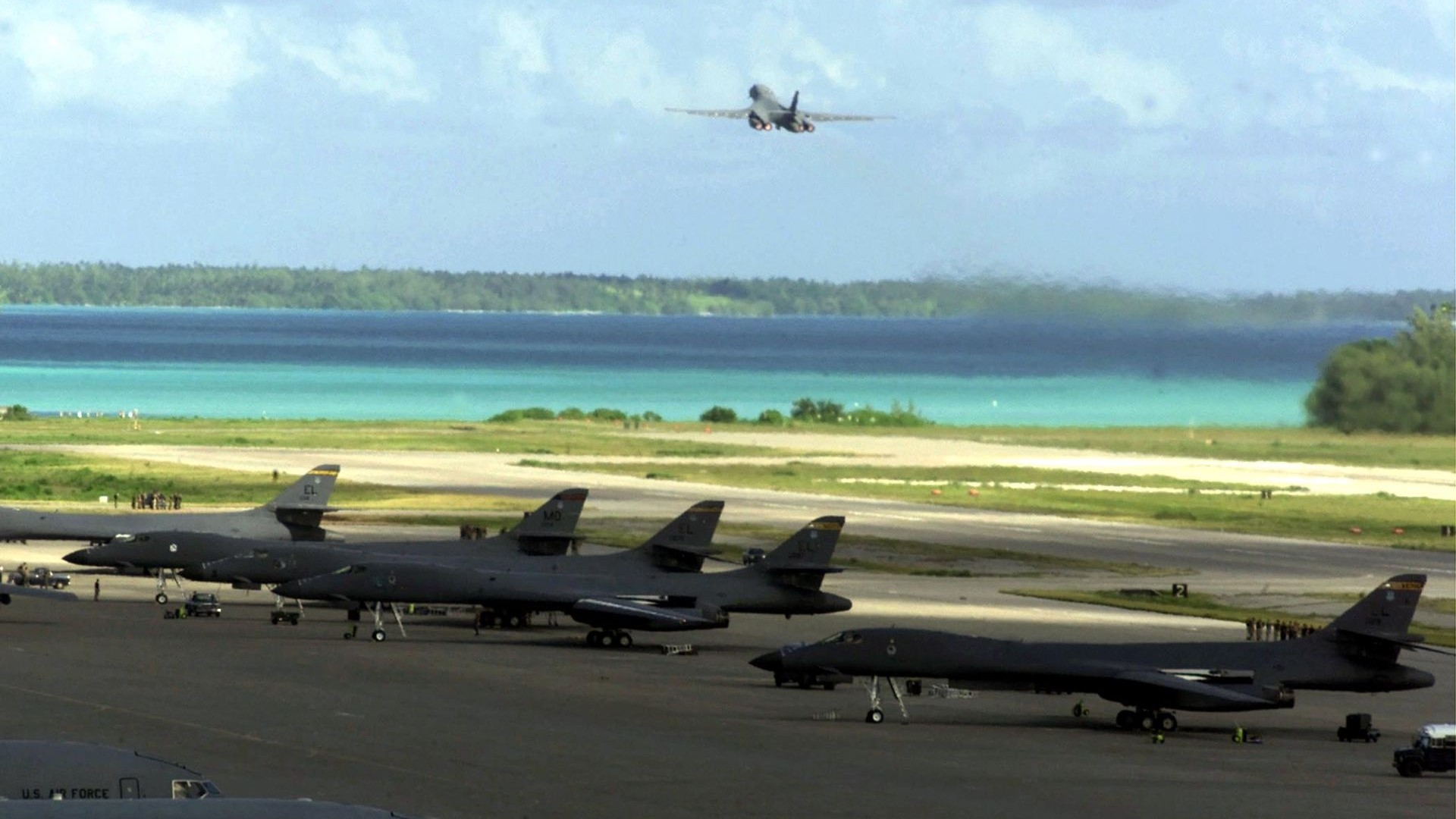
WSJ, citing U.S. officials, reports that Iran launched two medium-range ballistic missiles at the base on the island Diego Garcia. None of the missiles hit the target: one malfunctioned in flight, and an SM-3 interceptor was launched from a U.S. ship against the second — final confirmation of the interception could not be obtained.
Details of the incident
The island of Diego Garcia is located approximately 4,000 km from the territory of Iran; the base hosts strategic U.S. and British assets — from bombers to submarines and guided-missile destroyers. Experts say a launch at such a distance indicates Iran possesses missiles with greater range than it has officially acknowledged (Tehran previously spoke of limits up to 2,000 km).
"This is the first instance of Iran using medium-range ballistic missiles — a significant attempt to reach targets far beyond the Middle East"
— The Wall Street Journal, citing U.S. officials
What analysts say
Research centers, including Iran Watch and Israel's Alma Center, had earlier estimated the potential of Iranian missiles in the roughly 3,000–4,000 km range. The actual launch now lends weight to those estimates and forces a reassessment of assumptions about Tehran's technological capabilities. Experts point to two key things: first, it signals an expansion of reach; second, it is a test of allied air and missile defense systems in remote areas.
Why this matters for Ukraine
At first glance the event concerns the Indian Ocean, but the consequences are global. The spread of mobile and sea-based long-range delivery means lowers the threshold for distant strikes on infrastructure and military facilities. For Ukraine, this is a signal to strengthen its early-warning systems, look at integrating defensive technologies, and work with partners on transatlantic supply chains and intelligence coordination.
Reaction and possible actions by allies
According to reports, at the same time the U.S. temporarily allowed the purchase of Iranian oil that was under sanctions on the open sea (about 140 million barrels) — part of a broader strategy that combines economic pressure with diplomatic and defense measures. In the short term, allies will most likely combine public rhetoric with behind-the-scenes measures to bolster air defenses and intelligence in critical regions.
Conclusion
This is not just a story about a failed launch — it is a demonstration of capability and a test of deterrence readiness. Allies will need to turn diagnostics into concrete decisions: from modernizing air defenses to coordinating maritime security and intelligence-sharing. For Ukraine, the key question remains the same: how quickly partners can transform declarations into practical tools of protection.



