Iran Acknowledges Military Cooperation With Russia and China — Risks for the US and Opportunities for Ukraine's Defense Industry
The Iranian foreign minister in an interview with MS NOW directly confirmed military ties with Moscow and Beijing. We analyze why this matters for regional security, what the implications are for pressure on Russia — and why Ukrainian air-defence and drone manufacturers may find themselves at the center of new orders.

By Tetiana Suchkova-Ladik
March 15, 2026 · 2 min read
What Tehran said
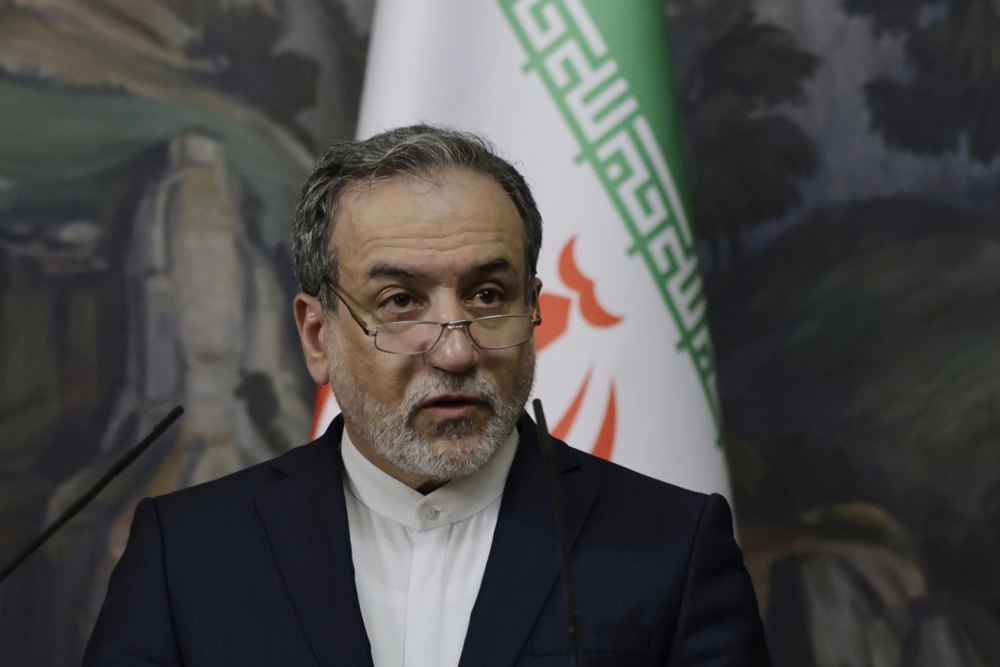
In an interview with the American channel MS NOW, Iran's foreign minister Abbas Araghchi confirmed the existence of close cooperation with Russia and China — including a military component. He declined to go into details, but was clear: the cooperation is “political, economic, even military.” The quote is cited by MS NOW; the conclusions and context are supported by reporting from LIGA.net and international media.
"Well, Russia and China are our strategic partners, and we have had close cooperation in the past that continues today. This applies to military cooperation as well. But I will not go into details... We have established cooperation with these two countries — in political, economic, even military spheres."
— Abbas Araghchi, Iran's foreign minister
Context: why this is happening
This decision logically fits into the geopolitical reality: U.S. pressure and Israeli strikes push Tehran to seek external support, while Moscow and Beijing gain an opportunity to strengthen their influence in the region. For Russia, cooperation with Iran is a way to expand asymmetric capabilities against Western interests; for China, it is an instrument of geo-economic balancing and access to strategic data.
What this means for Ukraine
First, strengthening military ties between Iran, Russia and China could reduce international pressure on Moscow, directly affecting the dynamics of the negotiation process over Ukraine. As the Financial Times notes, escalation in the Middle East could weaken the focus of the U.S. and EU on putting pressure on the Kremlin.
Second, rising tensions in the region increase demand for counter-drone systems and intelligence — a niche in which the Ukrainian defense industry has technological capabilities. LIGA.net points to the possibility of producing and exporting interceptor drones and air-defense systems specifically for countries in the region.
"I have one hundred percent proof that the Iranian regime used them against American bases and against Iran's neighbors in the Middle East... those Iranian drones contained Russian components."
— Volodymyr Zelensky, President of Ukraine (interview with CNN)
What Western sources say about it
Interviewees for the Financial Times note that the escalation in the Middle East and growing support for Tehran reduce international pressure on Moscow and complicate unified coordination of measures against Russia. Certain political figures, including Donald Trump, have openly discussed various scenarios for involving regional players, which further reshapes the balance of power in diplomatic circles.
Conclusion
Confirmation of military cooperation between Iran, Russia and China is not just another item in the geopolitical chronicle. It is a signal: fronts affect one another, and risks and opportunities are being redistributed faster than the patterns in capitals. For Ukraine, the key question is whether partners can convert strategic declarations into concrete assistance and whether our defense industry will seize the chance to occupy a place in expanding markets.
Question for decision-makers: will Western and regional players turn growing tensions into practical support that strengthens Ukraine while simultaneously narrowing Russia's room for maneuver?



