From 2.5 billion in defense funds — 576 million into the shadows: how a conversion center operated on equipment repairs for the Armed Forces
A private company received billion-hryvnia contracts from the Defense Ministry and National Guard for years while simultaneously operating a network of shell companies managed by residents of the occupied "DNR." Seven suspects have been remanded into custody without bail.

By Tetiana Suchkova-Ladik
April 27, 2026 · 2 min read
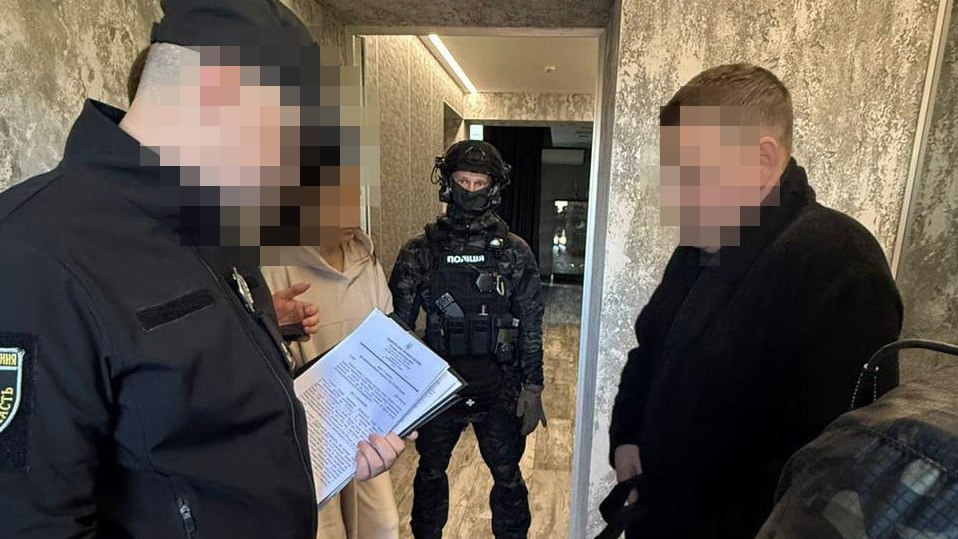
Between 2023–2025, a private enterprise received over 2.5 billion hryvnias from the state for repairing military equipment for the Ministry of Defence and the National Guard. According to the investigation, 576 million hryvnias from this amount were diverted into the shadow economy through a so-called "conversion center." On April 27, the Office of the Prosecutor General and the Department of Strategic Investigations announced suspicions against seven individuals.
How the scheme worked
According to the investigation, the contractor company used the services of a criminal organization that had built a network of at least 40 shell companies. These firms existed only on paper: with no employees, no production capacity, and with proxy directors.
"Through a network of transit firms, funds were 'laundered' and returned to customers in cash for their illegal enrichment, while the 'conversion center' company received a percentage for 'services.' Simultaneously, artificial losses were created for the enterprise to avoid paying taxes. According to expert findings, the amount exceeds 100 million hryvnias."
Prosecutor General Ruslan Kravchenko
A detail that distinguishes this case: among the nominal directors of shell companies are Ukrainian citizens who have been living in the occupied territory of the "DPR" since 2014 and support Russian aggression. One of the defendants, according to the SBI, works as a teacher in the occupied territory and received the award "Teacher of Russia."
What was seized and who was notified of suspicion
Investigators conducted more than 40 searches. Cash, vehicles, equipment, seals, and "black" accounting records were seized. All seven suspects are in custody without the right to bail.
They are charged with three articles of the Criminal Code:
- Art. 255 Part 1–2 — creation of a criminal organization and participation in it;
- Art. 209 Part 3 — legalization (laundering) of funds obtained through criminal means;
- Art. 212 Part 3 — tax evasion.
The pre-trial investigation is being conducted by investigators of the Main Investigation Department of the National Police with operational support from the SBI and with the involvement of specialists from the State Financial Monitoring Service. It is noteworthy that three participants in the scheme were notified of suspicion last year — the current seven individuals are a continuation of the same case.
Suspicion is not a conviction
In accordance with Article 62 of the Constitution of Ukraine, a person is considered innocent until their guilt is established by a court verdict. All the facts presented represent the investigation's version at the pre-trial investigation stage.
As Kravchenko emphasized: "This is not a documentation error and not a commercial dispute — this is an organized scheme." The question that remains open: if the proxy directors of these companies have been living in the occupied territory since 2014 — were these companies inspected during the initial accreditation process as subcontractors for defense contracts, and who specifically accredited them?



