Canada steps up aid to Ukraine: hundreds of armoured vehicles, $1.5 billion and sanctions against the "shadow fleet"
Ottawa continues Operation UNIFIER, is transferring more than 400 armored vehicles and allocates nearly $1.5 billion for defense needs and energy financing — sanctions on ships and the drop in Russian oil prices are having financial and tactical effects.

By Tetiana Suchkova-Ladik
February 24, 2026 · 2 min read
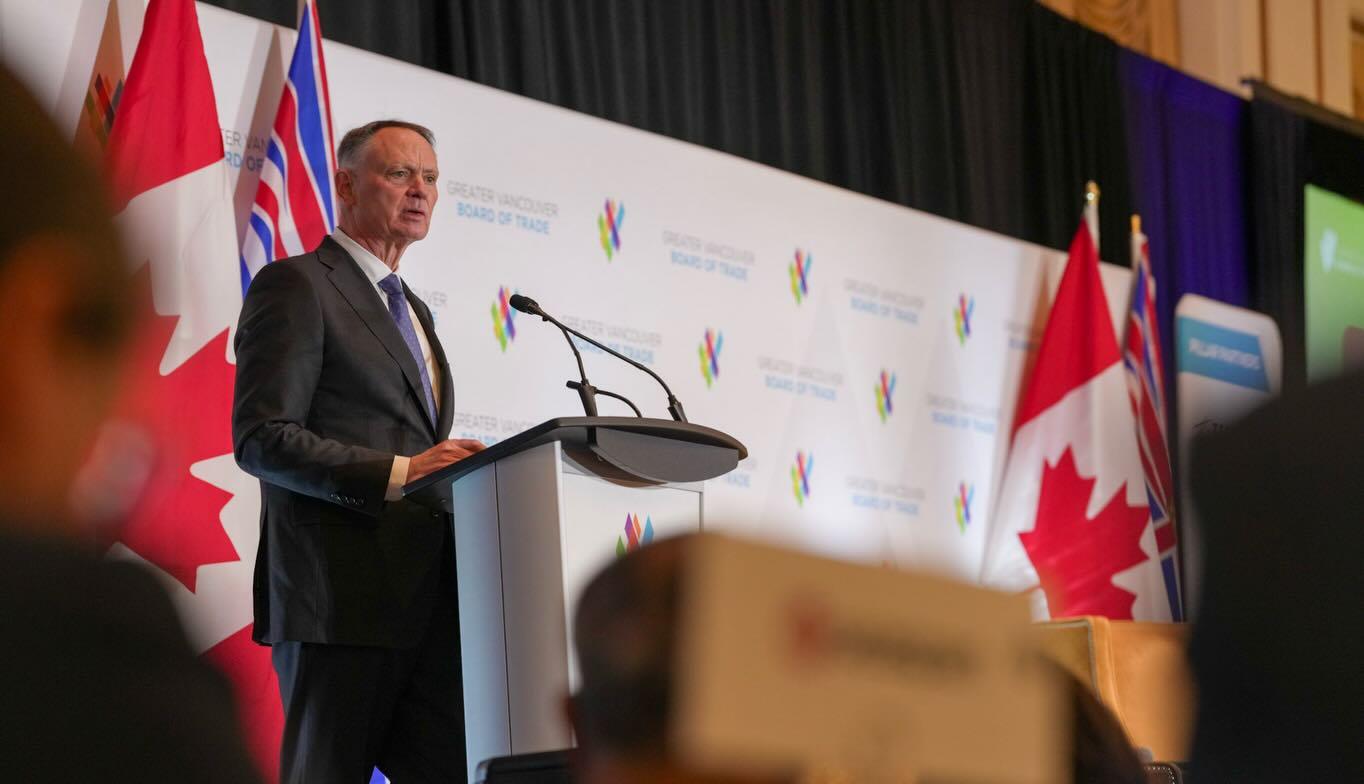
In high diplomacy, it's not loud declarations but quiet agreements that matter
On the fourth anniversary of the full-scale invasion, the Government of Canada announced a support package for Ukraine that combines material aid, funding for key needs and a strike against Russia's logistics. This is not a one-off action — it is a set of measures that will operate simultaneously on the front, in the energy sector and on energy markets.
What was announced in Ottawa
Key points from the official statement: the extension of operation UNIFIER for another three years — until 2029; the allocation of 2 billion CAD (approximately $1.5 billion) for the 2026–2027 fiscal year; the transfer of more than 400 armored vehicles (including 66 6th-class light armored vehicles from General Dynamics and 383 Senator vehicles from Roshel); a contribution to the Ukraine Energy Support Fund — 20 million CAD (about $14.6 million); sanctions against 21 individuals, 53 organizations and approximately 100 vessels of the so-called “shadow fleet”; and a reduction of the maximum price on Russian oil from $47.60 to $44.10 per barrel.
“Canada continues to strengthen Ukraine’s capabilities through training, equipment and financial support, while limiting Russia’s ability to circumvent sanctions.”
— Official statement from the Government of Canada
What this means for the front
The delivery of hundreds of armored vehicles and the extension of UNIFIER are not just about equipment and instructors. They speed up logistics, train new tactics and increase unit mobility. 6th-class light armored vehicles bolster reconnaissance and patrolling, while the Senator supports troop transport and casualty evacuation. Analysts in domestic and Western defense circles agree: systematic deliveries and training produce a noticeable effect on medium-term combat readiness.
Energy and sanctions: a strike against Russia's logistics
20 million CAD to the Energy Fund is a targeted contribution for restoring critical infrastructure and projects to increase grid resilience. Meanwhile, sanctions against about 100 vessels and the lowering of the price cap for Russian oil have an economic impact: they complicate the operations of the “shadow fleet” used to evade restrictions and reduce the profitability of Moscow’s export schemes.
International context
Canada’s announcement fits into a broader trend: recent decisions by Sweden (a large package to strengthen air defense) and the European Commission’s promises to deliver priority weapons by Easter create combined pressure on the adversary. Together this sends a signal: assistance is becoming more diverse and focused not only on individual systems but on comprehensive support.
Conclusion
Ottawa has provided resources at once — equipment, money and diplomatic levers. The next stage is oversight of implementation: when and how the armored vehicles will arrive, how effectively the Energy Fund will be used, and whether the sanctions can cut off the key routes of the “shadow fleet.” Analysts warn: announcements are important, but the outcome depends on logistics and partner coordination. Whether these declarations will translate into noticeable changes on the front and in the energy grid is a question for the coming months.



