Kim Jong Un Re-elected General Secretary: Regime Stability and Risks to Ukraine's Security
The re-election of Kim Jong Un is not merely a ritual of regime self-strengthening in North Korea. It signals a continued course toward military modernization and the strengthening of ties with Russia — factors that directly affect Ukraine’s security interests.

By Tetiana Suchkova-Ladik
February 23, 2026 · 2 min read
What happened
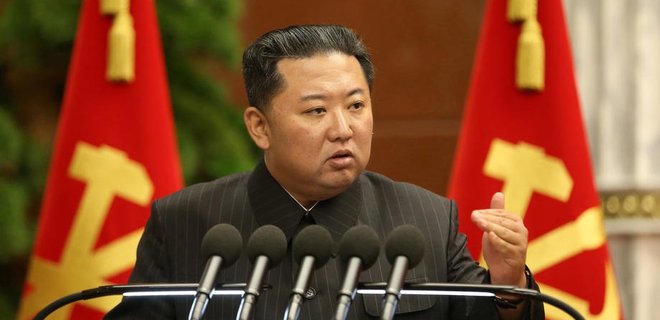
Kim Jong Un was re-elected as general secretary of the ruling Workers’ Party of the DPRK at its ninth congress, the state news agency KCNA reported. The previous formal confirmation of this post took place on January 11, 2021; in practice Kim has been in power since December 2011 following the death of his predecessor.
"...the country's military deterrent capability has radically improved..."
— KCNA, state news agency
Context: why this matters for us
The re-election signifies not only internal legitimization of the leader but also a continuation of the regime's external line — toward strengthening military capabilities and building strategic ties. For Ukraine this has three key dimensions.
Nuclear and naval modernization. In December 2025 the DPRK showcased its first nuclear submarine. Although there are no official confirmations of external assistance, experts do not rule out the involvement of foreign technologies and materials, which increases the global imbalance in access to advanced weaponry.
Military cooperation with Russia. According to Ukrainian intelligence and other sources, North Korea is already involved in supporting Russia's military potential — from supplying manpower to possible technical solutions. This is not an abstract threat: such ties directly affect the course of the war against Ukraine.
Direct intelligence reporting. The Main Intelligence Directorate of Ukraine (GUR) reported the presence of North Korean military personnel in the Kursk region on Russia's side — another indicator of the flow of resources and personnel into conflict hotspots.
"North Korean military personnel are still fighting for Russia in the Kursk region"
— Main Intelligence Directorate of Ukraine (GUR)
Personnel outlook and external reaction
Reuters notes the absence at the conference of Kim Jong Un's daughter Kim Ju-ae, who previously figured in discussions about possible succession. This underscores that in Pyongyang the consolidation of the existing power vertical is now more important than a public generational change.
What's next: a brief forecast
The re-election is a signal of regime stability and a continuation of the course toward military power. For Ukraine, this means strengthening intelligence and diplomatic work: monitoring supply channels, blocking sanction-evasion schemes, and coordinating with partners to counter technical assistance that bolsters Russian aggression.
The question naturally arises: will this remain merely a ritual of internal legitimization, or will it become a catalyst for a new wave of military-technical support for Russia? Much will depend on how quickly and coherently the international community responds.



