Coalition Without the US: Why Britain and France Are Gathering 30 Countries Around Hormuz
London and Paris are forming a "strictly defensive" mission to restore shipping in the Strait of Hormuz — separate from the American blockade and outside NATO as a structure.

By Tetiana Suchkova-Ladik
April 14, 2026 · 2 min read
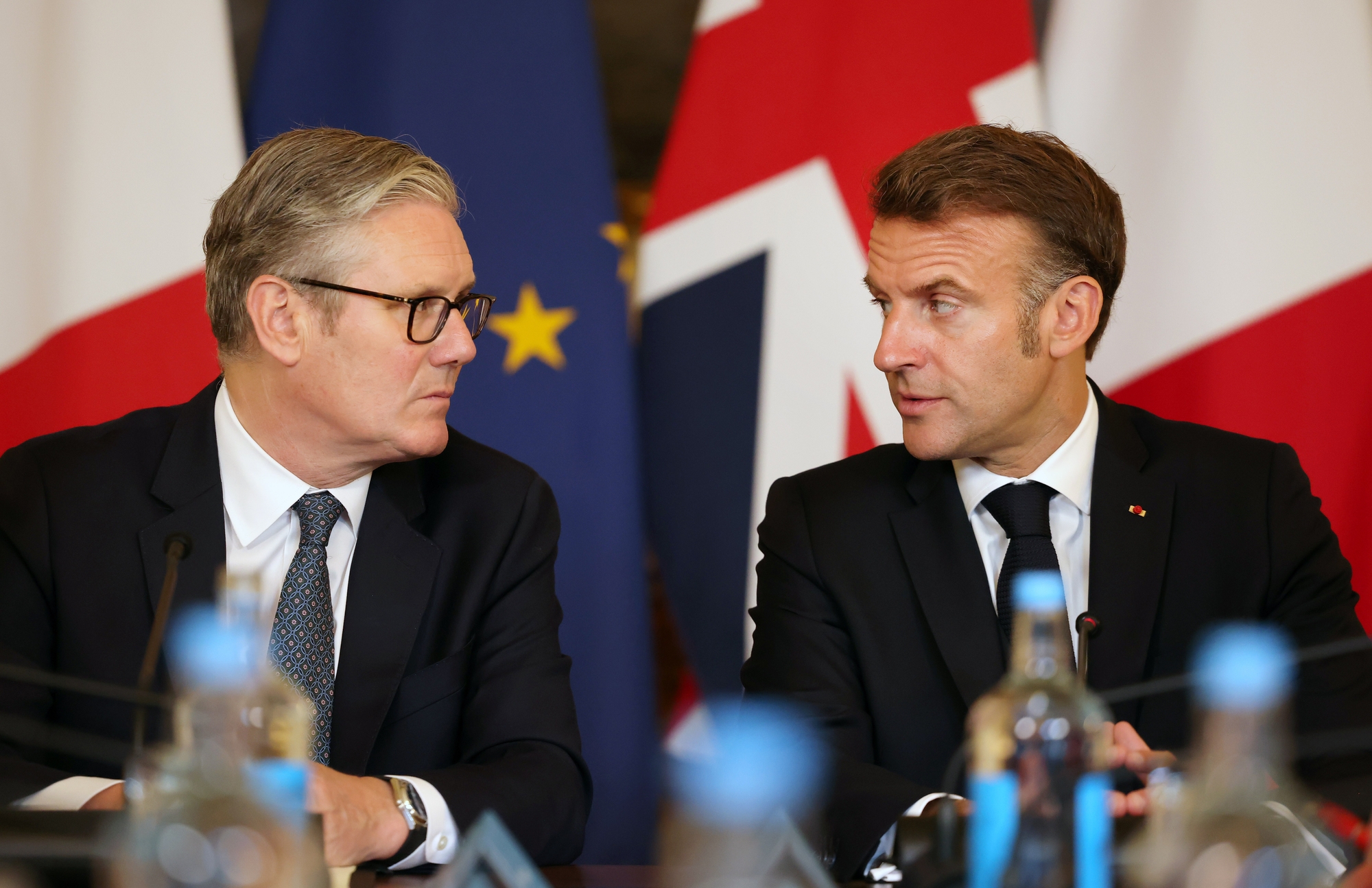
When French President Emmanuel Macron wrote on X on April 13 about an upcoming conference on the Strait of Hormuz, he carefully chose his words: the mission would be "strictly defensive" and separate from the "warring parties." This is not diplomatic euphemism — it is a construct that allows countries that cannot or do not want to become part of an American-Israeli operation against Iran to participate.
What is actually happening
After Trump called on countries receiving oil through Hormuz to "take care of this passage" by military means on March 15, most NATO allies — Germany, Spain, Italy, Great Britain, Australia, Japan — refused, citing unwillingness to be drawn into the war. But refusing the American request did not mean inaction.
On March 19, five major European states and Japan signed a statement about ensuring the security of the strait — but only after establishing a ceasefire and forming a multinational naval coalition. A crucial nuance: the mission will not operate as an Alliance operation; it will involve countries outside the military bloc, including Persian Gulf states.
"We are gathering a coalition of countries… working on a political and diplomatic plan, but also examining military capabilities and logistics for actually conducting ships through the strait"
— British Prime Minister Keir Starmer, April 9
Thirty countries — and a practical problem
Britain and France are negotiating with approximately 30 countries on opening the Strait of Hormuz; a meeting of chiefs of staff is planned for the coming days. European countries are gradually deploying ships at two gathering points — near Cyprus and in the southwestern Indian Ocean.
But coordination is running into a concrete technical gap: some participants are offering minesweepers but do not have frigates to provide cover for them. This is not an abstract problem — demining the strait without an escort means risk to the minesweepers themselves.
Why this matters for Ukraine
Hormuz is not just about oil. Up to 30% of international fertilizer trade passes through the strait, including 30–35% of the world's urea exports and 20–30% of ammonia. For a country where the agricultural season depends on imported fertilizers, any delay in resuming shipping translates into the cost of a ton of grain by the next spring.
- 22 countries, including Great Britain, France, Germany, Japan, Bahrain and the UAE, signed a statement expressing readiness to join efforts to ensure safe passage through the Strait of Hormuz.
- British Typhoons were additionally deployed in Qatar, and the nuclear submarine HMS Anson positioned in the region — despite the official message "this is not our war."
- Deployment of forces is planned only after a ceasefire is reached, but preparations have been accelerated due to threats of the US withdrawing from the conflict without resolving the strait problem.
The mission is formulated as defensive and post-conflict — but the apparatus for it is being assembled now, in the midst of fighting. If a ceasefire between the US and Iran is not signed by early May, the question will become practical: will this coalition remain "strictly defensive" when the strait remains closed and fertilizer prices in Ukraine continue to rise?



