"Wheel torn off, fighter wounded — how 'Omega-West' special forces held position after mine explosion"
A driver managed to control a damaged armored vehicle and drove it to shelter — this gave the group several seconds to organize a defense in Rodynske. These seconds determined the outcome of the evacuation.

By Tetiana Suchkova-Ladik
May 19, 2026 · 2 min read
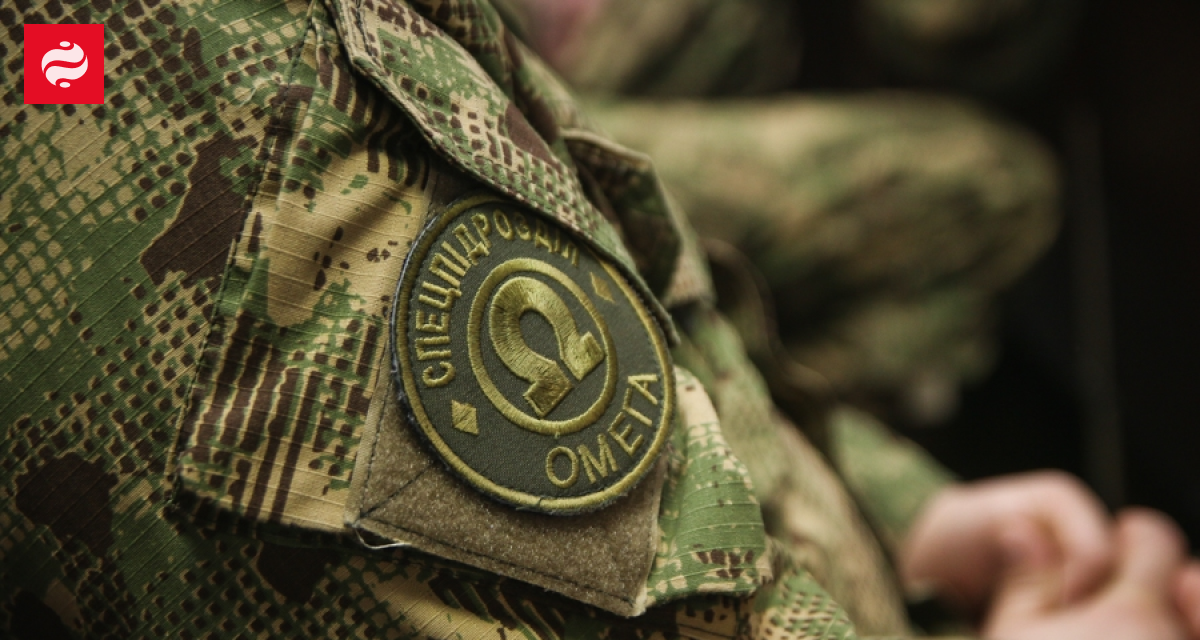
On the Pokrovsk front, the detonation of an armored vehicle on a mine does not always mean the complete loss of combat capability of a group. The commander of the National Guard of Ukraine's special unit "Omega-West" with the callsign "Brodyaga" described a sequence of actions that turned a potential catastrophe into a manageable situation — and this sequence is worth attention not as heroism, but as tactical logic.
A few seconds between detonation and defense
A group was entering Rodynske in an armored vehicle when the machine hit a mine. The explosion tore off a wheel. According to "Brodyaga," the driver did not lose control — he managed to get the vehicle to the nearest building.
"The driver was able to maintain control even though the wheel was torn off by the explosion. He got the vehicle to a house, where we immediately took up defensive positions and distributed sectors."
Group commander with callsign "Brodyaga," "Omega-West" special unit of the National Guard of Ukraine
This moment — maintaining control of a damaged vehicle — is critical. In an area of dense mine fields and under possible enemy observation, a crew that "jumps out" immediately after detonation becomes an open target. A vehicle brought to cover gave the group shelter and time.
Rodynske: why there
Rodynske is a city north of Pokrovsk that has been in a zone of active combat operations since fall 2024. Russian forces are pressing along multiple vectors simultaneously, and National Guard units operate here alongside Armed Forces brigades. "Omega-West" is a special National Guard unit that performs tasks in the most unstable sectors of the front.
Evacuation under pressure
After distributing sectors, the group organized the evacuation of a wounded soldier. The commander does not disclose details of the evacuation route and method — standard practice for active directions. What is significant is something else: the evacuation occurred after the group established itself, not instead of it. In other words, the tactical sequence was maintained even under the stress of detonation.
- Detonation — driver maintains control, vehicle continues moving
- Cover — building is used as a strongpoint
- Defense — sectors are distributed before casualty evacuation
- Evacuation — organized after establishment, not in parallel with chaos
This sequence is not obvious under stress. Adherence to it — not physical endurance or firepower superiority — determined the outcome of the episode.
What this means for the Pokrovsk direction
The Pokrovsk direction remains one of the most mine-hazardous sectors of the front: the density of enemy minefields is increasing proportionally to the pace of their advance. For units operating there in armored vehicles, a mine strike is not an exception but a statistical inevitability with a sufficient number of sorties. The question is not "if they will hit a mine," but "what happens after."
If such episodes become part of systematic training — does "Omega-West" formally transfer this experience to other National Guard units, or does it remain in oral accounts passed between soldiers?



