When an FPV drone costs more than logistics: why occupiers are transferring cargo from Urals to robots
On the Slovyansk direction, the National Guard has already replaced vehicles with horses in logistics — and this is not an experiment, but a response to the "death zone" at a depth of 15–25 km created by FPV-drones.

By Tetiana Suchkova-Ladik
May 13, 2026 · 3 min read
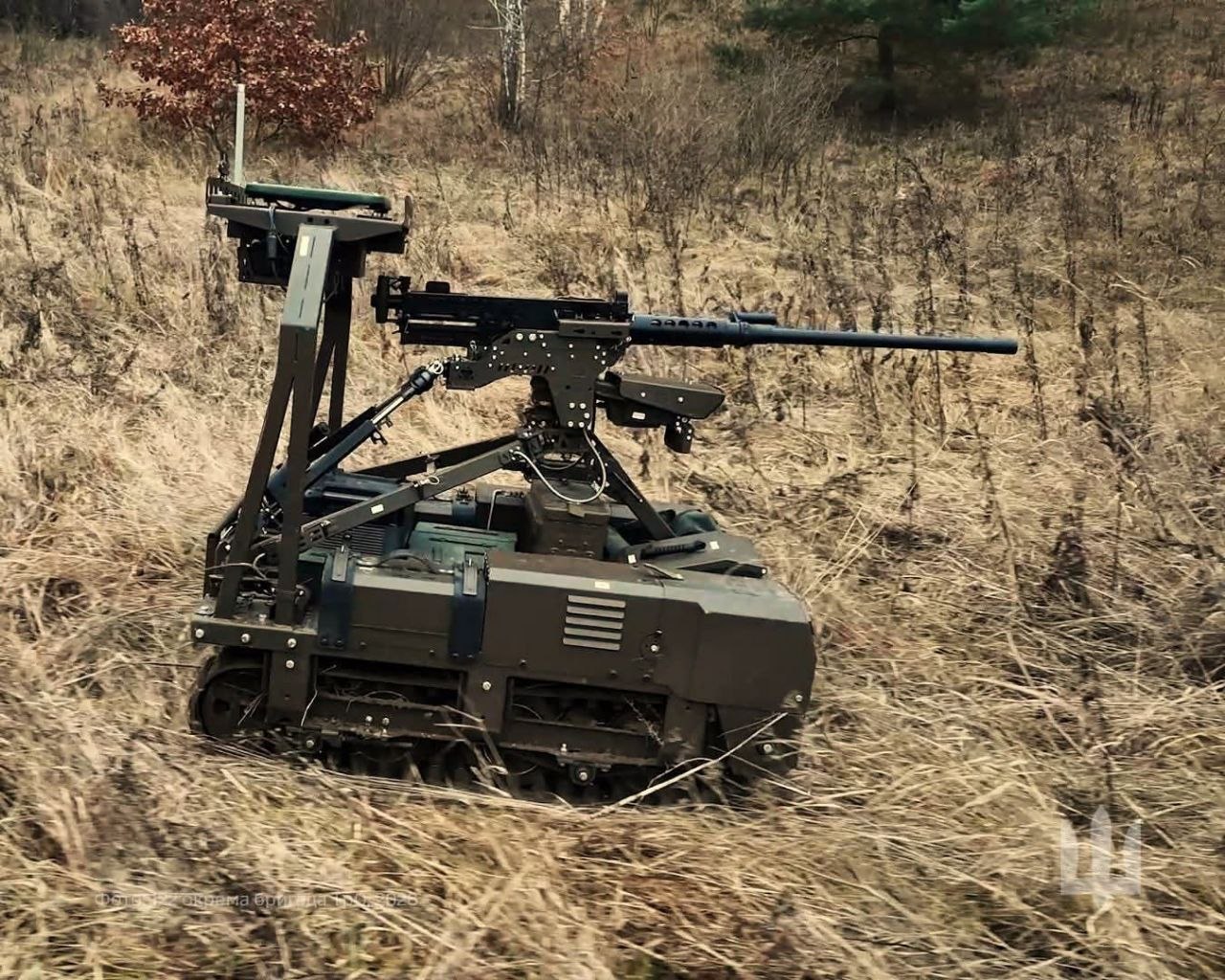
The commander of the Apache unmanned systems battalion of the 81st Air Assault Brigade, Senior Lieutenant Alexander Denisov, documented what analysts had been discussing in theory: in the Slovyansk direction, ground robotic complexes are appearing on roads more frequently than ordinary vehicles. The occupiers are using unmanned ground vehicles to deliver ammunition, provisions, and equipment to the positions of drone operators and artillery.
Why Now
The reason is mundane and lethal at the same time. FPV drones of both sides have transformed a strip 15 to 25 kilometers deep from the line of contact into a so-called "zone of death." Sending an armored vehicle or a Ural truck with cargo there is almost a guaranteed loss of both equipment and driver.
"It's hopeless — to take an armored vehicle and simply send it to evacuate infantry positions. You will be intercepted on the road 100 percent of the time"
— commander of an unmanned systems unit of the 12th Azov Brigade, Foreign Policy
This very pressure — not technological enthusiasm, but purely pragmatic response to FPV dominance — accelerated both sides' transition to unmanned ground vehicles as a logistics tool.
What is Known About the Russian Side
An analytical report by State Watch identified 32 models of Russian unmanned ground vehicles, of which at least 20 types have been recorded in combat use against Ukraine. The key structural change is that production has shifted from state defense plants to private companies and reached mass production levels in 2024–2026. Deliveries to the front range from dozens to hundreds of units.
Notably: only 3 out of 20 identified manufacturers are under EU sanctions. Most of the largest mass suppliers of "new" unmanned ground vehicles have not fallen under any jurisdiction's restrictions — despite confirmed combat use.
Ukraine's Response in Numbers
- In the first three months of 2026, Ukrainian unmanned ground vehicles completed nearly 24,500 missions — from 2,900 in November 2025 to over 9,000 in March 2026.
- The number of Armed Forces units employing unmanned ground vehicles increased from 67 in November 2025 to 167 in spring 2026.
- The Ministry of Defense concluded contracts for 25,000 ground robots in the first half of 2026 — twice as many as for the entire 2025.
According to the General Staff, units that integrated unmanned ground vehicles recorded personnel casualty reductions of 30%. One machine gun unmanned ground vehicle held a position for almost six weeks straight in late 2025 — it was refueled and serviced every 48 hours.
An Asymmetry Easy to Miss
The cost of one unmanned ground vehicle complex — from $30,000 to $40,000 — is equivalent to 30–50 FPV drones. That is, the unmanned ground vehicle is more expensive than the tool that forced it to appear. This means that the logistics robot is not a replacement for humans, but a forced response to the cheapening of killing: as long as an FPV drone costs less than delivering supplies with a living soldier, the equation works in favor of unmanned ground vehicles.
Russia is solving the same problem with different resources: instead of a single codified program — dozens of private manufacturers outside the sanctions field, instead of public mission statistics — fixation at the level of individual front sections, such as the Slovyansk direction.
If the EU does not close sanctions loopholes regarding Russian unmanned ground vehicle manufacturers — the pace of their production will be determined not by Russia's technological capability, but by access to components, which no one is currently seriously restricting.



