Corruption in territorial recruitment centers and unauthorized desertions from units undermine defense capability — Budanov announced a package of measures
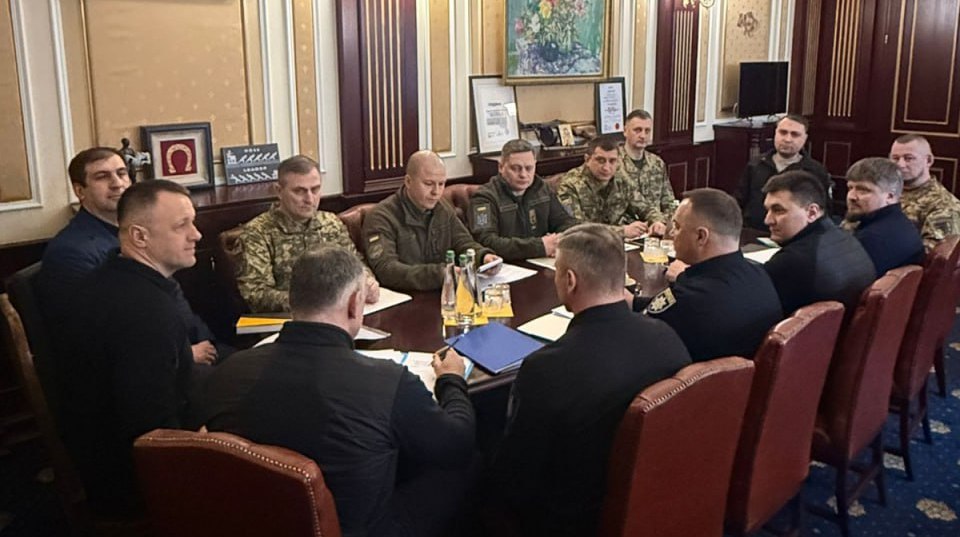
The Head of the Presidential Office held a meeting with the General Staff and law-enforcement agencies: this is not a personnel matter but a direct risk to unit manning and combat readiness.

By Tetiana Suchkova-Ladik
January 10, 2026 · 2 min read
Context
Kyrylo Budanov drew attention to two problems that directly affect defense capability: corruption in the system of Territorial Recruitment Centers (ТЦК) and unauthorized leaving of units (СЗЧ). The issues were discussed at an expanded meeting with the participation of the General Staff, the Ground Forces, the Military Law Enforcement Service and the heads of law enforcement agencies.
What Budanov said
“Abuse of official duties and the undermining of military discipline are unacceptable. We are studying the problems involved and preparing clear and effective solutions.”
— Kyrylo Budanov, head of the Office of the President
Evidence and examples
- In December 2025 the General Staff introduced changes that make using unauthorized leaving of units (СЗЧ) as a method of transferring to another military unit impractical.
- On January 6, 2026 the High Anti‑Corruption Court ruled that assets of the former head of the Zaporizhzhia Regional Territorial Recruitment Center totaling 3.8 million hryvnias were unjustified.
- On January 9 the State Bureau of Investigation reported exposing an official of a Territorial Recruitment Center in the Rivne region who accepted a bribe in the form of a car; he was placed under preventive measures with the option to post bail of more than 2 million hryvnias.
Why this matters for the country
Corruption and unauthorized leaving of units (СЗЧ) are not merely legal problems: they deplete resources, create personnel gaps and undermine discipline and trust within the armed forces. When the staffing system operates opaquely, the efficiency of personnel allocation suffers, and therefore the operational readiness of units decreases.
What will change
According to the Presidential Office, “clear and effective solutions” are being prepared: a combination of rapid law‑enforcement responses, disciplinary measures and systemic reforms in the work of the Territorial Recruitment Centers. Defense analysts expect intensified inspections and an acceleration of court proceedings related to corruption cases.
A question for society and authorities: will they be able to turn these intentions into lasting practice that increases combat capability, or will it remain another declaration?



