Kremlin wants to return Yermak and Mendel to Europe's information space — while Iran has pushed this topic aside
The SBU disclosed details of the operation: Russia considers the scandals surrounding the former head of the Presidential Office and the former spokesperson of Zelensky as "displaced" by international events and plans to revive them using fake documents and artificially created "character symbols."

By Tetiana Suchkova-Ladik
May 20, 2026 · 2 min read
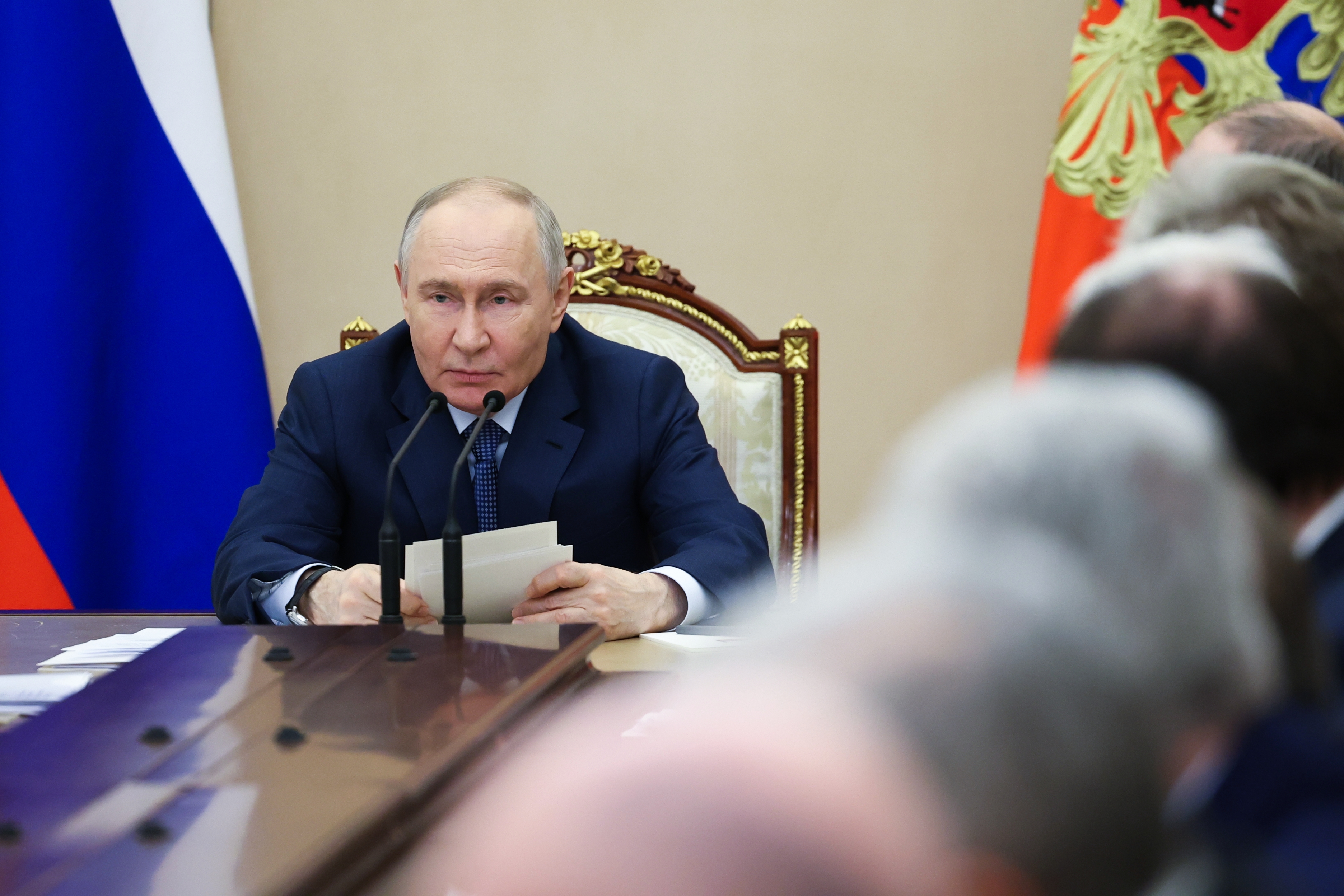
At the end of May 2026, Ukraine's Foreign Intelligence Service revealed details of a new Russian destabilization campaign. Notably, it's not the existence of the campaign itself — but rather how specifically the Kremlin formulates its own task: to prevent two scandals within Ukraine from becoming "secondary" in Europe's media space.
What the intelligence service leaked
According to the Foreign Intelligence Service, the Kremlin has noted that the case of Andriy Yermak's detention and Yulia Mendel's interview with Tucker Carlson — important matters, but "overshadowed" by the situation surrounding Iran and other international events. Therefore, the campaign's goal is not to create a scandal from scratch, but to prevent it from fading away.
The tools described by the Foreign Intelligence Service: development of fake documents allegedly from state authorities and "puppet symbols" — substitute persons who would act as credible sources or witnesses. This is not a new tactic, but its open documentation by the intelligence service is a signal that Kyiv is tracking the operation in real time.
"Russia's media plan" provides for developing fake documents allegedly from state authorities and spreading them to the public.
Foreign Intelligence Service of Ukraine
Why these two specific topics
The coincidence is not accidental. Analysts at "Media Detector" observed that in May these two topics already began functioning as a pair — in the same posts and videos where Yermak's detention was used to criticize the government, while Mendel's interview was used to defend or attack it. In other words, both topics simultaneously fragment the audience and absorb attention.
The Supreme Anti-Corruption Court arrested Yermak with a bail of 140 million hryvnias, which was paid within days. Mendel in her interview with Carlson — a journalist whom Ukrainian media experts characterize as a "Ukrainophobe" — made statements that provoked widespread criticism. According to "Media Detector" observations, Mendel's interview effectively "diluted" the negative impact of Yermak's detention, redirecting some of the public's attention to another subject.
Broader context of the operation
The Foreign Intelligence Service emphasizes that the information campaign has several parallel goals — discrediting mobilization and military leadership, psychological exhaustion of the population, undermining trust in the current government, and complicating Western support for Ukraine. Scandals surrounding Yermak and Mendel are just one vector, but a telling one: Moscow is trying to exploit real internal contradictions rather than fabricate them from scratch.
- Fake documents from state bodies — to undermine trust in official statements
- "Puppet symbols" — substitute persons to give the operation a "human face"
- Reviving overshadowed topics — using international attention as a window of opportunity
A separate point: the Kremlin pragmatically calculates what exactly has been "overshadowed" in European broadcasting. This means the operation is aimed not only at Ukraine's domestic audience, but also at shaping the narrative in countries upon which Kyiv's aid depends.
If Russia indeed launches a wave of fake documents allegedly from state bodies — the key indicator will be the reaction not of ordinary users, but of verification departments and official government communication channels: whether a systematic response to the planted materials will emerge, or the state will again leave the clarifications to initiative-driven fact-checkers.



